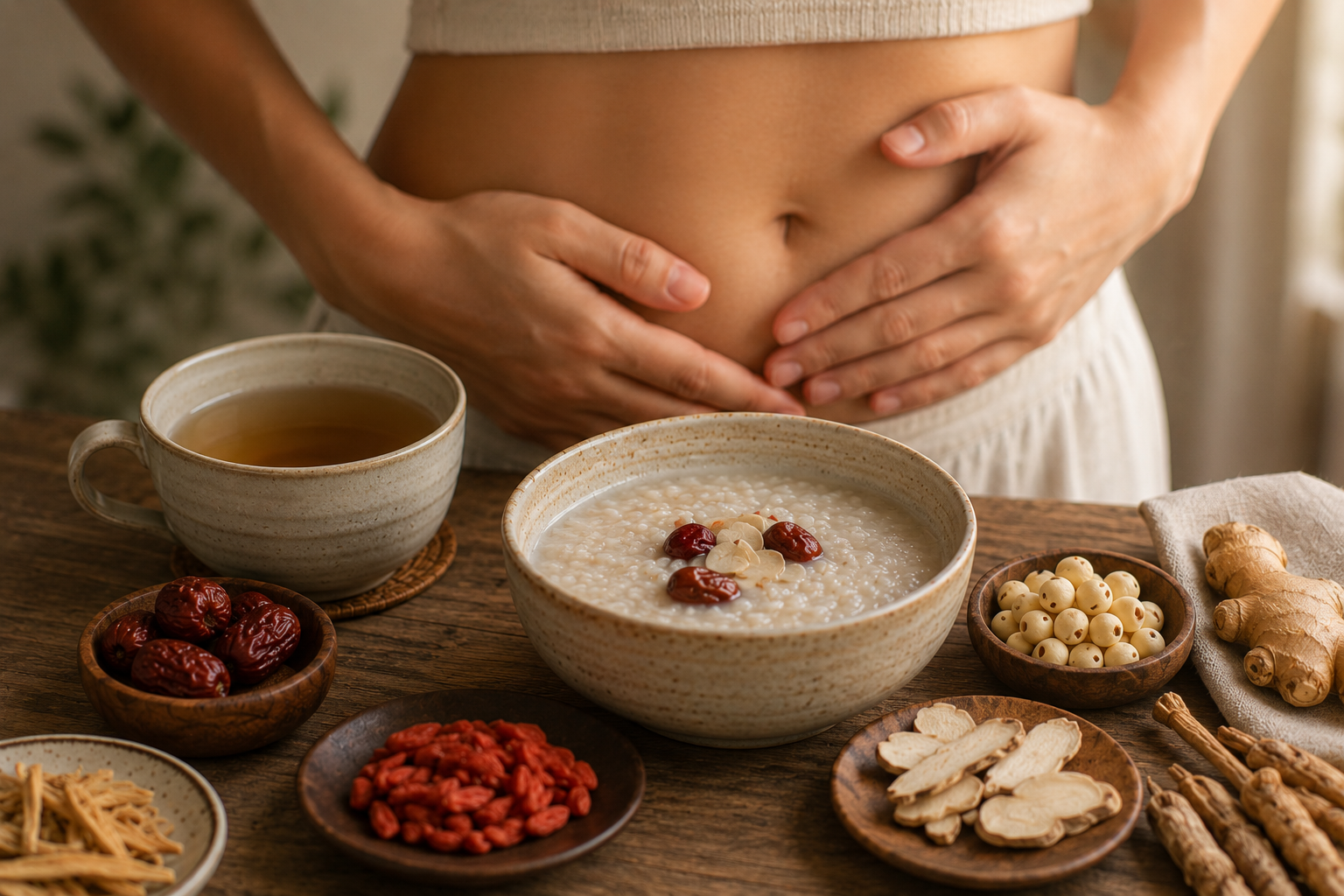
When most women think about hormone health, they think about estrogen, progesterone, thyroid function, or cortisol.
Rarely do we think about digestion.
But in Traditional Chinese Medicine, one of the most important organs for vibrant skin, balanced hormones, healthy menstrual cycles, and lasting energy isn't directly related to the reproductive system at all—it's the Spleen.
Not the anatomical spleen that filters blood in Western medicine, but the energetic Spleen: the system responsible for transforming the food we eat into the Qi, Blood, and body fluids that nourish every part of us.
In many ways, it is the body's foundation.
Your Body Can Only Build From What It Can Transform
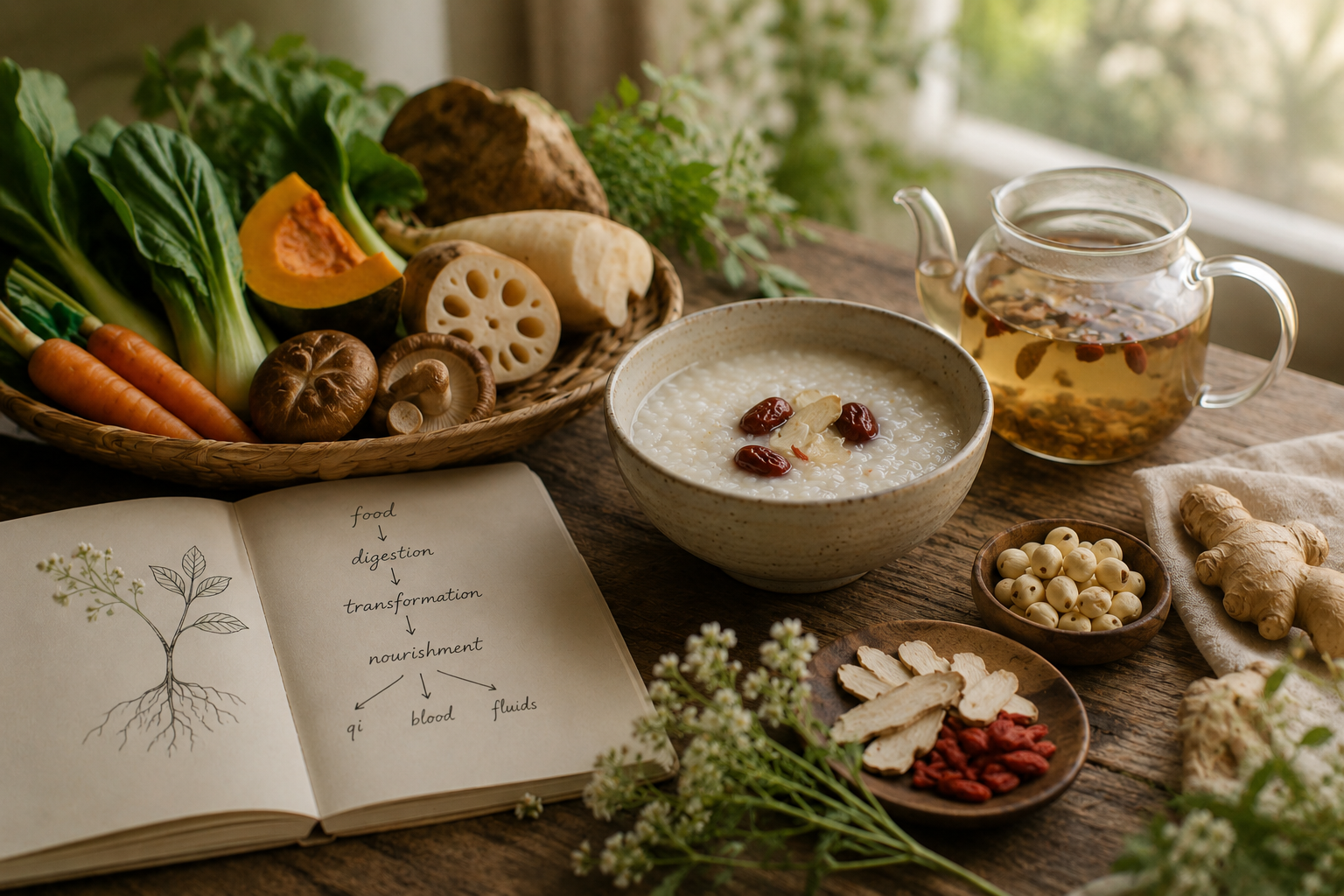
One of the biggest lessons I've been learning through my advanced women's health mentorship is that before we focus on optimizing hormones, we have to ask a much simpler question:
Does the body have enough nourishment to work with in the first place?
In Chinese medicine, the Spleen is responsible for extracting nourishment from food and transforming it into the resources your body uses every day.
These resources become:
the Blood that nourishes your menstrual cycle
the Qi that fuels your energy
the fluids that keep your skin soft and hydrated
the nourishment that supports fertility, healing, and healthy aging
If this system isn't functioning well, every other system has less to work with.
It's a reminder that health isn't simply about what we eat—it's about what we're actually able to digest, absorb, and transform.
When the Spleen Needs Support
Because the Spleen is responsible for producing nourishment, its effects show up in places you might never expect.
You may notice:
fatigue, especially after meals
bloating or sluggish digestion
loose stools or diarrhea
sugar cravings
brain fog
feeling heavy or puffy
easy bruising
prolonged spotting between periods
early periods (cycles less than 28 days)
heavier menstrual bleeding
slow recovery from illness, stress, or exercise
dull, tired-looking skin
These symptoms may seem unrelated, but from a Chinese medicine perspective, they can all point back to the same underlying pattern: the body isn't transforming nourishment as efficiently as it could.
The Spleen's Connection to Women's Health
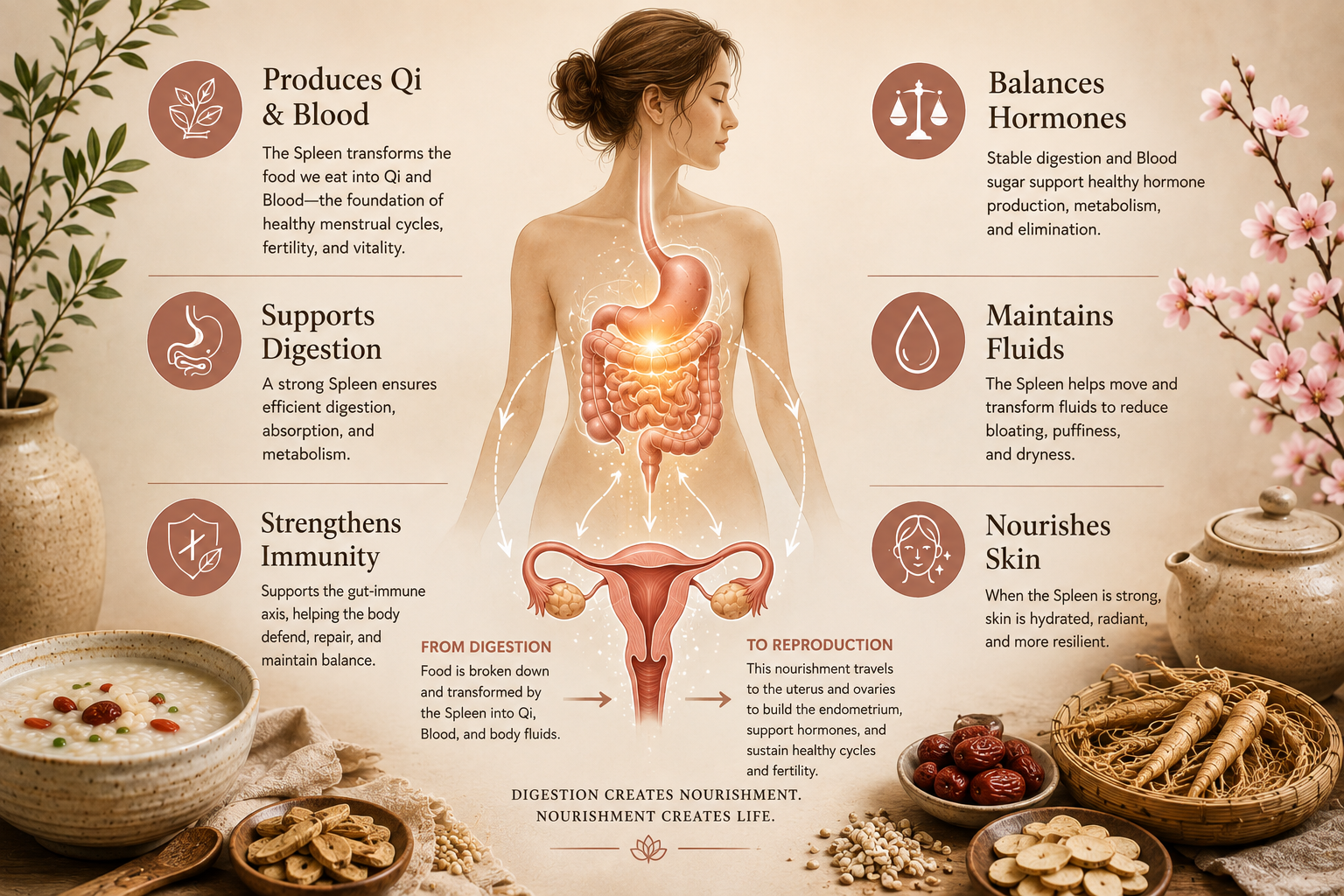
Every menstrual cycle asks the body to build, circulate, and replenish Blood. In Chinese medicine, this makes nourishment and digestion an important part of how we think about menstrual and reproductive health.
The Spleen is traditionally associated with transforming the food we eat into the nourishment the body uses to build Qi and Blood. It’s one reason I pay so much attention to digestion, appetite, energy, and eating habits when working with patients on their cycles or supporting fertility.
And that support can look a little different throughout the month. Your period, follicular phase, ovulation, and luteal phase each have their own job to do—and in Chinese medicine, treatment can shift along with them.
—> Read: [Acupuncture for Fertility: How Chinese Medicine Supports Each Phase of Your Menstrual Cycle]
Want to go a little deeper? Watch the quick reel below for my breakdown of the connection between digestion and fertility. And if you find it helpful, follow me on Instagram for more on fertility, hormones, digestion + Chinese medicine.
Your Skin Reflects Your Digestion
One of my favorite things about Chinese medicine is that everything is connected—and the skin is no exception.
The face can offer clues about what’s happening internally. In Chinese medicine, healthy Qi and Blood are associated with nourishment and vitality, and we often see that reflected in a complexion that looks brighter, more vibrant, and resilient.
When that nourishment feels a little depleted, the signs may be subtle:
puffiness
dryness
a dull complexion
slower-looking recovery
tired-looking eyes
loss of radiance
It’s one of the reasons my approach to facial rejuvenation acupuncture goes beyond the face itself. We may also talk about digestion, nutrition, sleep, stress, menstrual health, and herbal medicine—because skin doesn’t exist separately from the rest of the body.
And when breakouts seem to have a monthly rhythm? Your cycle may be giving us another clue.
→ Read: [Hormonal Breakouts, Decoded: A TCM Guide to Clearer, Calmer Skin]
Beautiful skin isn’t only about what we apply externally. At Ritual House, we also look at how the body is being nourished from within.
Supporting Your Spleen Every Day
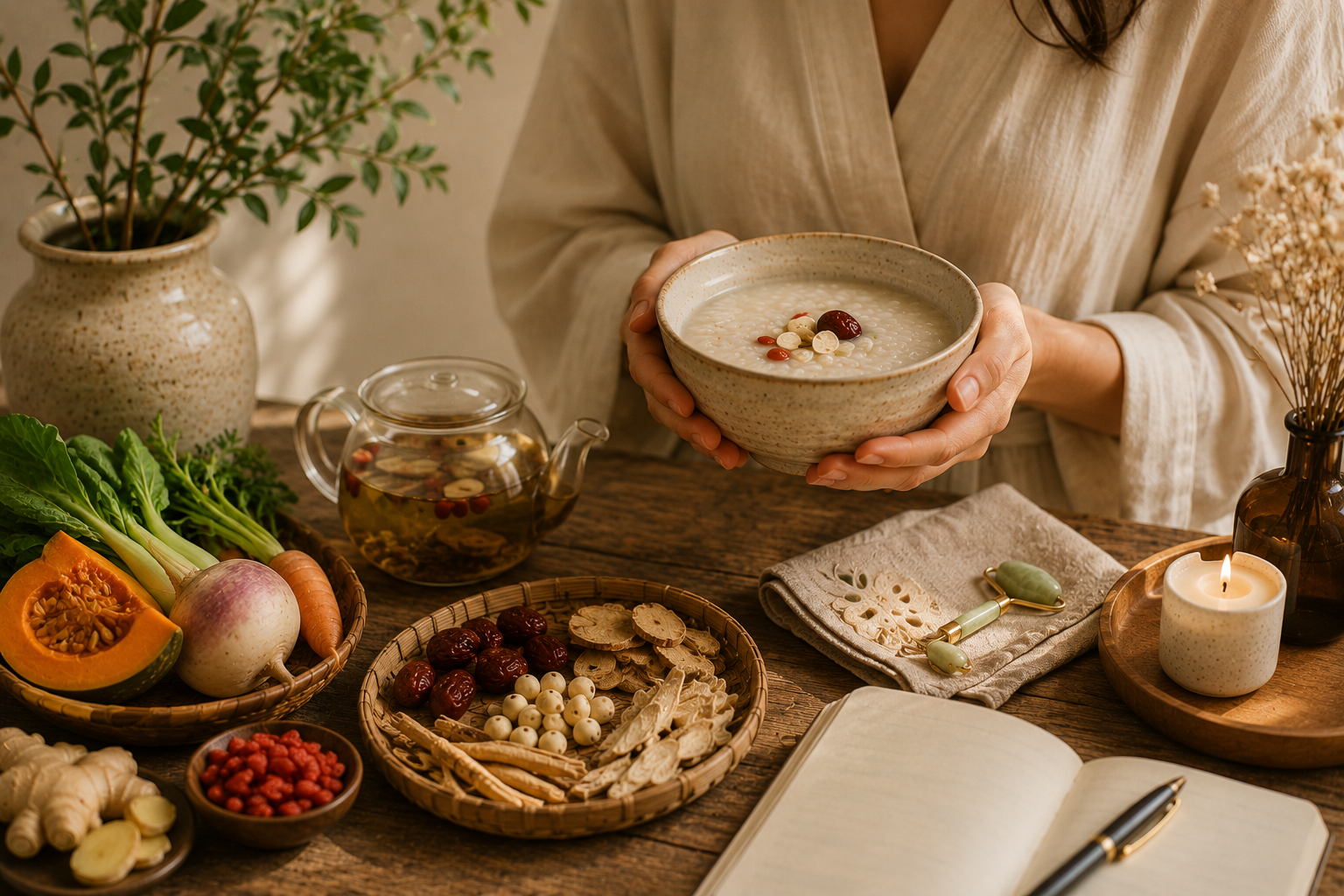
The good news is that supporting the Spleen doesn't usually require anything complicated.
Small daily rituals often make the biggest difference.
Some of my favorites include:
enjoying warm, cooked breakfasts instead of skipping meals
eating meals at regular times throughout the day, avoiding too much snacking between meals
limiting iced drinks when digestion already feels sluggish
slowing down enough to chew thoroughly, eat mindfully
including protein and nourishing whole foods with each meal
using herbs when they're appropriate for your individual constitution
These simple habits can help support healthy digestion and provide the body with the nourishment it needs to thrive.
A Simple Ritual to Begin
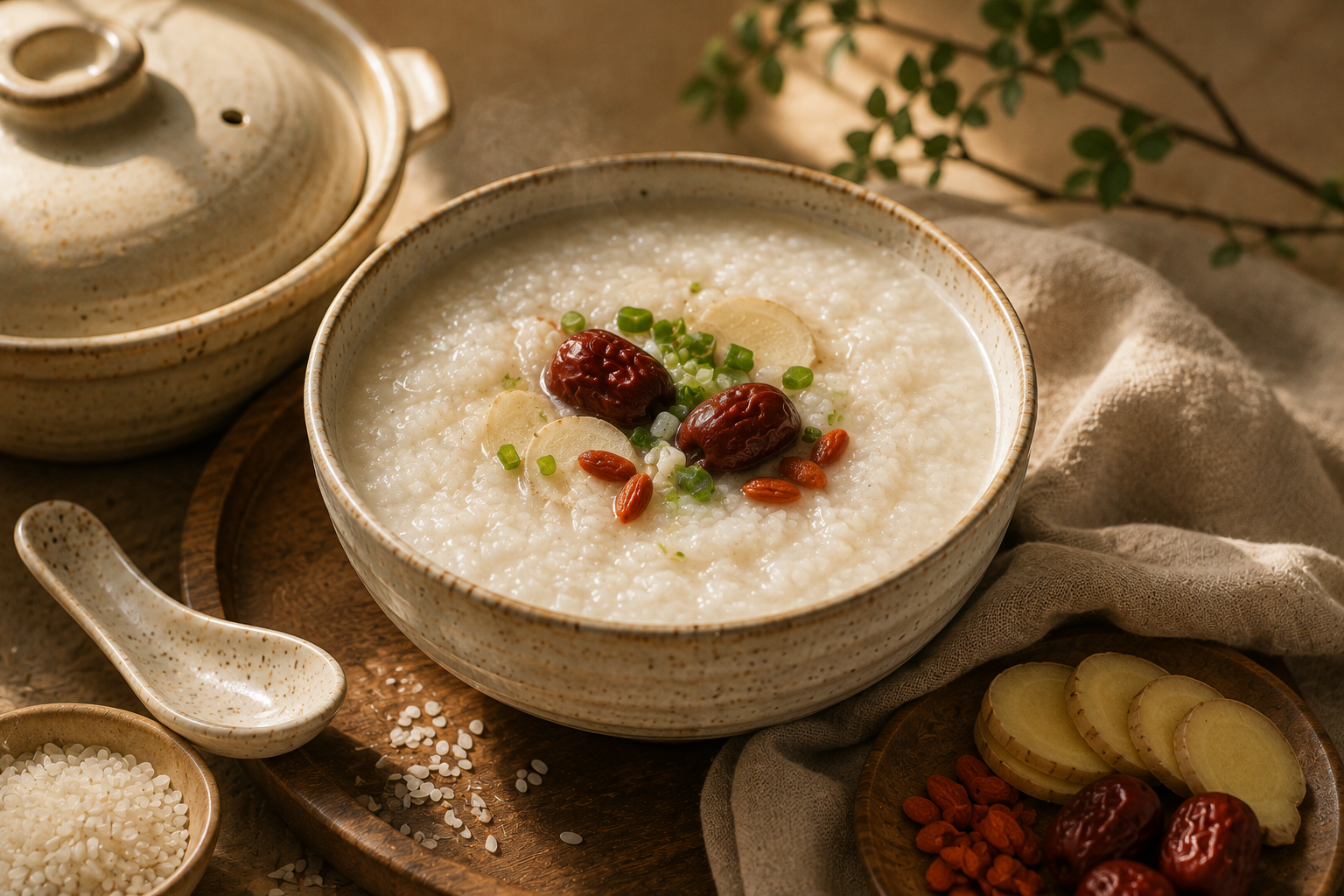
If there's one thing I'd encourage you to try after reading this article, it's this: start your day with something warm and nourishing.
In Traditional Chinese Medicine, breakfast is an opportunity to gently support digestion after a night's rest. Rather than asking your body to process cold smoothies or skipping breakfast altogether, consider beginning the day with foods that are easy to digest and deeply nourishing.
One of my favorite examples is rice congee—a slow-cooked rice porridge that has been enjoyed throughout Asia for centuries. Its soft texture and long cooking time make it especially gentle on digestion, making it a beautiful meal during times of stress, fatigue, postpartum recovery, or whenever your body feels like it needs a little extra care.
I've shared one of my favorite congee recipes in a separate post, along with simple topping ideas to make it a satisfying meal.
→ Read: The Healing Power of Rice Congee: A Nourishing Breakfast for Hormones, Digestion & Recovery
The Takeaway
Chinese medicine reminds us that beauty, hormones, fertility, and vitality all begin with nourishment.
Before we chase the next supplement or hormone hack, it's worth asking a more foundational question:
Is my body receiving—and transforming—the nourishment it needs?
Because true wellness isn't built from what we consume.
It's built from what our bodies are able to transform into energy, Blood, resilience, and life.
And sometimes, supporting your health begins with something as simple as caring for your digestion.