Long before smoothies, protein powders, and wellness trends, nearly every traditional healing system had its own version of a nourishing porridge.
In Traditional Chinese Medicine, it's rice congee. In Ayurveda, it's kitchari. In Japan, okayu. In Korea, juk. Across Europe, simple oat porridges and slow-cooked grain broths were prepared for the sick, postpartum mothers, and anyone recovering from exhaustion or illness.
Different cultures. Different ingredients. Yet they all arrived at the same conclusion: when the body is depleted, healing begins with warm, simple foods that are easy to digest.
Today, we often think healing comes from adding more—more supplements, more superfoods, more complicated routines. But our ancestors understood something beautifully simple: before the body can rebuild hormones, create healthy blood, or restore energy, it must first be able to digest and absorb nourishment.
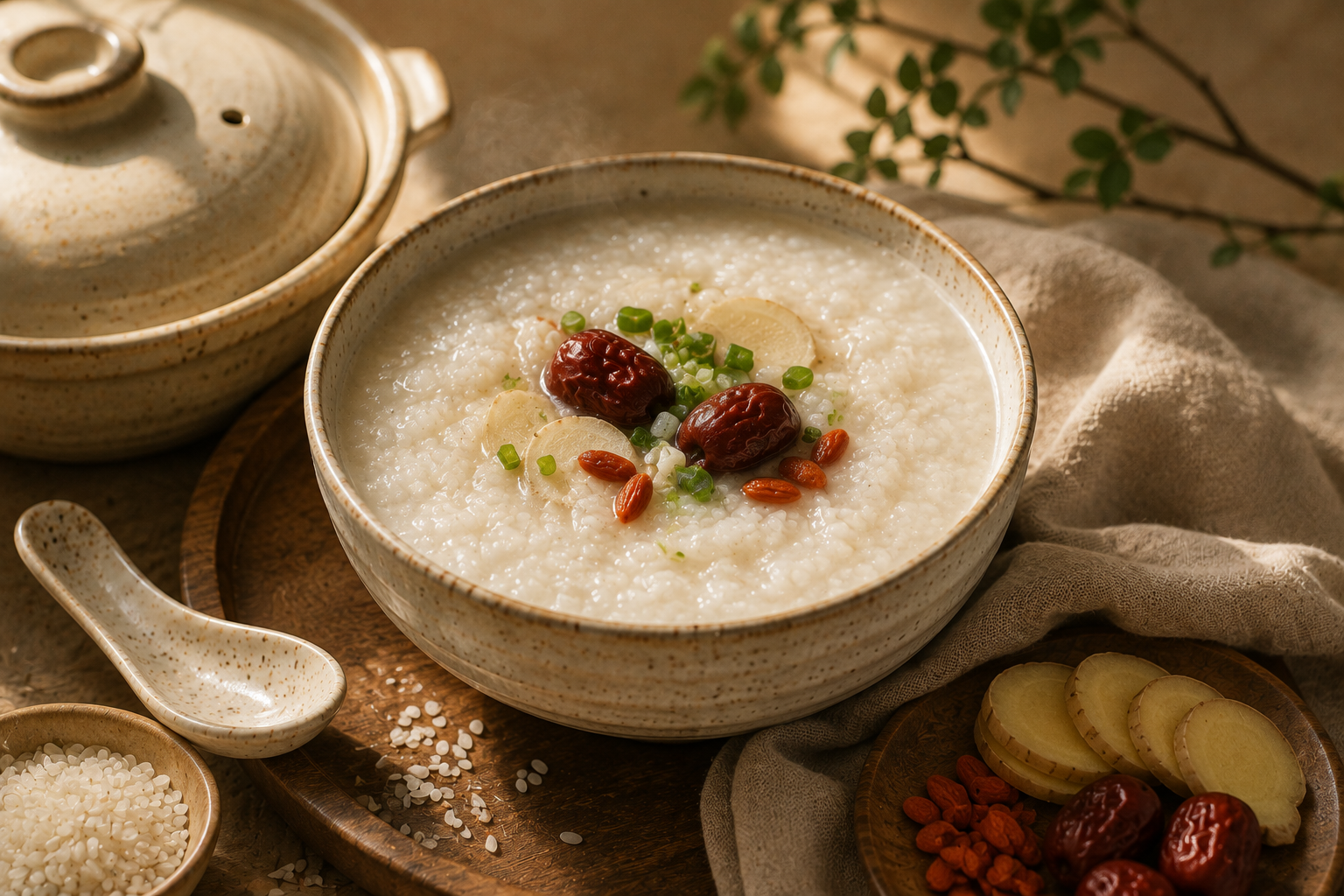
That's exactly why rice congee has remained a cornerstone of Chinese dietary therapy for thousands of years. This humble bowl of slow-cooked rice isn't just comfort food—it's one of the gentlest, most effective ways to support digestion, replenish Qi and Blood, and create the foundation for lasting healing.
Sometimes the most powerful medicine isn't complicated.
Sometimes it's just a warm bowl of rice.
Why Traditional Chinese Medicine Loves Congee
In Traditional Chinese Medicine, healthy digestion is considered the foundation of every other system in the body.
The Spleen and Stomach are responsible for transforming the food we eat into Qi (energy), Blood, and Body Fluids—the building blocks that nourish our organs, hormones, skin, muscles, and reproductive system.
Ancient physicians understood something we're rediscovering today:
Healing doesn't begin with what you eat—it begins with what your body can transform.
When digestion becomes weakened by stress, irregular eating, illness, overwork, or chronic inflammation, the body has a harder time producing these essential resources.
Congee gently supports this process by:
Warming and strengthening digestion
Supporting the Spleen and Stomach
Helping the body build Qi and Blood
Promoting hydration without taxing digestion
Providing steady, nourishing energy
It's one of the first foods many practitioners recommend after illness, surgery, childbirth, digestive flare-ups, or periods of burnout.
Why Breakfast Matters
In TCM, morning is when your digestive system is naturally waking up.
Instead of shocking your body with iced coffee or skipping breakfast altogether, offering your digestion something warm and nourishing helps support healthy energy throughout the day.
Many people notice that after switching to warm breakfasts they experience:
Better digestion
Less bloating
More stable energy
Reduced sugar cravings
Improved bowel movements
Better menstrual health over time
Small daily rituals often create the biggest long-term changes.
A Beautiful Food for Hormonal Health
Hormones don't appear out of nowhere.
Your body has to create them from the nutrients you absorb every day.
If digestion isn't working efficiently, your body may struggle to build the resources needed for healthy hormone production.
This is one reason I often recommend congee to patients experiencing:
Painful or irregular periods
Fatigue
Fertility challenges
Postpartum recovery
Burnout
Chronic digestive issues
Congee isn't a cure—but it creates an environment where healing becomes much easier.
Recovery Begins in the Gut
Modern life constantly asks our nervous systems to stay "on."
When we're stressed, digestion naturally slows. Blood flow is redirected away from the digestive tract, making it harder to properly absorb nutrients.
Warm, simple meals like congee support both digestion and the nervous system by encouraging the body to shift into a more restorative state.
Sometimes healing isn't about adding more supplements.
Sometimes it's about making digestion easier.
How to Make Congee Even More Nourishing
One of the beautiful things about congee is how adaptable it is.
Depending on your needs, you can add:
For Blood Nourishment
Red dates
Goji berries
Black sesame seeds
For Digestion
Fresh ginger
Cinnamon
Scallions
For Protein
Soft-boiled egg
Shredded chicken
Slow-cooked beef
Tofu
For Minerals
Bone broth instead of water
Shiitake mushrooms
Spinach
Bok choy
Every bowl becomes personalized medicine.
A Ritual, Not Just a Recipe
At Ritual House, I often remind patients that healing isn't found in one perfect meal.
It's built through small, consistent rituals.
Making a pot of congee at the beginning of the week means you have something nourishing ready whenever life feels overwhelming.
It becomes an act of caring for yourself before your body has to ask.
My Favorite Simple Congee
Ingredients
1 cup jasmine rice
8–10 cups water or bone broth
4–5 slices fresh ginger
Pinch of sea salt
Simmer for 90 minutes to 2 hours until creamy, stirring occasionally.
Top with your favorite nourishing ingredients—or enjoy it simply with sesame oil, scallions, and a soft-boiled egg. Enjoy!
Tip for meal prep — Congee keeps beautifully in the refrigerator for up to 3 days, making it a wonderful make-ahead breakfast. As it cools, it will naturally thicken—simply stir in a splash of water or broth while reheating until it reaches your desired consistency.
A Gentle Invitation
If your digestion feels off…
If your hormones feel out of balance…
If you're recovering from illness, burnout, or simply feeling depleted…
Try replacing just one breakfast this week with a warm bowl of congee.
Healing doesn't always begin with something complicated.
Sometimes it begins with a pot of rice, a little patience, and giving your body exactly what it's been asking for.