Acupuncture for Fertility: How Chinese Medicine Supports Each Phase of Your Menstrual Cycle
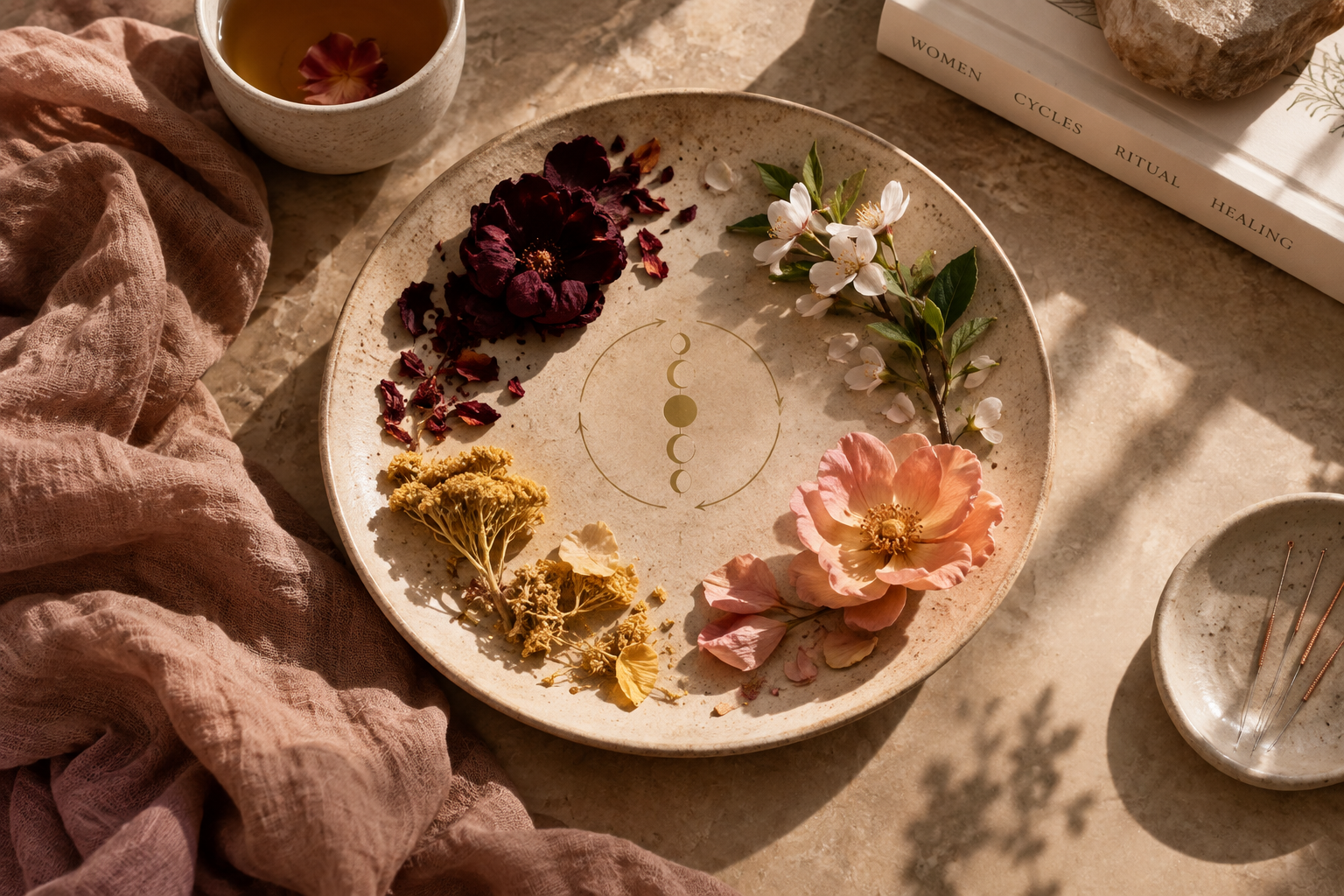
If you’re trying to conceive, you’ve probably become very familiar with your menstrual cycle.
Suddenly you’re tracking cervical mucus. Watching temperature shifts. Counting cycle days. Taking ovulation tests. Wondering whether that tiny twinge on your right side means something. And possibly analyzing your period with a level of attention you never imagined giving it.
But in Chinese medicine, we’ve been paying attention to these details for a very long time.
Your cycle isn’t simply a countdown to ovulation. It’s a sequence of beautifully coordinated physiological shifts—and each phase asks something slightly different of your body.
That’s why fertility acupuncture at Ritual House isn’t the same treatment every week.
The way I approach your period is different from the way I approach your follicular phase. Ovulation has its own priorities. So does the luteal phase.
Because when it comes to fertility, timing matters.
Your Cycle Is More Than Your Period
In Chinese medicine, the menstrual cycle gives us an incredible amount of information.
We look at more than whether your period arrives every 28 days.
We want to know:
What color is the blood? Are there clots? Does your period begin with spotting? Is ovulation easy to identify? Do you notice fertile cervical mucus? Do you feel exhausted around ovulation? Are your breasts sore before your period? Do you become constipated, anxious, bloated, crampy, or ravenously hungry during certain parts of the month?
None of these details exist in isolation.
Together, they help us understand how your body is moving through the different phases of the cycle—and where it may need a little extra support.
Rather than treating fertility as one static condition, Chinese medicine allows us to follow the rhythm of the cycle itself.
Menstrual Phase: Clear + Release
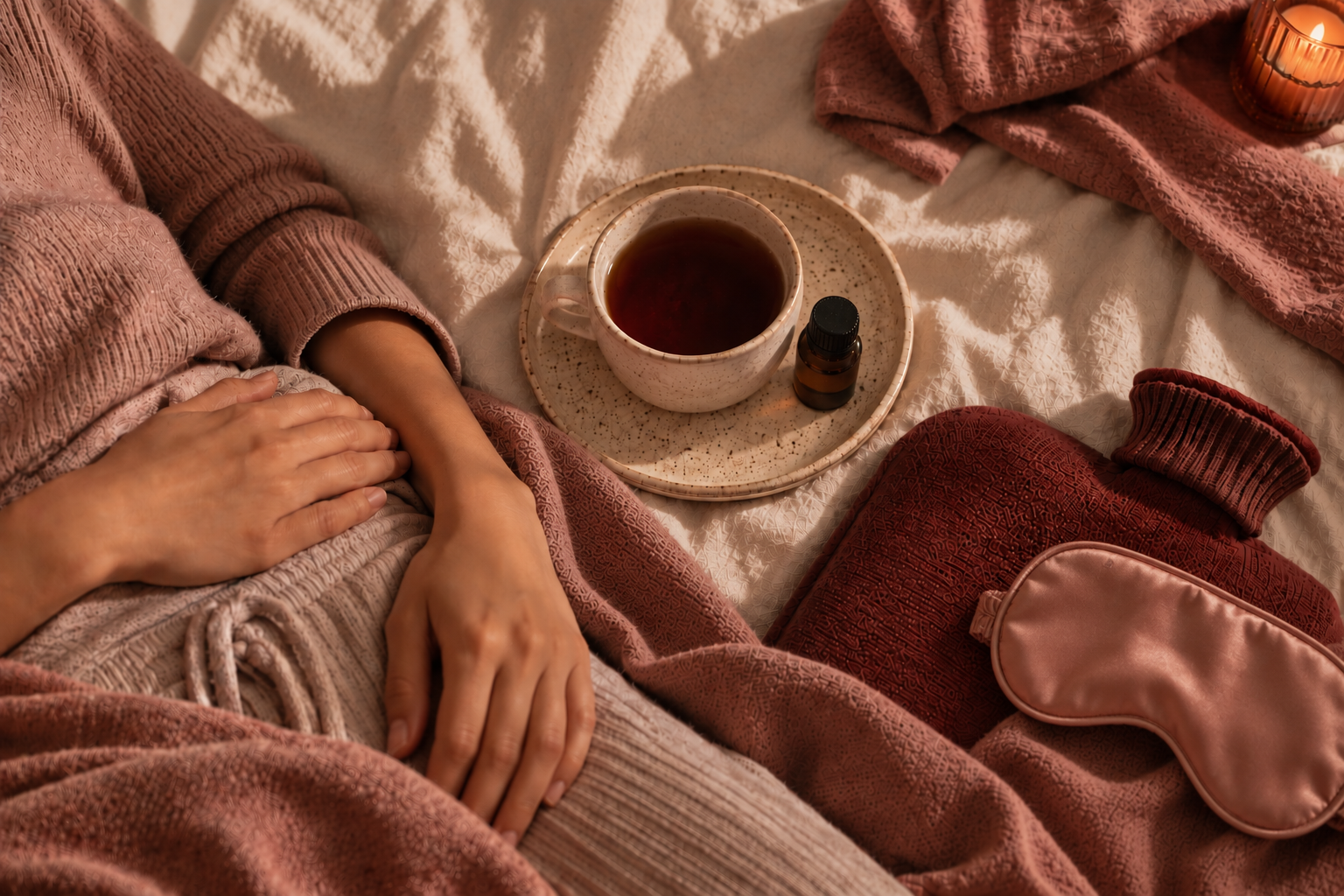
Think: out with the old.
Your period is the beginning of a new cycle, not the end of one.
From a Chinese medicine perspective, this is a time when Blood needs to move downward and outward freely. The focus often shifts toward encouraging circulation and allowing the uterus to empty smoothly.
This is also why I ask so many questions about your actual bleed.
Very painful periods, large clots, dark or purple blood, prolonged spotting, very scanty bleeding, or a flow that starts and stops can all give us clues about what may be happening beneath the surface.
For someone with endometriosis or adenomyosis, for example, the menstrual phase can be particularly informative.
Acupuncture during this part of the cycle may be used to support comfort, circulation, relaxation, and a smoother menstrual experience while we pay attention to the patterns your body is showing us.
And once menstruation finishes, the strategy changes.
Follicular Phase: Build + Nourish
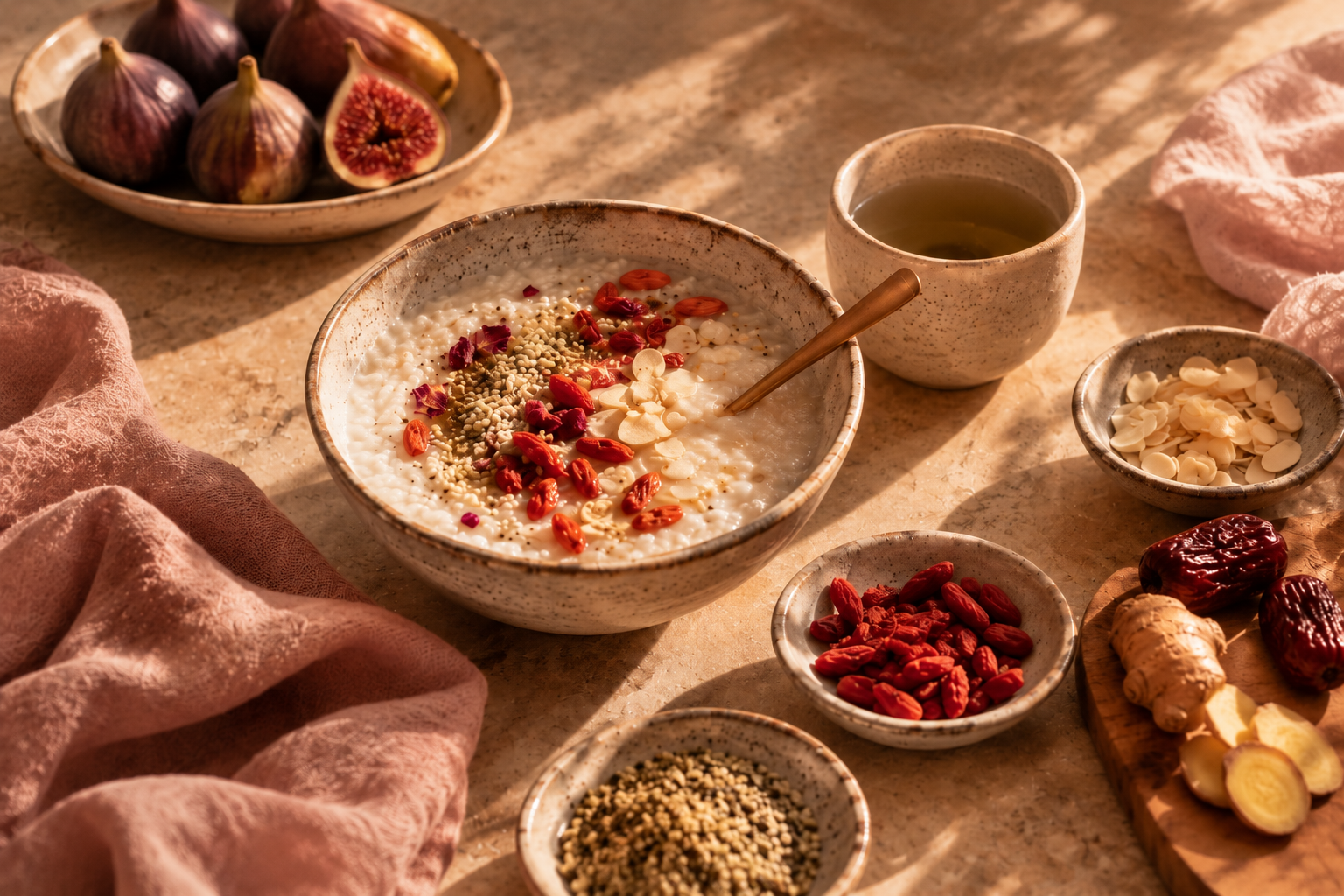
Now we build.
After your period, your body enters the follicular phase. Follicles are developing, estrogen begins rising, and the uterine lining starts rebuilding in preparation for a possible pregnancy.
In Chinese medicine, this phase has a decidedly nourishing quality.
We think about Blood, Yin, Kidney Essence, and the Ren Mai—one of the extraordinary vessels closely associated with reproductive health.
If the menstrual phase was about releasing, the follicular phase is about replenishing.
This is where adequate food, rest, Blood-building nutrients, good digestion, and recovery become especially important. You cannot endlessly ask the body to produce without also giving it the resources to rebuild.
It’s also one reason I talk about digestion so much in fertility appointments.
In Chinese medicine, reproductive health isn't separate from digestive health. The food you eat has to be digested, transformed, and ultimately used to nourish the body.
In other words: fertility doesn't begin at the ovaries.
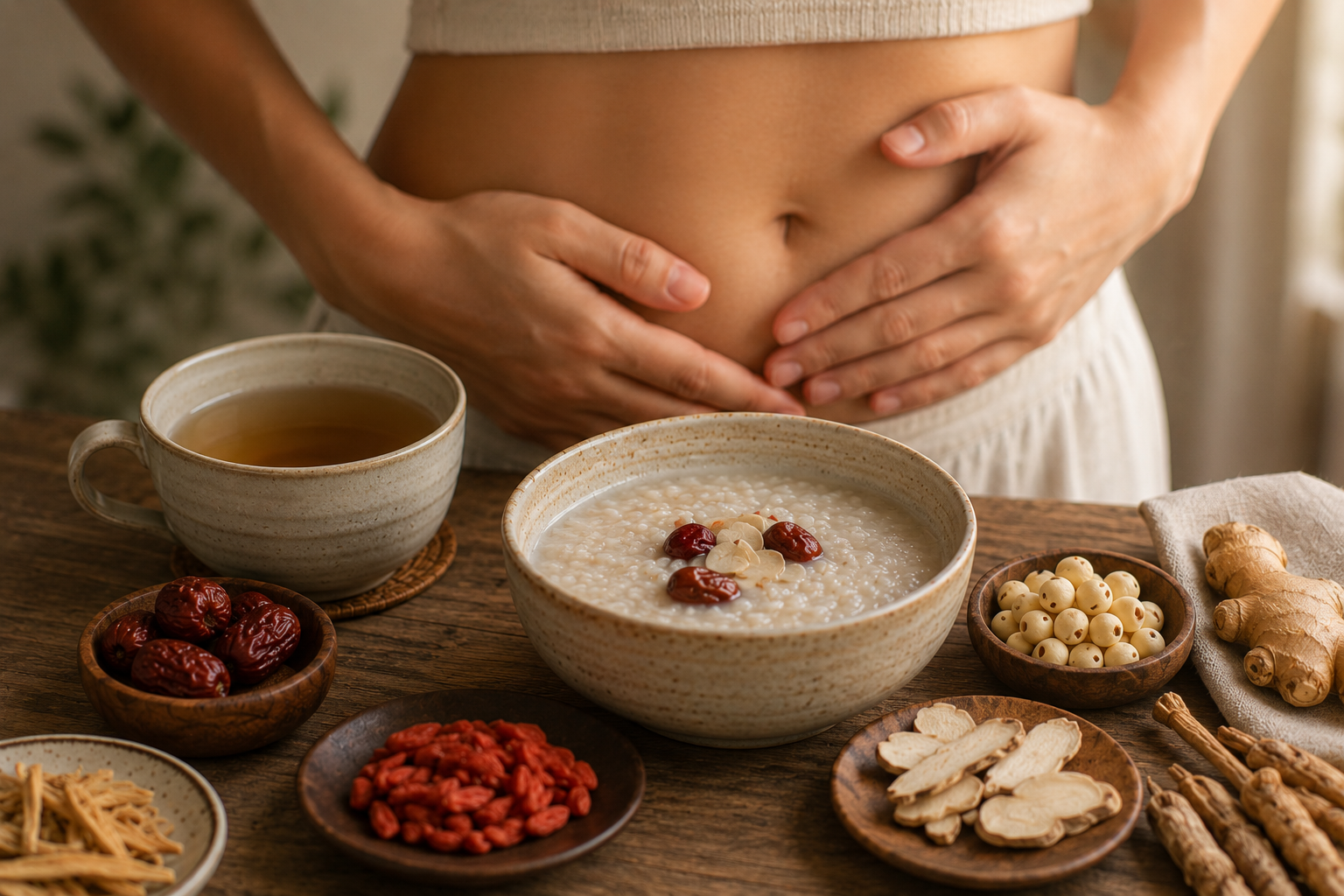
Ovulation: Move + Transform
This is the handoff.
Ovulation is a fascinating moment from a Chinese medicine perspective because the body is transitioning from the more Yin, building portion of the cycle into the more Yang, warming and holding portion.
Something has to move.
A follicle has matured. An egg needs to be released. Hormones are shifting. Cervical mucus changes. Your basal body temperature will soon rise.
This is where the Liver becomes particularly interesting in Chinese medicine.
The Liver is associated with the smooth movement of Qi and Blood. When that movement feels constrained, we may see patterns like significant bloating, irritability, breast tenderness, headaches, pelvic tension, or discomfort around ovulation.
Treatment around the fertile window is therefore often less about simply “adding more” and more about supporting the body through this transition.
We want things nourished—but we also want them moving.
Luteal Phase: Warm + Hold
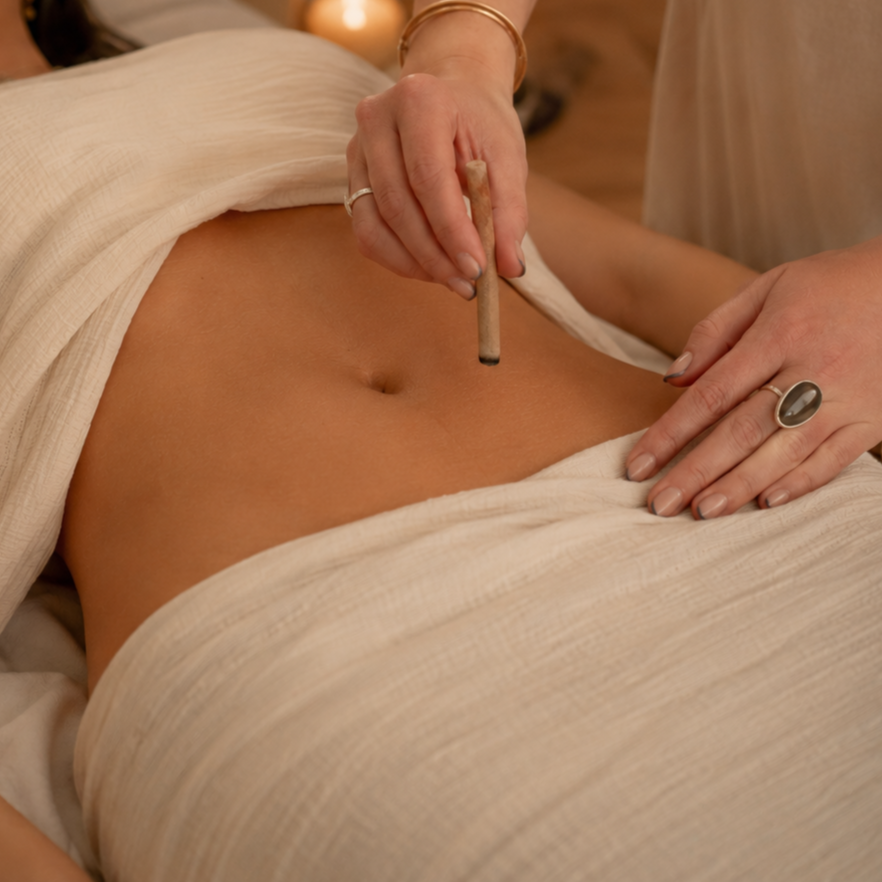
The egg has been released. Now the assignment changes again.
After ovulation, progesterone rises and the body enters the luteal phase.
In Chinese medicine, this is the more Yang portion of the cycle: warming, containing, and holding.
If conception has occurred, this is the earliest stage of an entirely new process. If it hasn't, the body is still preparing as though pregnancy could happen until the hormonal signals shift toward menstruation.
This phase can reveal its own set of patterns.
Premenstrual spotting, feeling unusually cold, significant PMS, breast tenderness, mood changes, bloating, sleep disruption, or a short luteal phase are all things I want to know about.
Depending on the person, treatment during this phase may focus more on supporting warmth, circulation, digestion, nervous-system regulation, and the body's ability to transition smoothly toward either implantation or the next menstrual cycle.
And again—the treatment isn't identical for everyone.
Two people can both be trying to conceive and need completely different support.
And Then There’s Stress...
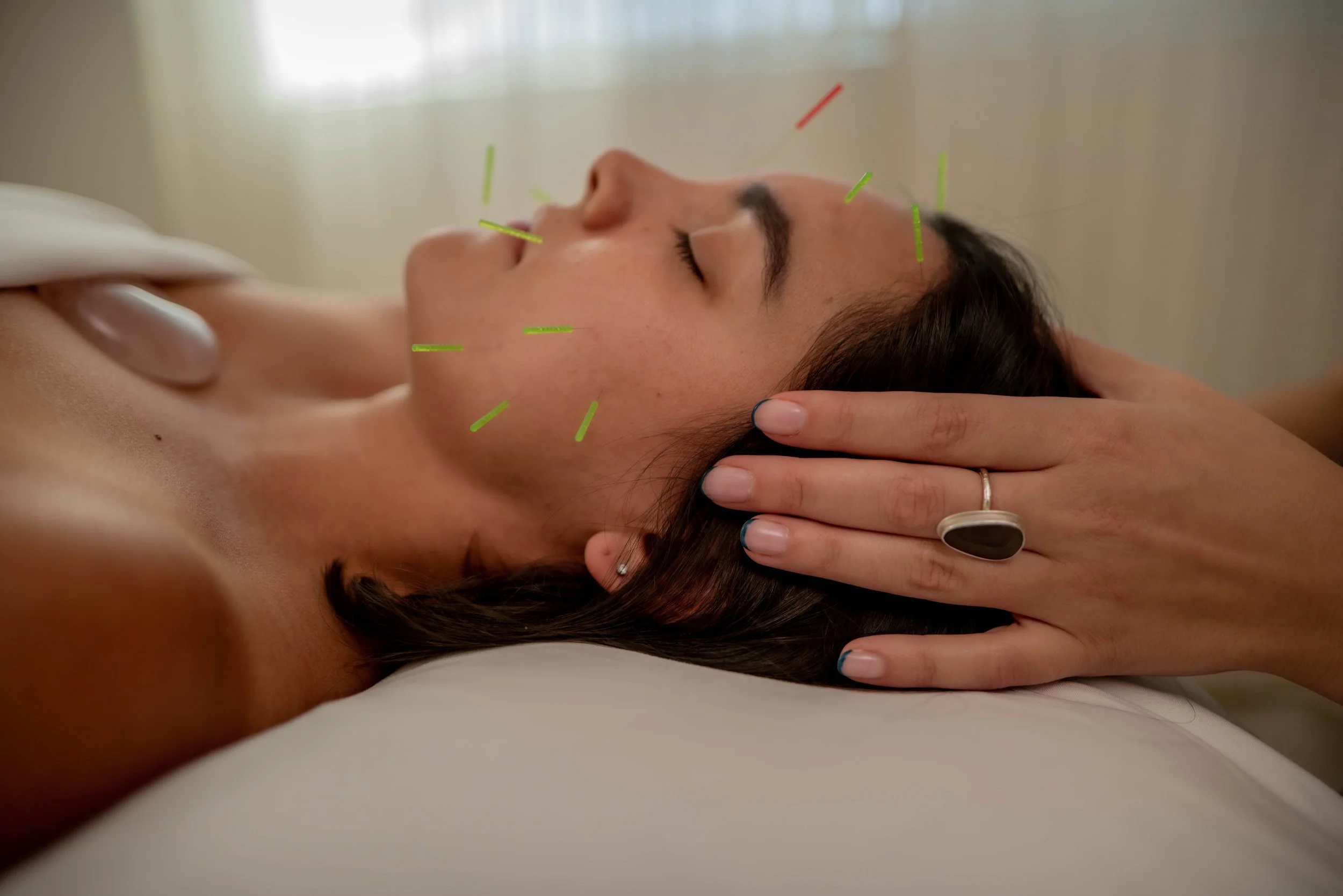
We need to talk about this one carefully.
If you’ve ever struggled with fertility, you've probably been told some version of:
“Just relax.”
No.
Stress is not a moral failing, and taking a bubble bath is not a fertility treatment.
But your reproductive system also doesn't exist independently from your nervous system.
The brain, stress-response system, and reproductive hormone signaling communicate with one another. Significant or chronic physiological stress can influence the hypothalamic-pituitary-ovarian axis involved in reproductive function.
Chinese medicine has its own language for these relationships. We often think about the Liver's role in maintaining smooth movement throughout the cycle, alongside the balance between the body's active, protective functions and its deeper nourishing resources.
This is one of the reasons acupuncture can fit so naturally into fertility care.
Sometimes the treatment goal isn't to force the reproductive system to do something.
It's to create a little more room for the body to do what it already knows how to do.
Fertility Acupuncture Shouldn't Be One-Size-Fits-All
There isn't one magical “fertility acupuncture protocol.”
At least, that's not how I practice.
Your treatment might change depending on where you are in your cycle, what your period looks like, whether you're ovulating regularly, your digestion, immune system, sleep, stress levels, temperature, cervical mucus, pain, spotting, headaches, energy, and the larger pattern your body is showing us.
Someone with a heavy, painful, clotty period and endometriosis shouldn't necessarily receive the same treatment as someone with a very light period, little cervical mucus, and a long follicular phase.
The goal is to treat the person having the cycle, not simply the cycle day written on the calendar.
So, When Should You Start Fertility Acupuncture?
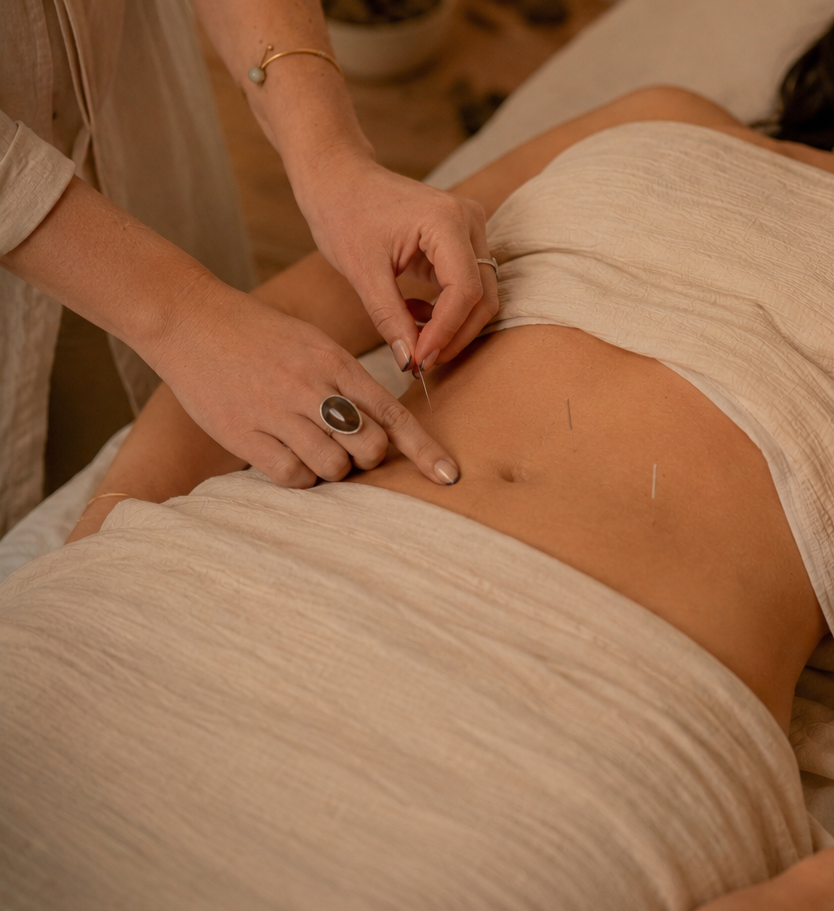
You don't need to wait until something is “wrong.”
Some patients start fertility acupuncture come in because they're preparing to start trying. Others have been trying for a while. Some are navigating endometriosis, PCOS, irregular cycles, painful periods, or other reproductive concerns. Others are preparing for IUI or IVF and want acupuncture to be one part of their broader care team.
If you have the luxury of planning ahead, giving ourselves several menstrual cycles can also give us something valuable:
time to learn your pattern.
We can see how your period behaves. When you tend to ovulate. What symptoms appear during particular phases. How your body responds to treatment. And what changes—or doesn't—from one cycle to the next.
Acupuncture isn't a guarantee of pregnancy, and fertility is far too complex to reduce to one treatment or one variable.
But it can offer a thoughtful, individualized way to care for your body throughout the process.
Your Cycle Is a Conversation
One of my favorite things about Chinese medicine is that it teaches us to stop looking at the menstrual cycle as something that either “works” or “doesn't.”
Your cycle is giving us information all month long.
Your period tells us something.
Your follicular phase tells us something.
Ovulation tells us something.
Your luteal phase tells us something.
And when we start putting those pieces together, we get a much richer picture of your reproductive health than a single ovulation test could ever provide.
At Ritual House, fertility acupuncture is about learning that rhythm, supporting your body through each phase, and creating a treatment plan that evolves with you—cycle by cycle.
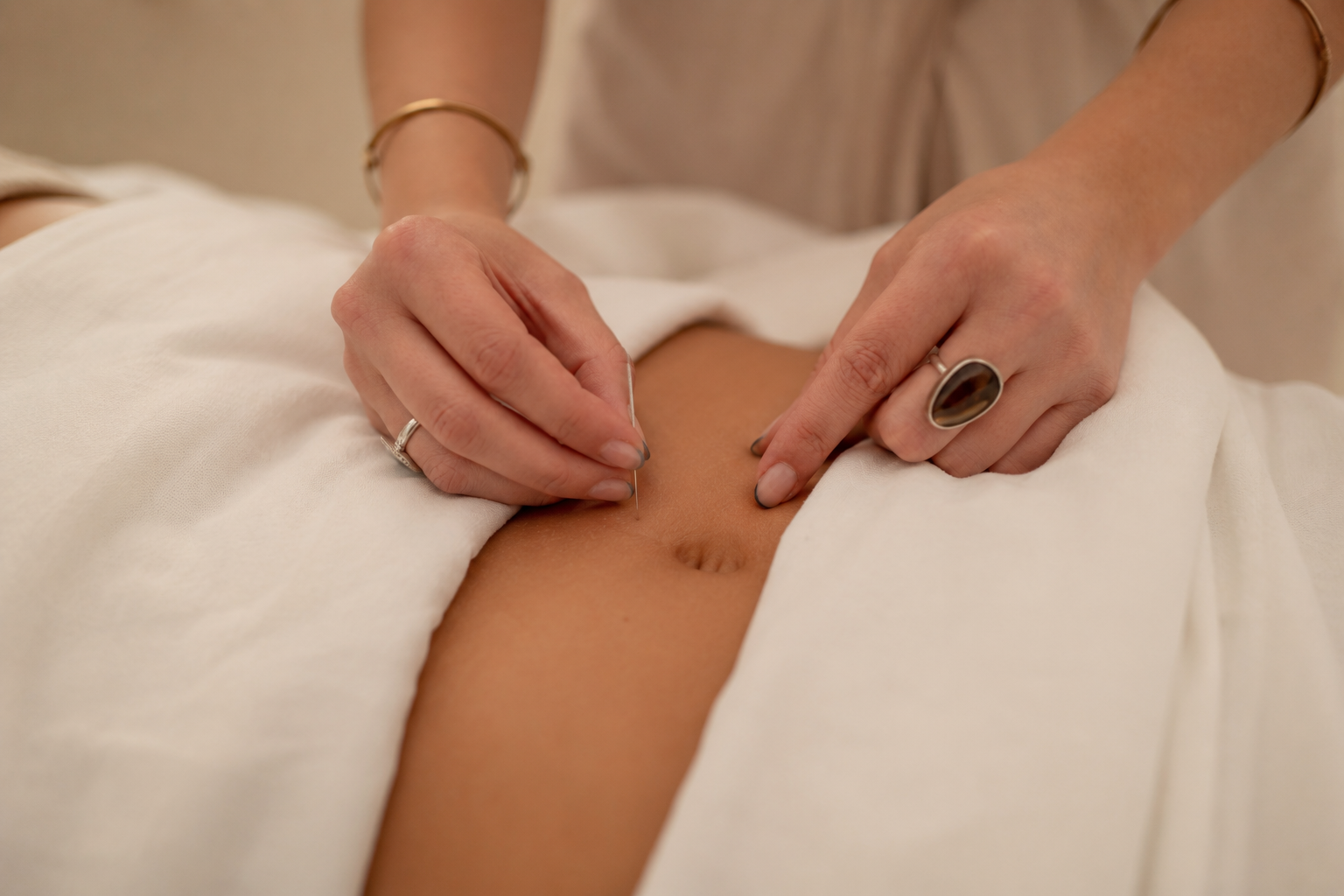
Trying to conceive or preparing your body for pregnancy?
Explore Women’s Wellness + Fertility Acupuncture at Ritual House in Montrose, Los Angeles, or book an initial acupuncture consultation to begin.