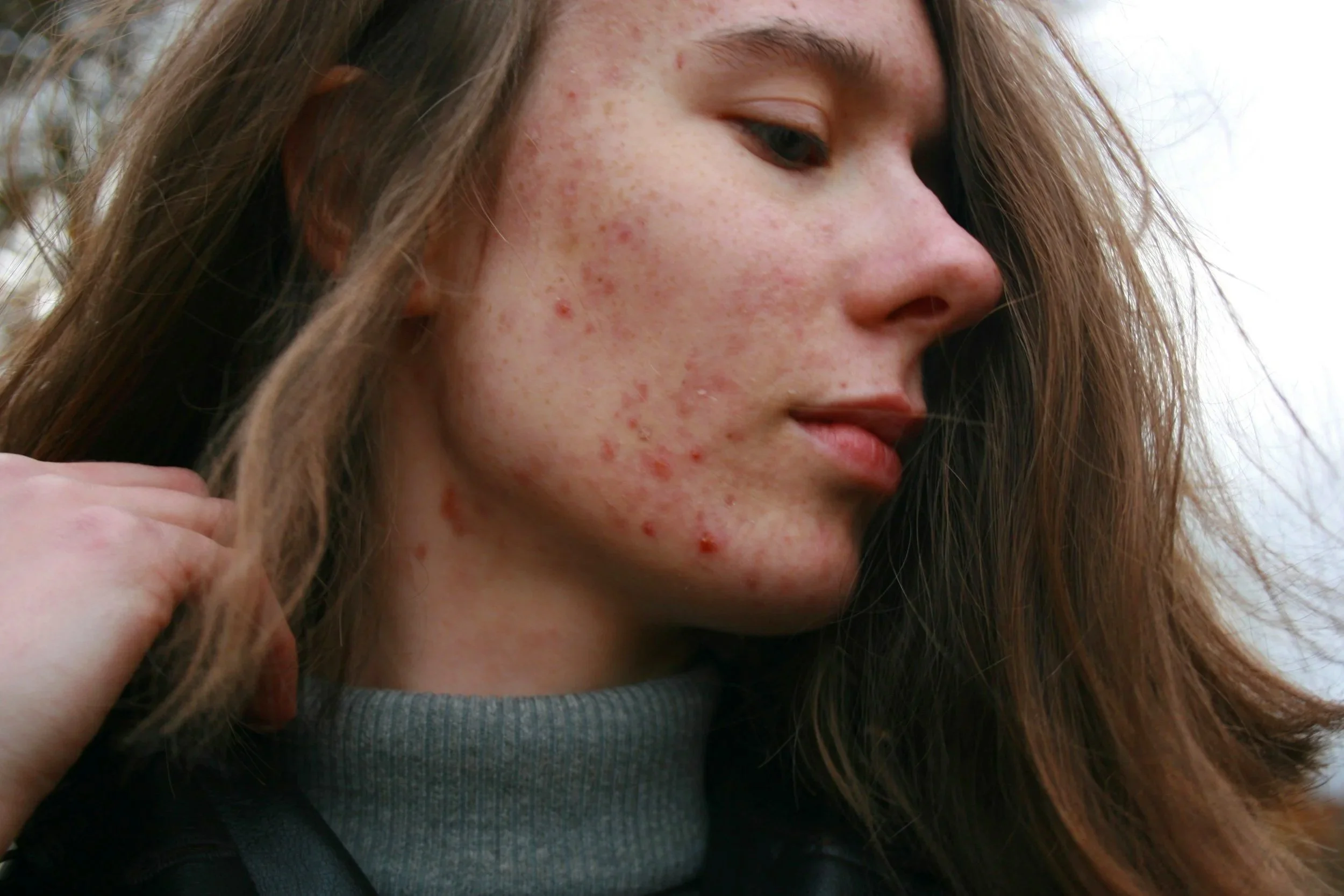
Let's talk about those breakouts.
The ones that show up like clockwork right before your period. The deep, tender, under-the-skin situation along your chin and jawline that no spot treatment seems to touch. The ones that leave you wondering, “Is this just my hormones?”
Well, your hormones may have something to do with it. But the story is a little more interesting than that.
Hormonal breakouts don't necessarily mean your hormones are imbalanced. Sometimes, it's about how your skin responds to perfectly normal hormonal fluctuations.
And while conventional dermatology looks at the relationship between hormones, oil production, and inflammation, Chinese medicine invites us to zoom out.
What else is happening in your body when these breakouts appear? Are you also experiencing PMS, bloating, irritability, or painful periods?
Because your skin doesn't exist in isolation. And those recurring breakouts might be part of a much bigger picture.
Why Do Hormonal Breakouts Happen?
Your skin is surprisingly responsive to the hormonal shifts happening throughout your menstrual cycle.
Estrogen, progesterone, and androgens all play roles in skin physiology. Androgens, in particular, stimulate the sebaceous glands responsible for producing sebum, your skin's natural oil.
As hormone levels fluctuate throughout the month, changes in oil production and inflammatory activity may contribute to clogged pores and breakouts, particularly in the days leading up to menstruation.
But here's where it gets interesting.
Two women can experience the same premenstrual jawline breakouts for very different reasons.
One might notice acne alongside breast tenderness, irritability, and menstrual cramps. Another might experience breakouts with digestive complaints, fatigue, or irregular cycles.
These symptoms don't necessarily share a single hormonal cause. But in Chinese medicine, they provide valuable context for understanding an individual's overall pattern.
Rather than diagnosing a hormonal imbalance based on where a pimple appears, we look at the timing, characteristics, and accompanying symptoms.
And that's where Chinese medicine offers a different way of looking at your skin.
The Chinese Medicine Perspective: What Your Breakouts Might Be Telling You
In Chinese medicine, we don't just look at where a breakout appears. We look at when it appears, what it looks and feels like, and what else is happening in your body.
Because two women with nearly identical jawline breakouts might have very different underlying patterns.
One might experience tender, inflamed blemishes alongside breast tenderness, irritability, and painful periods. Another might notice persistent congestion, digestive bloating, fatigue, or changes in her menstrual flow.
Same skin concern. Different clinical picture.
Traditional Chinese Medicine uses a system called pattern differentiation, which considers the relationships between Qi, Blood, Yin, Yang, and organ systems such as the Liver, Spleen, and Kidneys.
These organ systems aren't simply references to their Western anatomical counterparts. They describe functional relationships within the traditional Chinese medicine framework.
For example, the Liver is traditionally associated with the smooth movement of Qi and the regulation of emotional and menstrual rhythms. When that movement becomes constrained—a pattern known as Liver Qi stagnation—we might see symptoms such as premenstrual breast tenderness, irritability, bloating, or menstrual discomfort alongside cyclical breakouts.
But not every hormonal breakout points to Liver Qi stagnation.
Depending on the complete clinical picture, we might also consider patterns involving Damp-Heat, Blood stagnation, or Yin deficiency.
The goal isn't to diagnose your internal health from the location of a pimple. It's to understand the pattern of symptoms that makes your experience unique.
Let's take a closer look at some of the patterns I consider when treating women with recurring breakouts.
The Jawline Drama: Liver Qi Stagnation
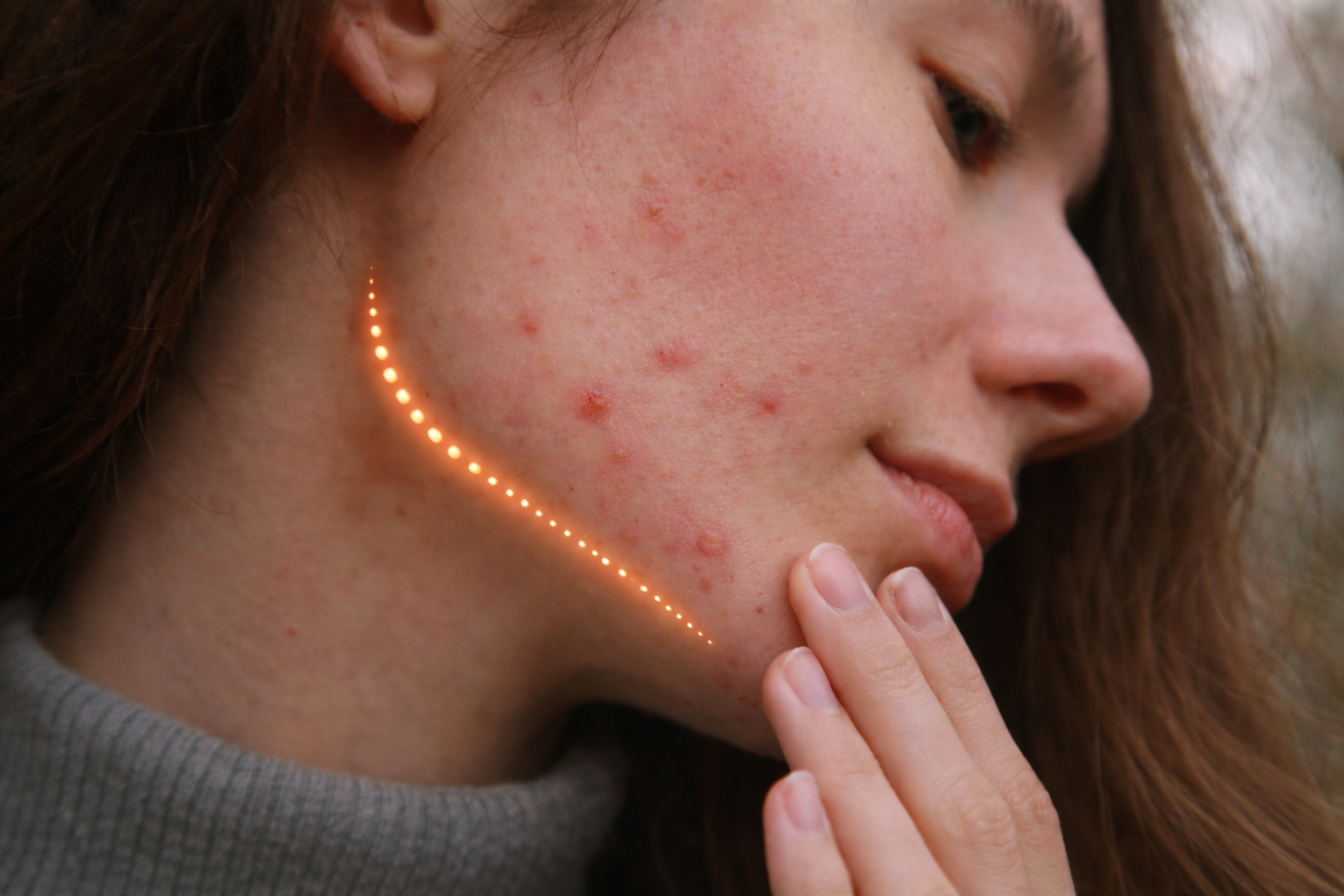
If your acne flares 3–7 days before your period, chances are we’re looking at Liver Qi stagnation turning into heat.
In TCM, the Liver is in charge of keeping things moving — emotionally, hormonally, energetically. When stress builds (hello, modern life), Qi gets stuck.
Stuck Qi creates friction.
Friction creates heat.
Heat rises.
And where does it go? Upward. To the face.
Classic signs:
Jawline or chin breakouts
Deep, tender cysts
PMS mood shifts
Breast tenderness
Bloating
This isn’t random. The jawline maps to the hormonal axis in facial diagnosis.
Root issue: Stagnation.
What you see: Red, inflamed, painful acne.
Your skin isn’t misbehaving. It’s venting.
Oily, Congested, Can’t-Catch-a-Break Skin? Think Damp-Heat.
If your breakouts are deep, cystic, and paired with oiliness or congestion, TCM might call this Damp-Heat.
Translation: your internal terrain feels heavy and inflamed.
When the Spleen (your digestive and fluid-transforming powerhouse) gets overwhelmed — from stress, sugar, irregular eating, or overthinking — fluids don’t metabolize efficiently. Dampness builds.
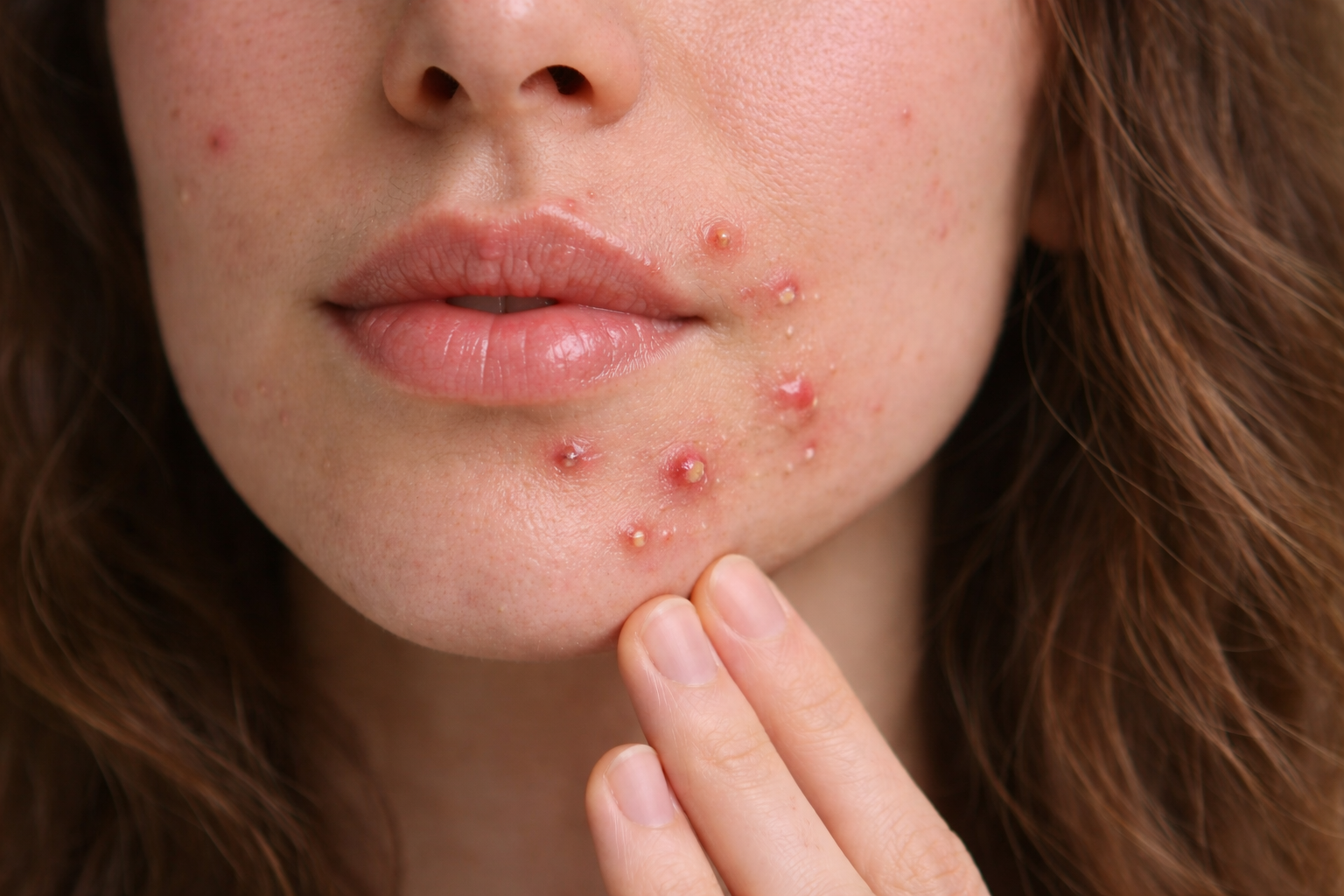
Add heat to the mix, and now you have thick, inflammatory congestion that shows up as:
Persistent cystic acne
Oily skin
Breakouts around the mouth and chin
Sluggish digestion
A heavy, foggy feeling
This isn’t just about clogged pores. It’s about internal congestion looking for an exit.
Digestion and skin are more connected than we often realize.
→ Read: Beauty Begins in the Belly: What the Spleen Teaches Us About Skin, Hormones & Vitality
The Plot Twist: Dry Skin That’s Still Breaking Out
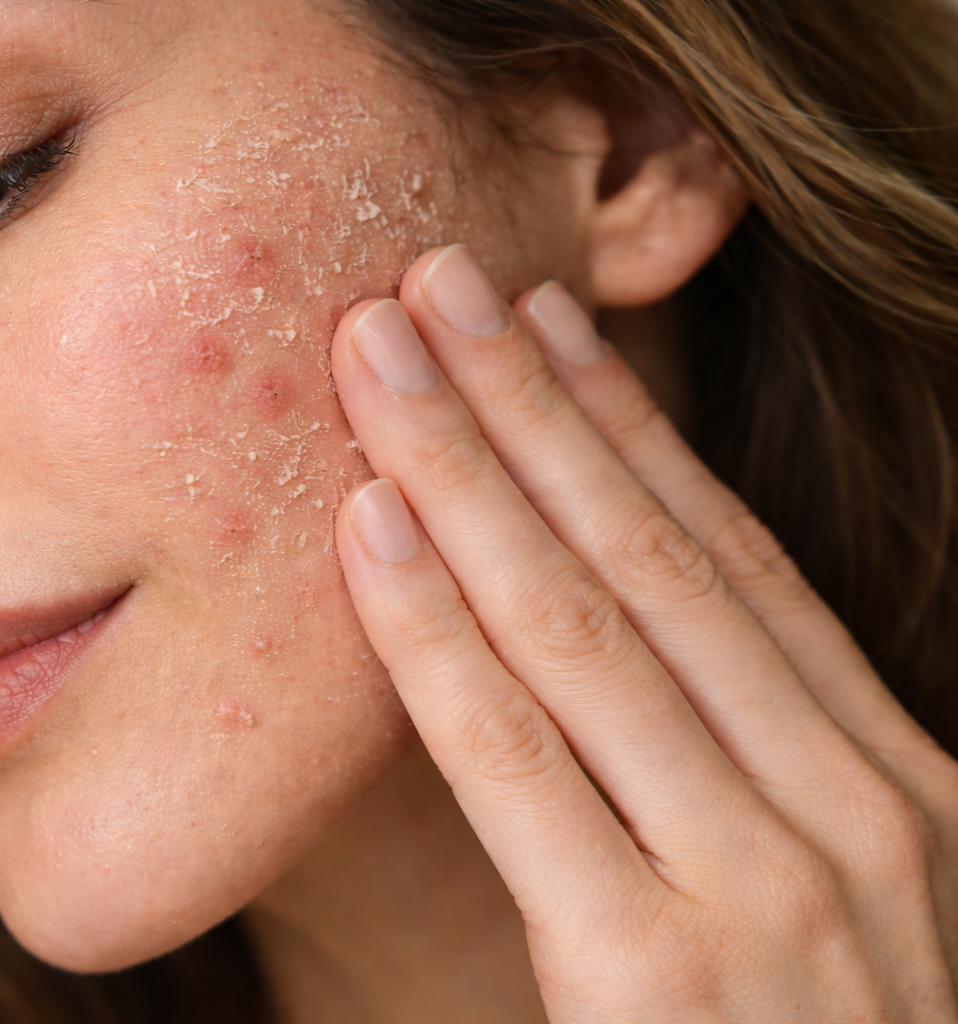
If you’re in perimenopause, postpartum, or just plain exhausted, and you’re breaking out and feeling dry — we may be looking at Yin deficiency with empty heat.
Yin is your cooling, moistening, nourishing reserve. When it’s depleted, heat rises without being anchored.
You might notice:
Acne with dryness
Sensitive, reactive skin
Night sweats
Restless sleep
Fine lines paired with inflammation
It can look oily on the surface, but underneath? Depletion.
This is where more drying products make things worse — not better.
When Breakouts Linger: Blood Stagnation
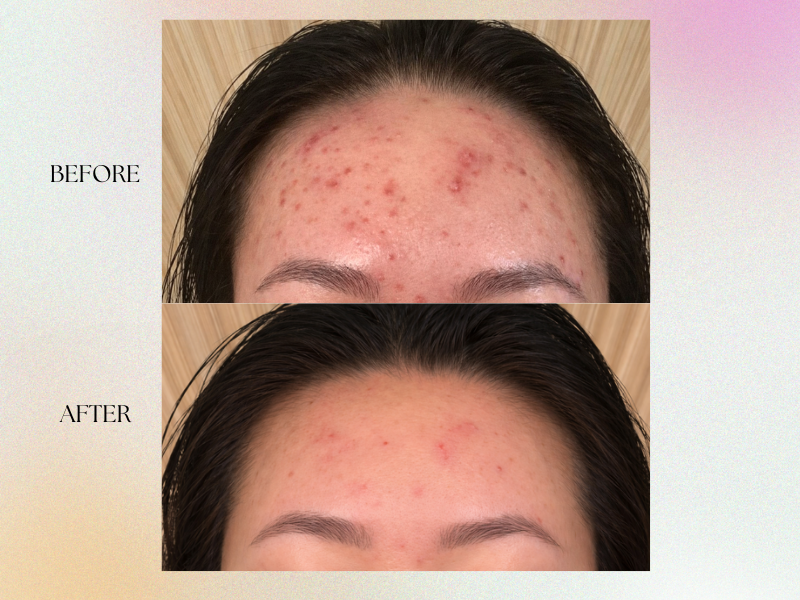
If your acne leaves behind dark marks, takes forever to heal, or seems to scar easily, we’re often looking at Blood stagnation.
In TCM, Blood isn’t just literal blood — it represents nourishment, circulation, and tissue repair. When Blood isn’t moving well, inflammation hangs around longer than it should.
You might notice:
Post-acne dark spots that linger for months
Purplish or deep red blemishes
Breakouts that feel “stuck” under the skin
Slow healing after cystic acne
Think of it like traffic that never clears. The initial inflammation may have passed, but the debris is still sitting there.
This is why simply drying out a breakout doesn’t prevent marks or scarring.
When we focus on moving Blood — through acupuncture, microneedling, facial cupping, or targeted circulation work — we’re encouraging the skin to complete the healing cycle.
Not just suppressing the fire.
But clearing what’s left behind.
Here’s what that can look like when we focus on restoring circulation and resolving stagnation:
Does Jawline Acne Always Mean a Hormonal Imbalance?
Not necessarily.
While breakouts around the chin and jawline are commonly associated with adult female acne, their location alone can't tell us whether your hormones are out of balance.
Hormonal fluctuations, genetics, skin sensitivity, inflammation, and other factors can all contribute to breakouts.
What I find more interesting is the timing.
Do your breakouts consistently appear before your period? Are they accompanied by breast tenderness, bloating, headaches, or changes in your menstrual cycle?
In Chinese medicine, these details help build a more complete picture of your individual pattern.
Because where a breakout appears is only one piece of the puzzle.
Let’s Reframe This
Hormonal acne is not your body betraying you.
It’s communication.
It may be saying:
Slow down
Move your stress
Support digestion
Nourish your reserves
Regulate your nervous system
In Chinese Medicine, we don’t attack the skin. We restore flow.
That might look like:
Acupuncture to regulate the Liver, Chong, and Ren
Facial acupuncture to increase circulation
Lymphatic facial massage to reduce congestion
Strengthening digestion to prevent Dampness
Supporting Yin so heat has somewhere to settle
Herbal Remedies to drain lymphatic congestion and clear heat
Because when Qi moves, heat softens.
When fluids transform, congestion clears.
When Yin anchors Yang, inflammation calms.
Clear skin isn’t forced.
It’s regulated.
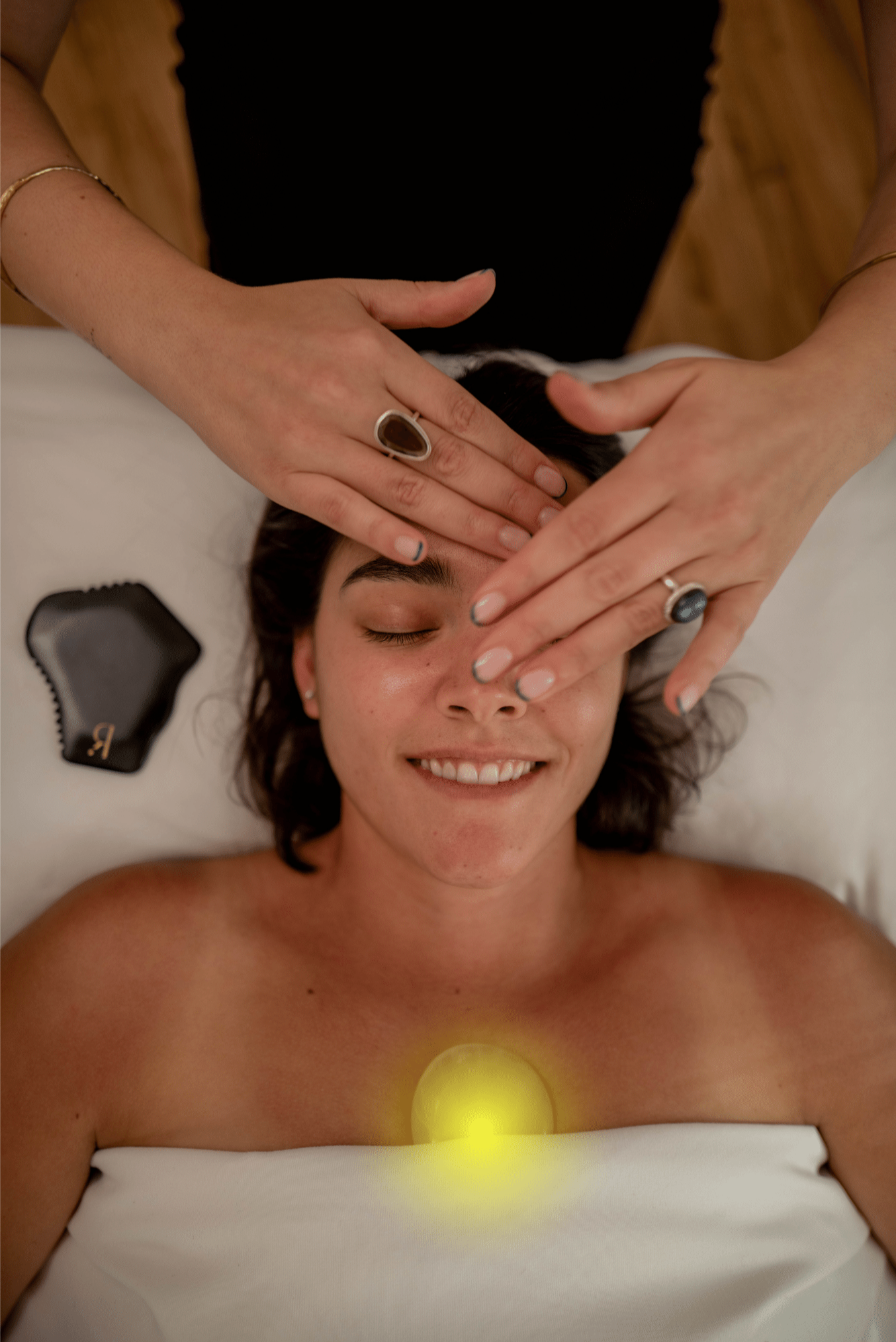
Your Skin Is Part of a Bigger Conversation
Your skin doesn't exist in isolation. It's influenced by your hormones, your environment, your lifestyle, and the many changes happening throughout your menstrual cycle.
And while not every breakout signals an underlying imbalance, recurring patterns are worth paying attention to.
At Ritual House, we take a more comprehensive approach to women's health. Rather than focusing on a single symptom, we look at the bigger picture—your cycle, digestion, sleep, stress, and the subtle patterns that make your experience unique.
Through individualized acupuncture, Chinese herbal medicine when appropriate, and thoughtful lifestyle guidance, we work to support your overall well-being while addressing the concerns that brought you in.
Because sometimes, understanding your skin starts with understanding your body.
Ready to look beyond the breakout?
Explore Women's Wellness Acupuncture at Ritual House and discover a more personalized approach to your health.

About the Author
Jessica Mkrtchyan is a licensed acupuncturist, Chinese medicine herbalist, and founder of Ritual House Acupuncture & Apothecary in Montrose, California. Specializing in women's health, hormonal wellness, and holistic facial rejuvenation, she blends traditional Chinese medicine with modern insights into skin health, healthy aging, and the mind-body connection.
Her approach is rooted in a simple philosophy: Your body isn't something to fight against. It's something to understand.