How Chinese medicine and acupuncture can support you through changing periods, hot flashes, sleep disruption, mood shifts + the hormonal plot twist no one properly warned you about.
Maybe your period suddenly has a mind of its own. It comes early. Then late. Then very heavy. Then barely at all.
You’re waking up at 3 a.m. for absolutely no reason. Your patience has mysteriously disappeared. You're running hotter than you used to. Your skin is changing. Your libido is… somewhere.
And you keep thinking: Wait. Is this perimenopause?
Possibly. And no—you don’t have to be in your 50s or have stopped getting your period for your hormones to start changing.
Welcome to the hormonal plot twist that is perimenopause.
First: What Exactly Is Perimenopause?
Perimenopause is the transition leading up to menopause. Menopause itself marks the end of menstrual periods, but that transition doesn't happen overnight. In the years leading up to it, ovarian hormone production becomes more variable, ovulation may become less predictable, and your menstrual cycle can start behaving very differently than it used to.
For some women, the transition is relatively uneventful. For others? The body gets loud.
Symptoms can include changing cycle length, heavier or lighter periods, skipped periods, hot flashes, night sweats, disrupted sleep, mood changes, brain fog, changes in energy and libido, vaginal dryness or discomfort, and urinary changes.
One of the confusing things about perimenopause is that these symptoms can initially seem completely unrelated. Your weird period, 3 a.m. wake-up, sudden anxiety, vaginal dryness, and inability to tolerate anyone chewing loudly may actually be arriving during the same reproductive transition.
It’s Not Just Hot Flashes
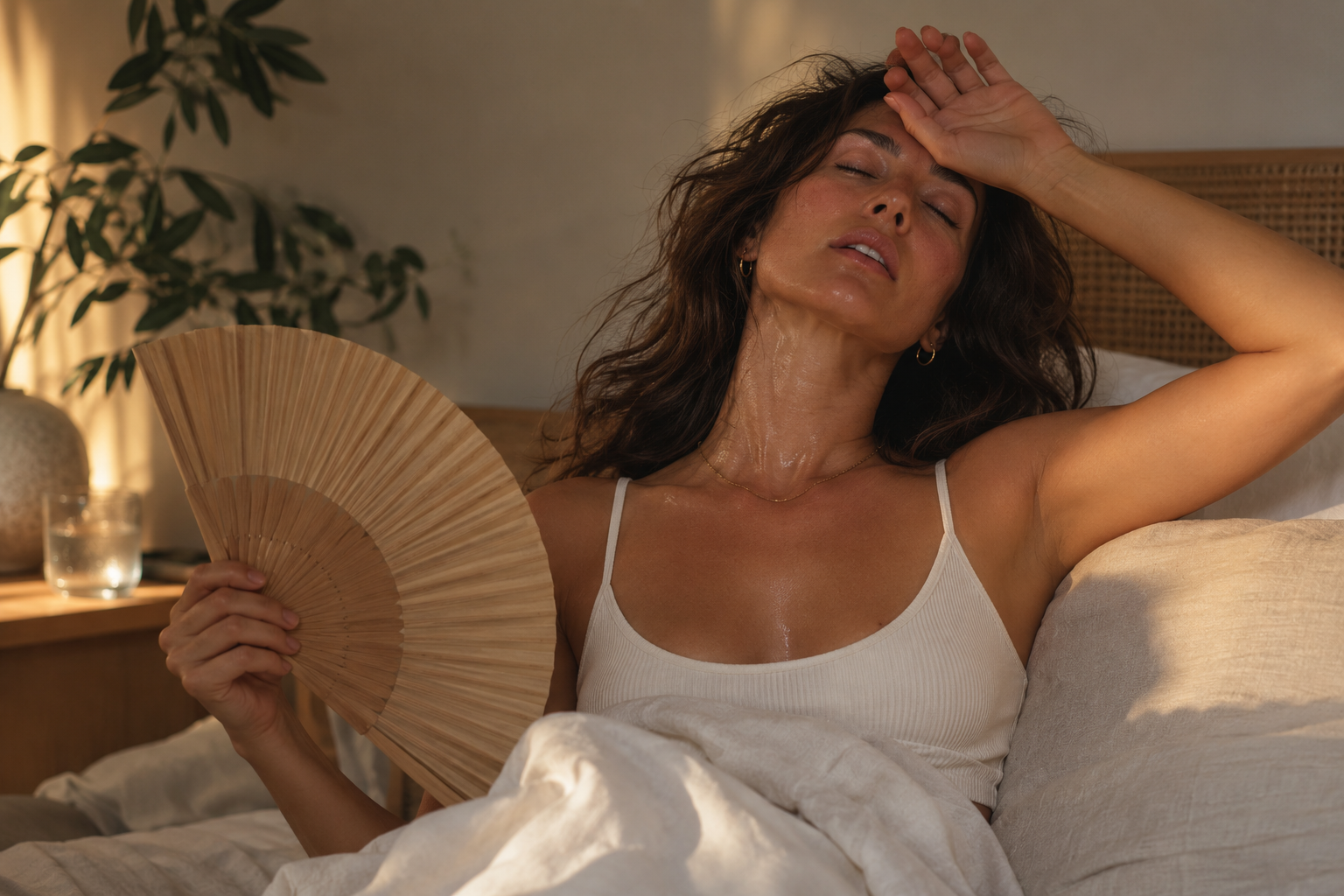
Perimenopause has a branding problem. We hear menopause and immediately think: hot flashes.
And yes, hot flashes and night sweats can absolutely be part of the picture. But the hormonal transition can show up in much quieter ways. Maybe your sleep suddenly falls apart. Maybe anxiety feels louder than it used to. Maybe your libido changes, sex becomes uncomfortable, or you start experiencing vaginal or urinary symptoms you've never dealt with before. Maybe your mood feels less predictable—or you simply don't feel quite like yourself.
Then there is everything happening outside your hormones.
For many women, perimenopause overlaps with an already very full chapter of life: careers, relationships, parenting, caregiving, aging parents, changing bodies, shifting priorities, and approximately zero interest in tolerating things you used to tolerate.
Hormones don't exist in a vacuum. Neither do you.
That's why I want to know what changed, when it changed, what else is happening in your life, how you're sleeping, what your periods are doing, how your digestion feels, and which symptoms tend to travel together. Sometimes the pattern tells us much more than one symptom ever could.
Chinese Medicine Calls It a “Second Spring”

One of my favorite things about the Chinese medicine perspective on perimenopause is that this transition isn't viewed simply as the end of your reproductive years. It can also be understood as the beginning of a “Second Spring”—a new season of life.
Rather than looking at menopause as something going wrong, Chinese medicine recognizes that the body's priorities are changing. The resources that have supported menstruation and reproduction for decades begin to shift as you move into a different phase of life. The goal isn't to turn the clock backward or make your body behave like it did at 28. It's to support the body as it moves forward into something new.
Of course, the road into your Second Spring can still be a little chaotic. Hot flashes, strange periods, insomnia, anxiety, dryness, fatigue, irritability, brain fog—or somehow feeling hot one minute and cold the next—can all become part of the transition.
This is also where Chinese medicine gets particularly interesting, because there isn't one single perimenopause pattern. Two women can walk into Ritual House at the exact same stage of life and experience it completely differently.
One may be waking drenched in sweat at 3 a.m., feeling dry, restless, and overheated. Another may feel exhausted, cold, puffy, and suddenly be dealing with heavier periods. Someone else may feel physically pretty good but tell me, “I don't know what's happening—I suddenly feel anxious, irritable, and I cannot sleep.”
All three may be experiencing perimenopause, but from a Chinese medicine perspective, they aren't necessarily experiencing the same underlying pattern. And I wouldn't treat them as though they are.
That's why I want to know the whole picture: Are you running hot or cold? What are your periods doing? How are you sleeping? Has your digestion changed? Are you feeling more anxious, wired, depleted, irritable, or exhausted? What changed first, and which symptoms seem to show up together? Your tongue and pulse provide additional information about how your body is navigating the transition.
Perimenopause tells us which season you're entering. Your individual pattern helps us understand what you may need along the way.
The Kidney Connection
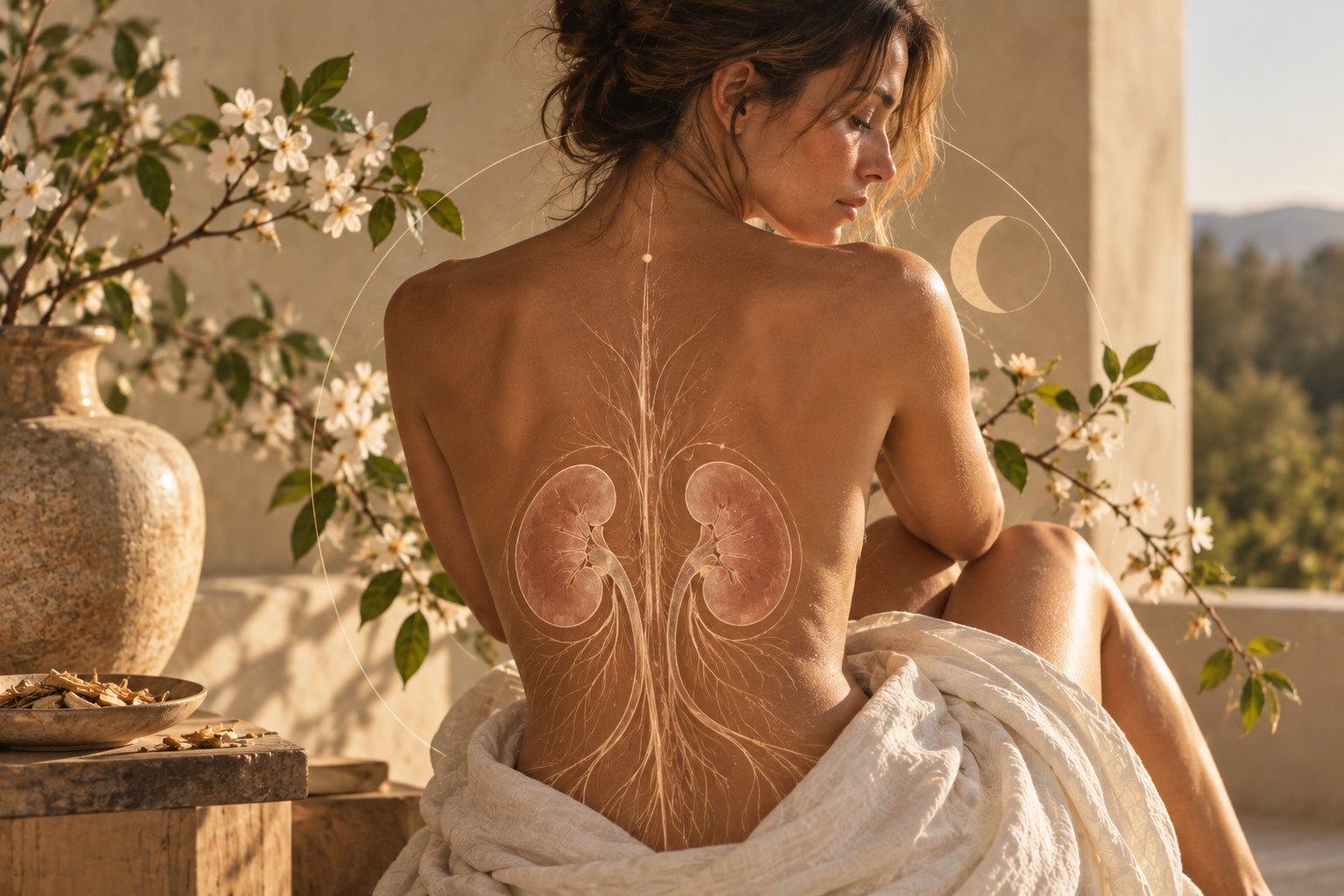
In Chinese medicine, reproductive development and aging are closely associated with the Kidney system and Jing, or Essence. And no—we aren't talking only about your anatomical kidneys.
Think of Kidney Essence more like the body's deep constitutional reserve: a traditional concept associated with growth, development, reproduction, and aging. As we move through different stages of life, that reproductive landscape naturally changes.
This is another reason I don't view perimenopause as something your body is doing wrong. We're not trying to prevent menopause from happening. Instead, we're asking: How can we support the body as it moves through this transition?
That distinction matters.
Hot Flashes + Night Sweats: When the Thermostat Gets Weird
One minute you're completely comfortable. The next?
Why is it suddenly 900 degrees in here?
Hot flashes and night sweats are known as vasomotor symptoms and are common during the menopause transition. Chinese medicine describes these experiences through a different framework.
One pattern we may see involves declining Yin. Yin is traditionally associated with cooling, moisture, nourishment, and rest. When that cooling and nourishing influence becomes relatively insufficient, signs of heat may become more noticeable. That might look like waves of heat, night sweating, dryness, restlessness, waking during the night, or somehow feeling exhausted and wired at the same time.
But not every woman having hot flashes has the same Chinese medicine pattern. Stress, sleep, digestion, menstrual changes, and the rest of the presentation matter too.
That's why I don't use a predetermined “menopause protocol.” Treatment is based on what your body is actually showing us.
Welcome to the 3 A.M. Club
One of the complaints I hear all the time is: “I can fall asleep. I just can't stay asleep.”
Maybe you wake up hot or sweaty. Maybe your heart feels like it's racing. Or maybe your eyes simply open and your brain decides now is the ideal time to review everything you've ever done.
Sleep disruption is common during the menopause transition, and night sweats can make an already fragile night of sleep even harder. From a Chinese medicine perspective, I'm also interested in how your sleep is disrupted. Difficulty falling asleep gives me different information than waking repeatedly. Waking hot and sweaty tells me something different than waking anxious.
“Bad sleep” isn't one symptom in Chinese medicine. It's a conversation.
And while acupuncture may be one piece of the plan, sometimes the least glamorous interventions matter too: a cooler bedroom, a real wind-down period instead of answering emails until your head hits the pillow, regular movement, eating enough during the day, and paying attention to alcohol—especially if you've noticed that your glass of wine makes your sleep or night sweats noticeably worse.
None of this is particularly sexy wellness advice. It is, however, often worth talking about.
And Then There Are the Periods…
This is where perimenopause can get especially confusing. You're moving toward menopause, but you're still cycling.
A period that was once predictable may become shorter, longer, heavier, lighter, closer together, or farther apart. And because Chinese medicine already pays close attention to the menstrual cycle, these changes give us useful information about how your individual transition is unfolding.
I want to know: How often are you bleeding? How heavy is it? Has the color changed? Are there clots, pain, or spotting? Has PMS changed? Are your breasts suddenly more tender? Are symptoms appearing at a different point in your cycle than they used to?
The menstrual cycle has always given us information. During perimenopause, that information is simply changing.
It's also why I don't think of women's health as two completely separate categories called fertility and menopause. They're different chapters of the same reproductive story.
→ Read: Acupuncture for Fertility: How Chinese Medicine Supports Each Phase of Your Menstrual Cycle
Irritability, Anxiety + the “Why Is Everyone Annoying Me?” Phase
We need to talk about mood, because sometimes the first clue isn't a hot flash. It's suddenly having zero tolerance for nonsense.
Mood changes, anxiety, and irritability can occur during the menopause transition. And if you're also sleeping poorly, running hot, juggling stress, and generally feeling unlike yourself, those things don't necessarily exist separately from one another.
Chinese medicine pays close attention to emotional stress as well. The Liver is traditionally associated with the smooth movement of Qi. When that movement becomes constrained, the pattern may include irritability, tension, headaches, breast tenderness, digestive changes, feeling emotionally stuck, or difficulty winding down.
Then add work, relationships, caregiving, aging parents, financial stress, changing roles, and the general reality of being a human being in midlife. There can be a lot happening at once.
That's why I don't love reducing someone's experience to: “It's just your hormones.”
Hormones are part of the picture. But you are the picture.
Where Did My Sex Drive Go?
Libido can change during perimenopause, but it's rarely as simple as my estrogen changed, therefore I don't want sex.
Sleep deprivation doesn't exactly make anyone feel seductive. Neither do stress, exhaustion, vaginal dryness, discomfort during sex, changes in arousal, mood changes, relationship dynamics, or simply having approximately 47 things running through your brain at any given moment.
Some women notice less spontaneous desire. Some notice changes in physical arousal or lubrication. Some experience pain or discomfort. Others don't experience a major decline at all.
A change in libido also doesn't mean a satisfying sex life is over.
If vaginal dryness, burning, urinary symptoms, or pain with sex are showing up, I want you talking to your gynecologist too. These symptoms deserve attention, and treatment options are available. You don't simply have to accept discomfort as the price of getting older.
Your Bladder May Join the Conversation Too
This one catches a lot of women by surprise. Changes associated with the menopause transition can affect not only the vagina and vulva but also the urinary tract.
You may notice vaginal dryness or irritation, discomfort during sex, urinary urgency or frequency, or recurrent urinary tract infections. These symptoms are often discussed under the umbrella of genitourinary syndrome of menopause (GSM).
New or persistent vaginal and urinary symptoms deserve a conversation with your medical provider, particularly if you're experiencing pain, bleeding, or recurrent infections. Acupuncture doesn't replace that evaluation.
This is one of those moments where integrative care really matters.
Digestion Still Matters. A Lot.
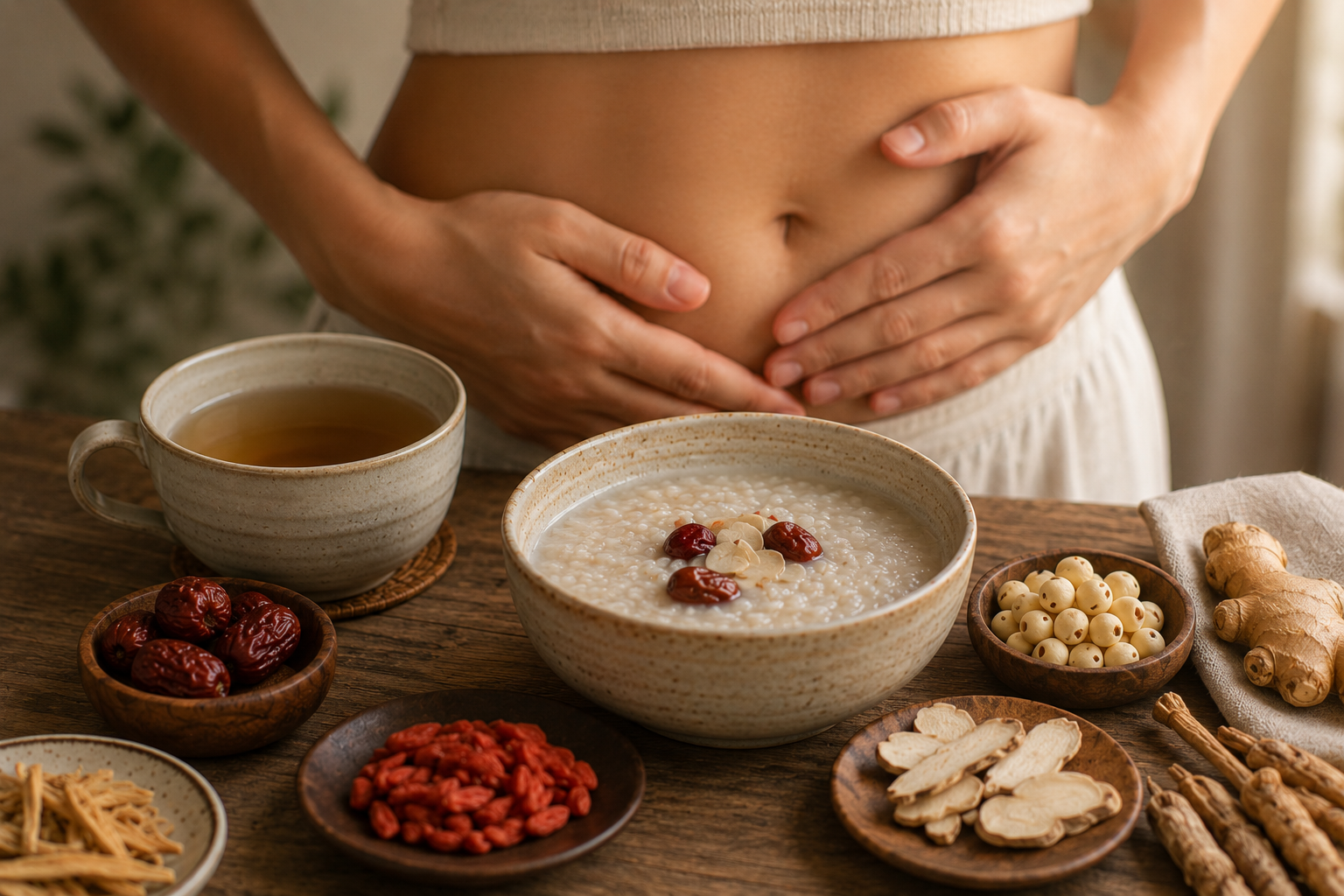
If you've spent any time around Ritual House, you knew I was going to bring up digestion eventually.
In Chinese medicine, the Spleen and Stomach are central to transforming food into the Qi and Blood used to nourish the body. Digestion plays a much bigger role in Chinese medicine than simply whether or not your stomach feels good.
Are you eating enough? Are you getting adequate protein? Are you eating plants and fiber regularly? Are you skipping breakfast and surviving on coffee? Are you bloated after meals? Are you constipated? Are you craving sugar because you're exhausted? How is your appetite?
Perimenopause isn't the time I want someone trying to survive on caffeine, salads, and vibes.
Nourishment doesn't have to be complicated. Think regular meals, adequate protein, plenty of plants and fiber, healthy fats, omega-3-rich foods, and enough food overall.
In other words, we're building a well-nourished body—not chasing the perfect “hormone-balancing” diet.
And from a Chinese medicine perspective, I care about how you're digesting that food too. The world's most perfect nutrition plan isn't particularly useful if you're constantly bloated, constipated, skipping meals, or too stressed to eat.
Movement, Stress + the Boring Things That Actually Matter
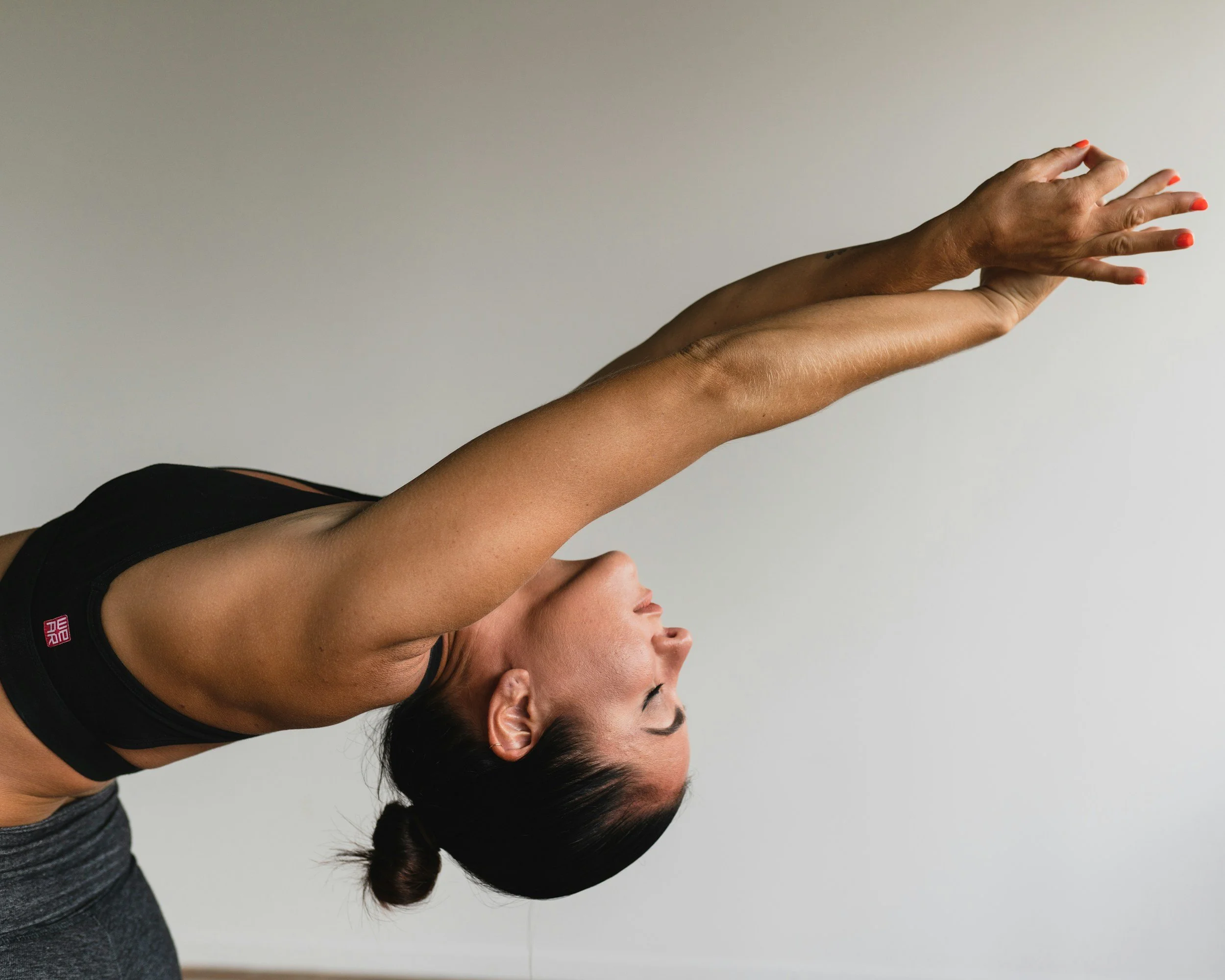
There is no single lifestyle hack that makes perimenopause disappear. But the foundational things still matter.
Regular movement supports cardiovascular, metabolic, musculoskeletal, and mental health as we age. Strength training becomes particularly valuable as we think about maintaining muscle and bone. Sleep matters. Nourishment matters. Stress matters. And alcohol may affect you differently than it did ten years ago.
This is where I think the wellness world occasionally gets it wrong: you do not need another 17-step morning routine.
Sometimes supporting your body means getting outside for a walk, eating an actual lunch, lifting something heavy a few times a week, turning the temperature down at night, and giving your nervous system a chance to realize the day is over.
Simple doesn't mean insignificant.
So… Can Acupuncture Help Perimenopause?
This is where acupuncture can become a really supportive part of the conversation.
Perimenopause rarely arrives as one neat, isolated symptom. You may be dealing with disrupted sleep, hot flashes, headaches, anxiety, digestive changes, tension, fatigue, changing periods—or some unpredictable combination of all of the above.
And that's exactly why I like acupuncture during this stage of life. Rather than using the same “perimenopause protocol” for everyone, treatment is individualized around what your body is actually doing right now.
Maybe sleep is the thing unraveling everything. Maybe hot flashes and night sweats are your biggest complaint. Maybe your periods have become heavier and more uncomfortable. Maybe you're feeling wired, anxious, irritable, exhausted—or somehow all four.
Your treatment can change as your symptoms change.
Research on acupuncture for menopausal symptoms is still evolving. Some studies have reported improvements in vasomotor symptoms, sleep, and quality of life, while the overall evidence—particularly compared with sham acupuncture—remains mixed.
So I don't promise that acupuncture will “balance your hormones” or make perimenopause disappear.
That's not really the goal anyway.
Perimenopause is a normal physiological transition. We're not trying to stop it. We're looking for ways to help you feel more comfortable, more rested, more regulated, and more like yourself while your body moves through it.
At Ritual House, Women’s Wellness Acupuncture is individualized around what your body is actually doing right now. That might mean focusing treatment on sleep one week and hot flashes the next. We may be talking about digestion, stress, menstrual changes, movement, nourishment, or whether something you're experiencing warrants a conversation with your gynecologist.
Because perimenopause isn't one symptom. Supporting you through it shouldn't be one-size-fits-all either.
What About Chinese Herbs?
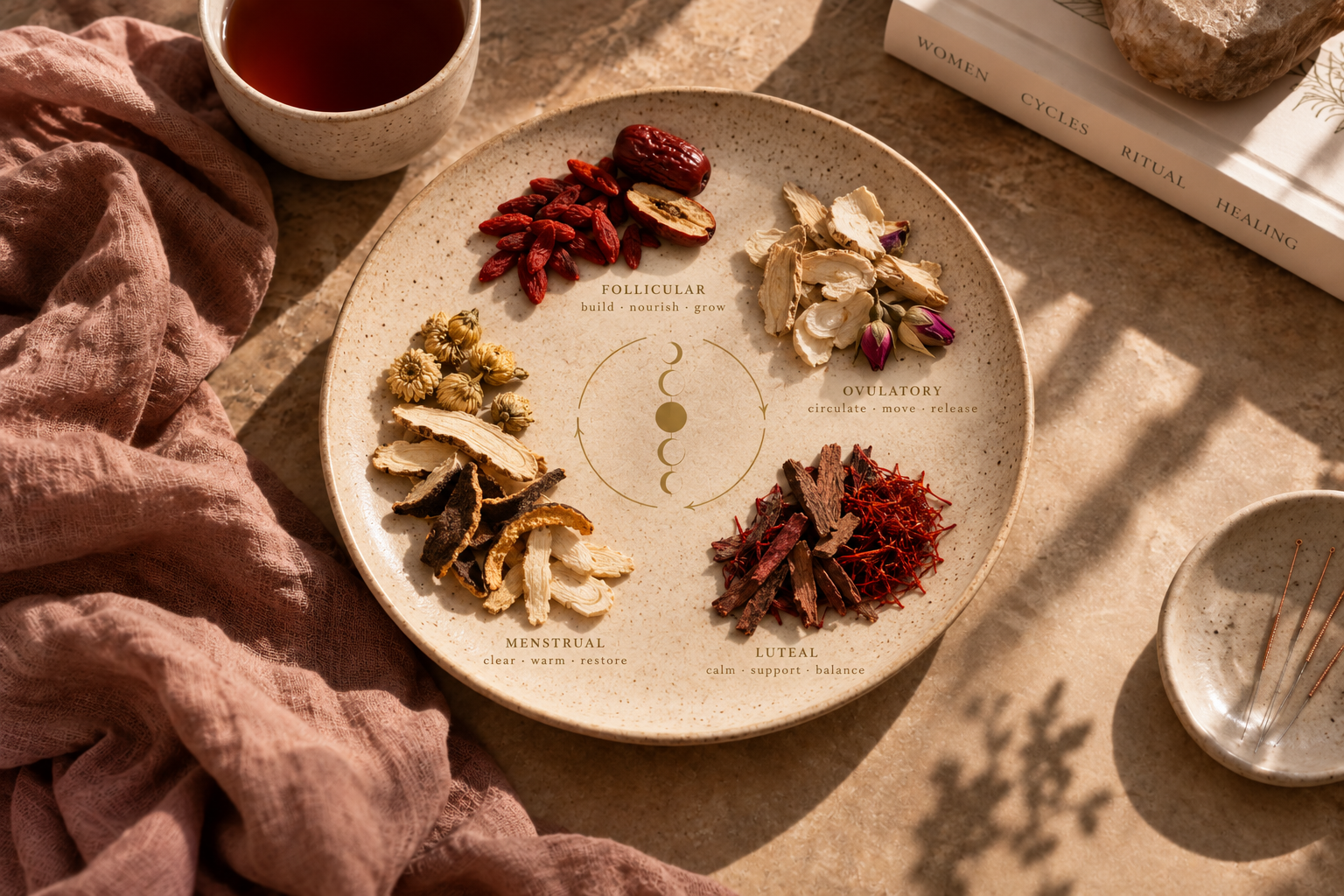
Herbal medicine can also be part of a Traditional Chinese Medicine approach to perimenopause, but this is another place where individualization matters.
The formula I consider for someone experiencing dryness, night sweats, and insomnia may look very different from what I consider for someone experiencing heavy periods, bloating, fatigue, and feeling cold.
That's the difference between practicing Chinese herbal medicine and simply grabbing a bottle labeled MENOPAUSE SUPPORT at the health-food store.
Herbs are selected according to the individual pattern, not simply the diagnosis. And “natural” doesn't automatically mean harmless. Herbs and supplements can have side effects and interact with medications, which is why I prefer herbal medicine to be chosen within the context of an actual assessment.
Acupuncture + HRT Aren't Mortal Enemies
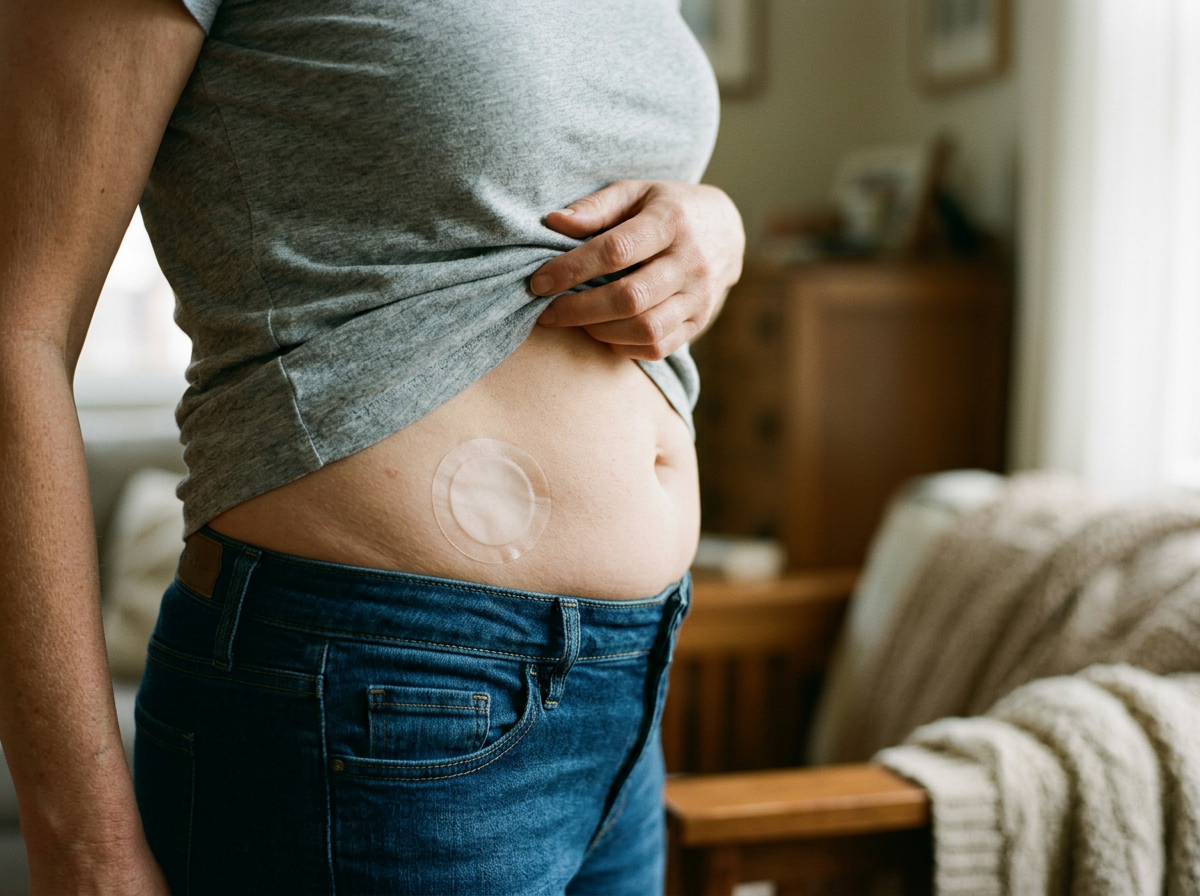
Choosing acupuncture doesn't require you to swear off conventional medicine. And choosing hormone therapy doesn't mean you've somehow failed at doing menopause “naturally.”
Depending on your symptoms, health history, preferences, and where you are in the menopause transition, your physician may discuss menopausal hormone therapy or nonhormonal treatment options with you. Hormone therapy can be an effective treatment for bothersome vasomotor symptoms for appropriate candidates, while vaginal estrogen and other therapies may be considered for genitourinary symptoms.
Those are conversations to have with your medical provider based on your individual health history.
Acupuncture can exist alongside that care. So can nutrition. So can exercise. So can Chinese herbal medicine when appropriate.
You don't need to pick a team.
Integrative medicine should actually be integrative.
Your Second Spring Isn't Just Something to Survive
There’s another side of this transition that gets talked about much less.
Perimenopause can absolutely bring symptoms that deserve attention and treatment. But your Second Spring also represents a new stage of life—not simply the loss of the one before it.
For many women, this chapter comes with a changing relationship to their bodies, sexuality, priorities, boundaries, and what they're willing to spend their energy on. That doesn't mean we romanticize the miserable parts. A hot flash during a meeting is still a hot flash during a meeting.
But maybe supporting perimenopause isn't only about asking: “How do we get rid of these symptoms?”
Maybe we also ask: “What does my body need from me now?”
Your body isn't suddenly betraying you. It's transitioning. And yes, that transition can sometimes be messy, sweaty, sleepless, emotional, confusing, and deeply inconvenient.
But I don't think the answer is to dismiss every symptom as something you simply have to tolerate. Nor do I think we need to pathologize every change.
There is a middle ground. We can pay attention. We can investigate symptoms that need medical evaluation. We can support sleep, nourishment, movement, stress regulation, and overall health. And we can create a treatment plan that reflects what is happening in your body right now.
Because your needs aren't static.
Your treatment shouldn't be either.
Ready for a Little More Support Through the Transition?
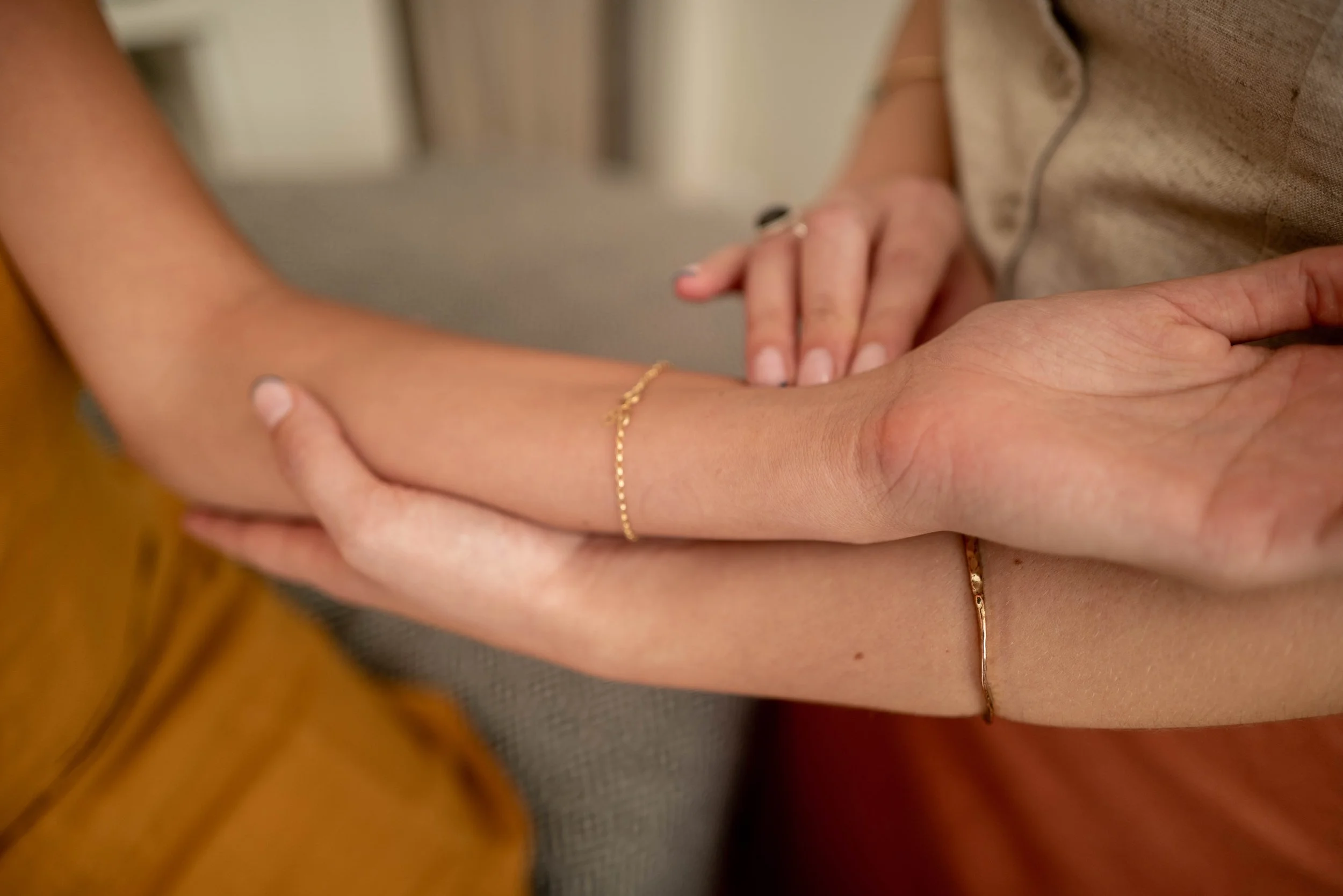
At Ritual House, Women's Wellness Acupuncture is individualized around your symptoms, health history, and where you are in your reproductive life—from periods and fertility through perimenopause and menopause.