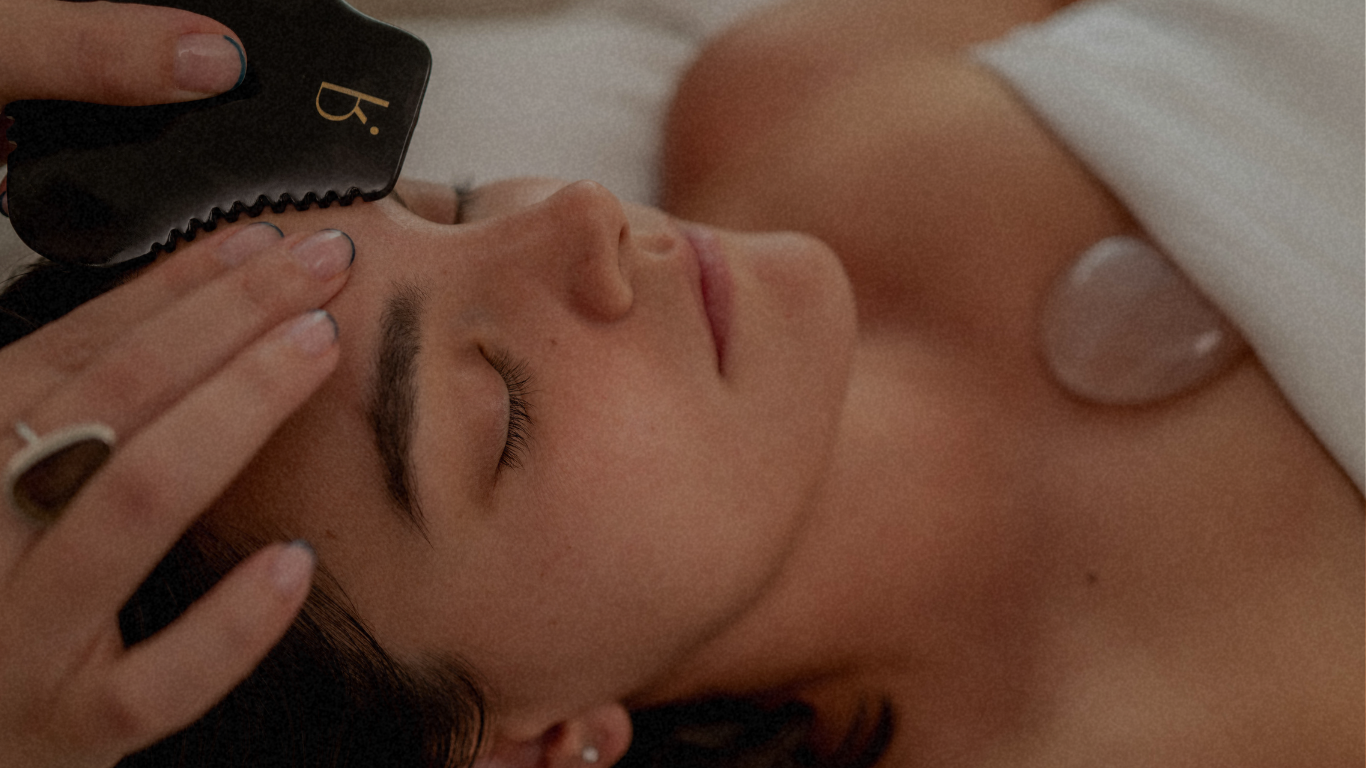
What facial fascia, muscle tension, and tissue mobility have to do with aging well.
When we talk about facial aging, the conversation usually revolves around the same familiar suspects: collagen loss, fine lines, sagging skin, and disappearing volume.
And the solutions? More skincare. More botox. More collagen stimulation. Maybe a little filler.
But what if we're overlooking an important part of the equation?
Beneath your skin is an intricate network of muscles, connective tissue, fat, nerves, and blood vessels that influence how your face looks, feels, and moves.
One of the most fascinating—and frequently overlooked—parts of that network is fascia.
Understanding it offers a different perspective on facial rejuvenation. One that considers not only what your face might be losing with age, but also how the tissues you already have are functioning.
Meet Fascia: Your Skin's Overlooked Supporting Cast
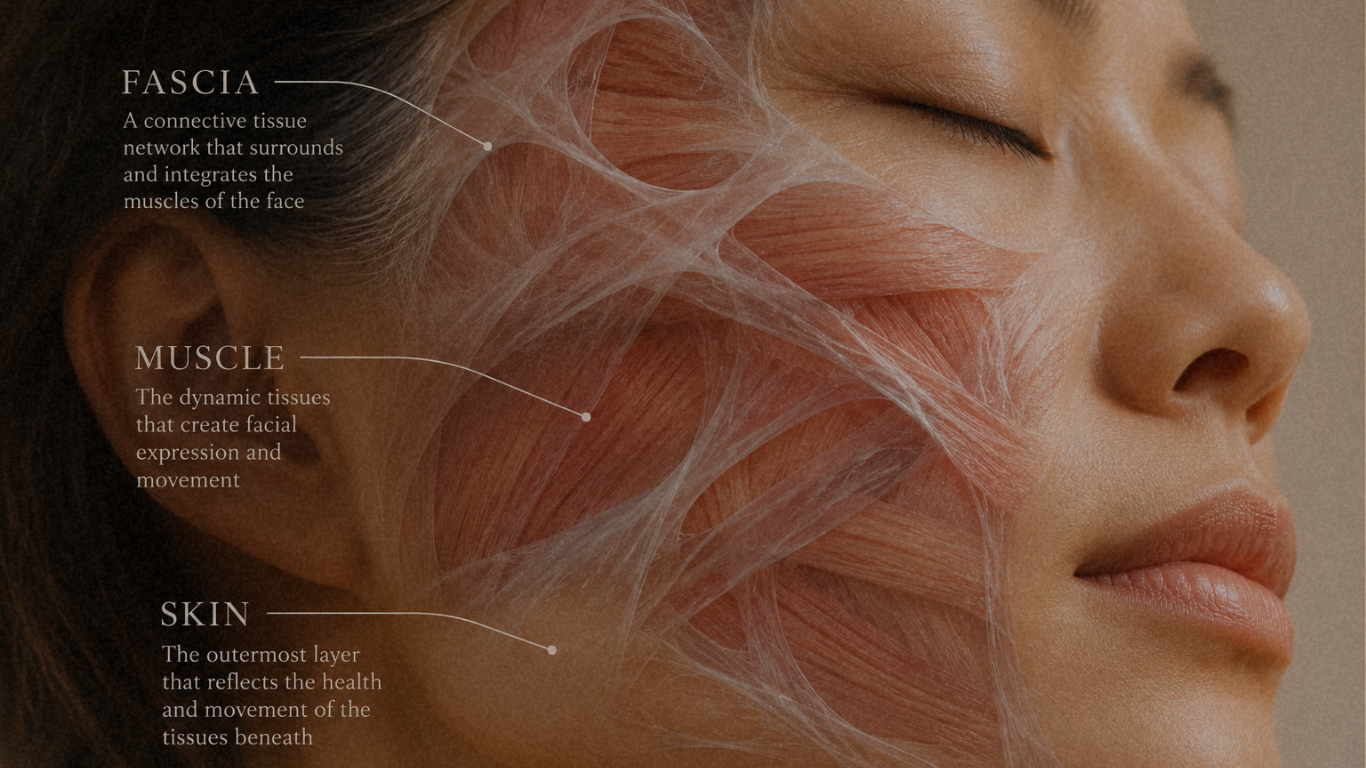
Imagine a delicate, three-dimensional web woven throughout your entire body, surrounding muscles, nerves, blood vessels, and organs.
That's fascia.
Far from being passive wrapping, fascia is a dynamic connective tissue network that helps organize and support the structures beneath your skin.
It's made up of components that probably sound familiar if you've spent any time browsing the skincare aisle: collagen, elastin, and hyaluronic acid.
But these ingredients aren't exclusive to your favorite serum.
Within connective tissue, collagen provides strength, elastin contributes to elasticity, and hyaluronic acid helps maintain a hydrated environment that allows tissues to glide and move freely.
In the face, this matters because our tissues aren't meant to behave like rigid, isolated structures. They need to stretch, adapt, and move in relationship to one another.
Fascia is part of the architecture that makes that possible.
And its role goes beyond structural support. Fascia is also involved in how our tissues respond to mechanical forces, maintain hydration, and communicate with their surrounding environment.
For a deeper look at this fascinating connection, explore The Fascia Beneath Your Skin: How Bioelectric Health Shapes Aging & Beauty, where I explore the relationship between connective tissue, hydration, and facial aging.
Why Don't We Hear More About Fascia?
Historically, fascia received relatively little attention in conventional anatomical education. It was often treated as material to remove in order to study the muscles, nerves, and organs underneath.
Today, researchers and manual therapists increasingly recognize connective tissue as an important part of how the body moves, senses mechanical forces, and responds to physical stress.
Yet in beauty, we still tend to discuss the skin, muscles, and facial fat as though they're separate systems.
They're not.
And that's where the conversation gets interesting.
When Facial Tension Becomes Part of the Picture

Think about how often you unconsciously clench your jaw, furrow your brows, squint at your computer, or tighten your forehead.
Our facial muscles are constantly working.
And they don't work alone.
As muscles contract, they transmit mechanical forces through the surrounding connective tissues. Repeated expressions contribute to the formation of dynamic lines, which can become more noticeable as the skin changes with age.
Persistent muscle tension may also influence how comfortable and mobile the surrounding soft tissues feel.
This is particularly relevant in areas like the jaw, forehead, and between the eyebrows—places where many of us carry tension without realizing it.
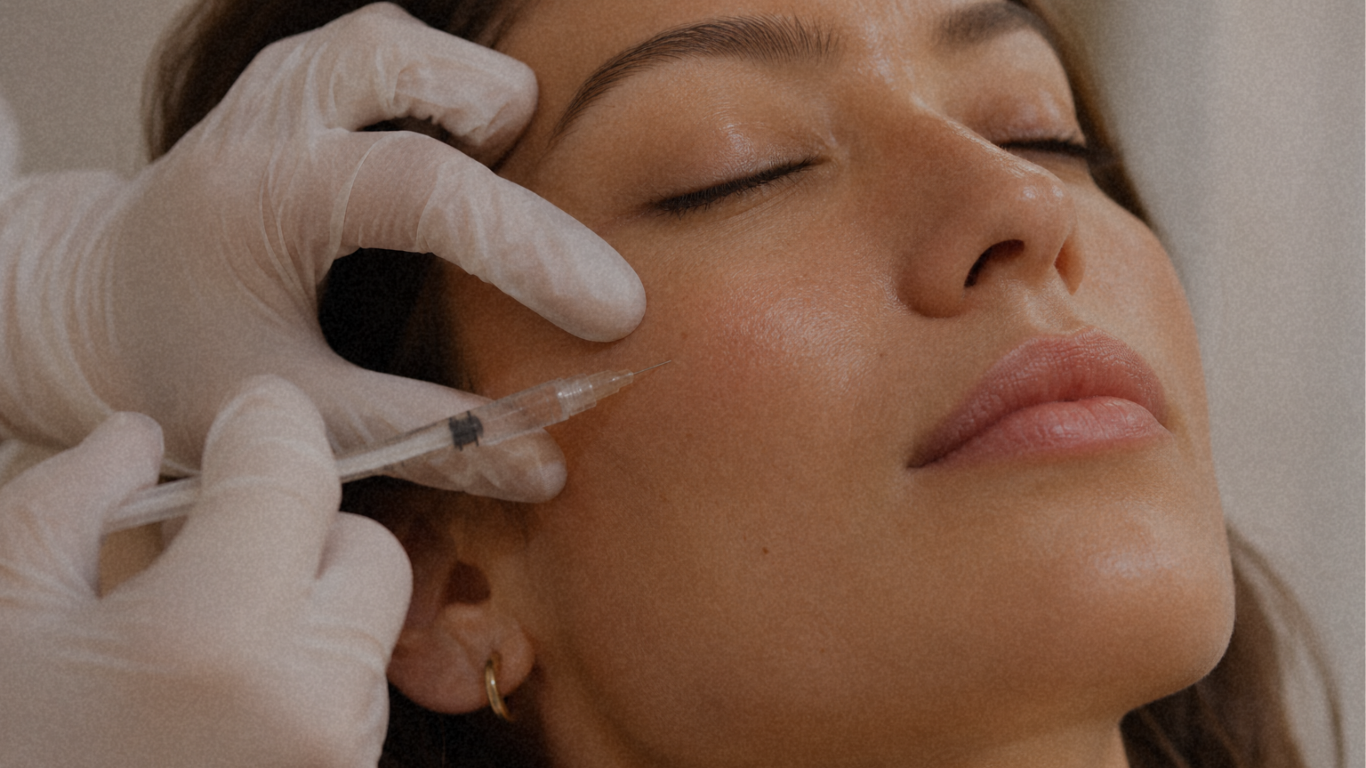
Of course, there are different ways to approach expression lines and facial tension. Botox temporarily reduces activity in targeted muscles, while facial rejuvenation takes a different approach—working with facial movement, muscle tension, and the surrounding tissues.
Curious how these approaches compare? Explore Facial Rejuvenation vs. Botox & Fillers for a closer look at the different philosophies behind modern injectables and holistic facial treatments.
What Does It Mean When Fascia Feels "Stuck"?
Healthy soft tissues need to move in relationship to one another.
Hyaluronic acid plays an important role in lubricating certain connective tissue interfaces, helping neighboring layers glide during movement.
Changes in tissue composition, mechanical loading, and mobility can influence how easily these layers move.
When people describe their fascia as feeling stuck, they're often referring to sensations of tightness, stiffness, or reduced movement.
That doesn't necessarily mean the tissue has developed a literal adhesion. But it does point toward something worth considering: the quality of movement within the soft tissues.
And this is where fascia-focused treatments enter the conversation.
Fascia vs. Filler: Two Very Different Approaches
First, let's clear something up.
Dermal filler isn't inherently bad, and fascia-focused treatments aren't a substitute for every aesthetic procedure.
They simply address different concerns.
As we age, our faces undergo real structural changes. Facial fat compartments change, bone remodels, and the skin gradually loses some of its collagen and elasticity.
Dermal fillers can help restore or augment volume, soften certain folds, and enhance facial contours.
But volume isn't the only factor influencing how a face looks.
Muscle activity, soft tissue mobility, and fluid distribution can also affect our appearance.
And filler isn't specifically designed to address those concerns.
Sometimes, the question isn't just what needs to be added. It's what might benefit from moving more freely.
What Can Sculptural Facial Massage and Gua Sha Actually Do?
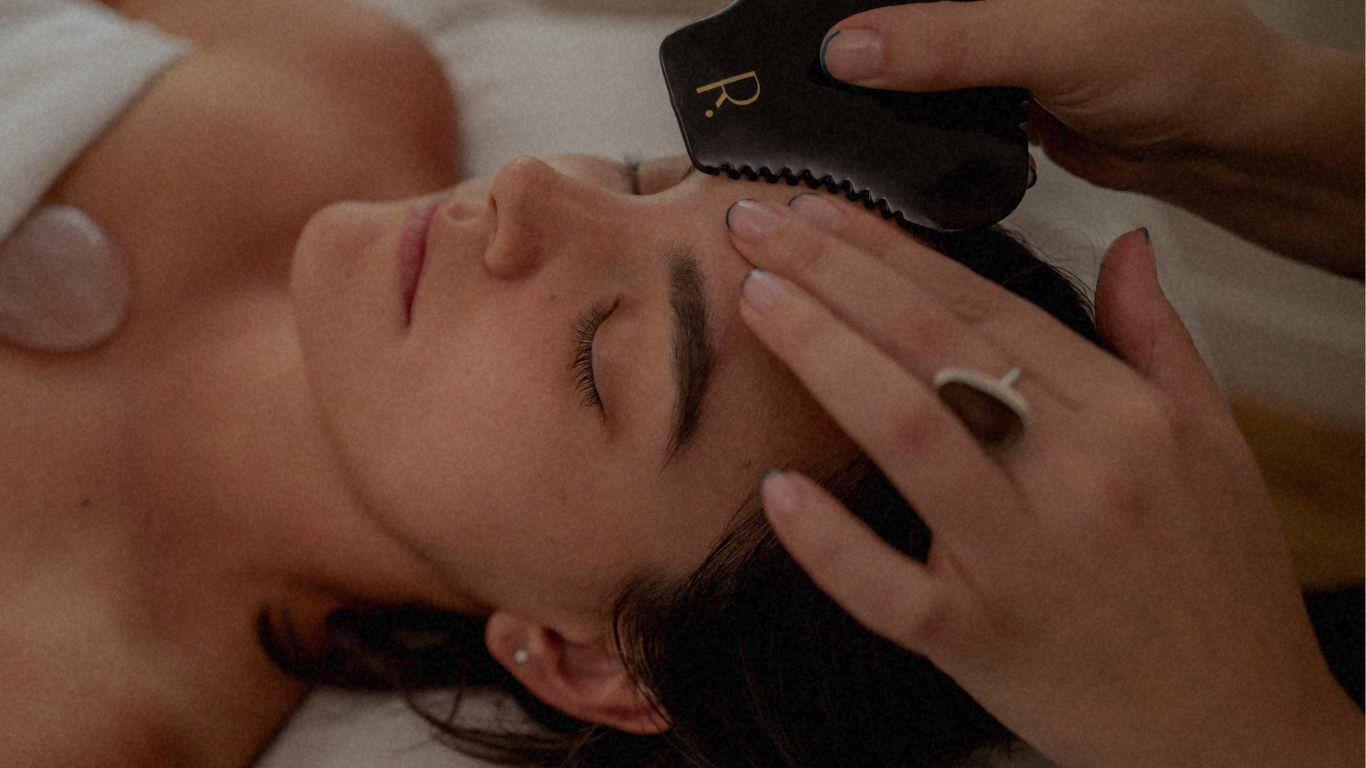
One of the reasons I love incorporating hands-on facial work into my treatments is that it allows us to approach the face from a different perspective.
Rather than adding volume, sculptural facial massage and gua sha use targeted mechanical pressure and movement to work with the muscles and surrounding soft tissues.
These techniques can help ease muscular tension, improve comfort, and encourage movement within the tissues.
They may also influence the distribution of superficial fluid, temporarily reducing puffiness and changing the appearance of facial contours.
Think about the difference between a face that looks puffy and heavy after a poor night's sleep and one that appears more defined after gentle massage.
That visible change isn't necessarily the result of new collagen or restored facial fat. Fluid movement and changes in muscular tension can contribute to the difference.
The result may be a face that appears more sculpted, smoother, and supple.
And while the longer-term cosmetic effects of facial massage are still being studied, its ability to address tension and provide a restorative hands-on experience makes it a valuable part of my approach.
Why Facial Acupuncture Adds Another Dimension
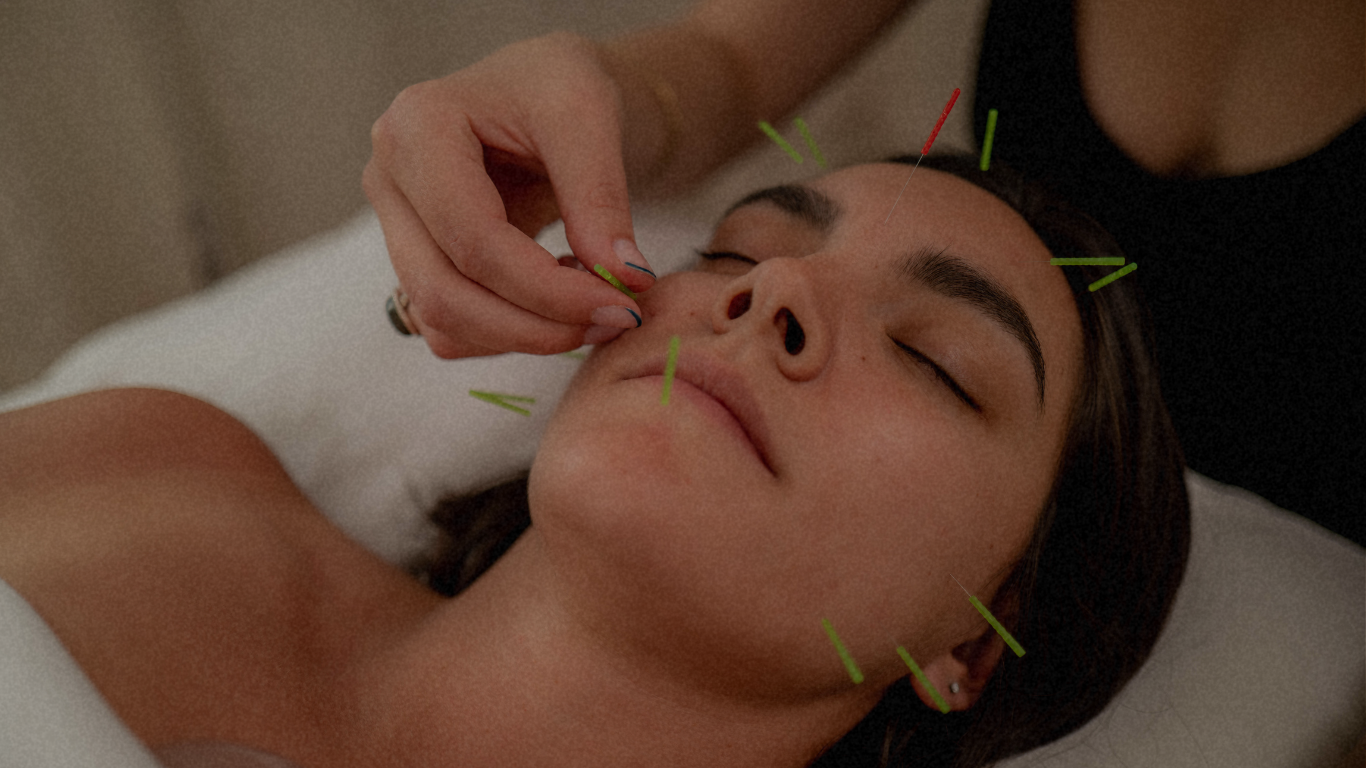
Massage is only part of the picture.
As an acupuncturist specializing in facial rejuvenation, I'm interested in the relationship between facial muscles, connective tissue, circulation, and the nervous system.
During a treatment, I'm not simply looking at a wrinkle and deciding where to place a needle.
I'm considering how the surrounding muscles move, where tension may be present, and how different facial structures work together.
Depending on the individual, I may incorporate targeted facial acupuncture points and facial motor points alongside sculptural massage, facial cupping, and gua sha.
Motor points are specific areas associated with the neuromuscular activation of a muscle. In clinical practice, they offer one way to target individual facial muscles.
Acupuncture also introduces a different form of mechanical stimulation into the tissues than hands-on massage.
Research continues to explore how acupuncture interacts with connective tissue and neuromuscular signaling. While its cosmetic outcomes require more high-quality research, these mechanisms offer an interesting foundation for understanding why facial acupuncture involves more than the skin's surface.
At Ritual House, these techniques are incorporated into a more comprehensive approach to facial rejuvenation, combining hands-on sculptural work with acupuncture to address the face beyond the skin's surface. Explore our Facial Rejuvenation treatments to learn how these techniques come together.
The Chinese Medicine Perspective
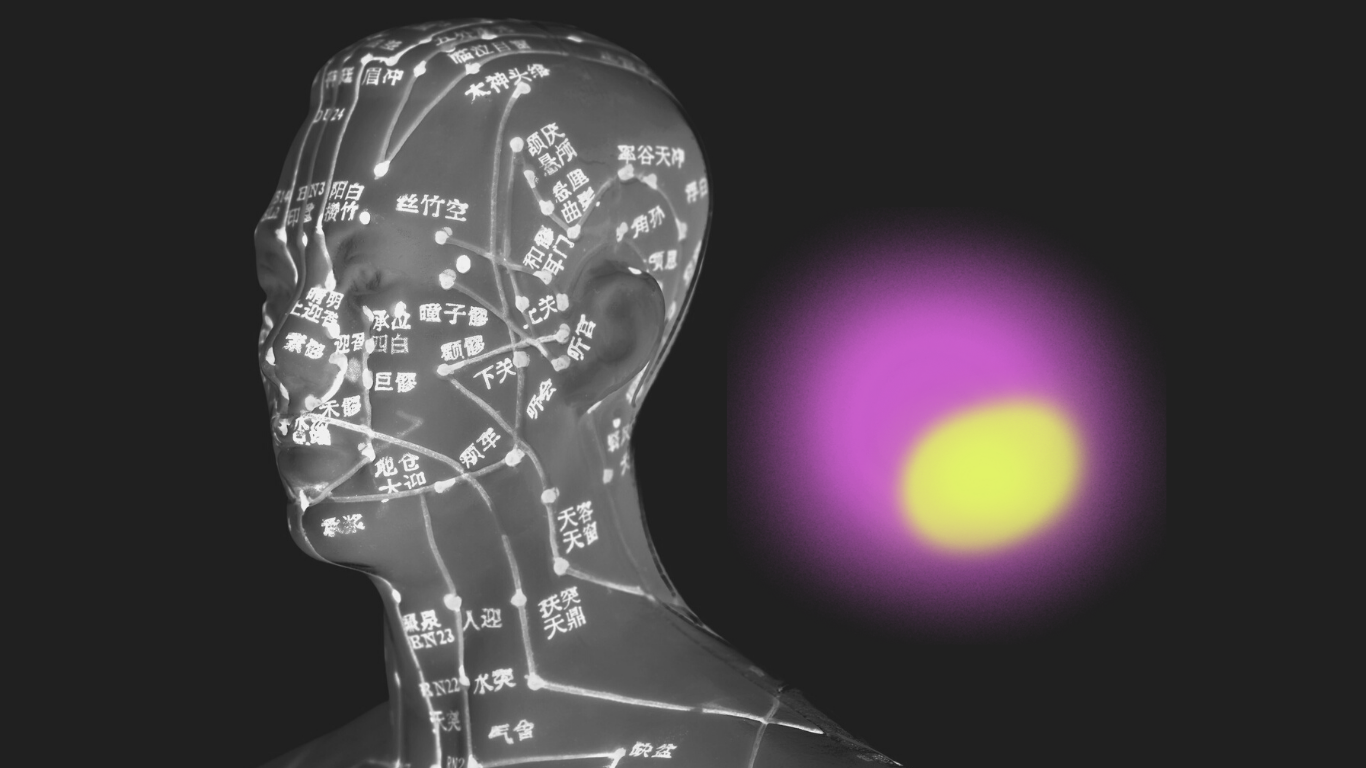
Chinese medicine has long approached the face as part of a larger interconnected system.
Rather than viewing facial appearance in isolation, we consider the relationship between the body's overall health, circulation, stress, sleep, and individual patterns of imbalance.
This doesn't mean every wrinkle indicates an internal health problem.
It means the face is one part of a person—and treating it thoughtfully requires understanding more than what's visible in the mirror.
At Ritual House, facial rejuvenation combines that whole-person philosophy with an anatomical understanding of muscles, connective tissue, and skin.
So, Does Your Face Need More Volume—or Less Tension?
The answer depends on what's contributing to your concern.
True volume loss is a normal part of aging. So are changes in skin elasticity, facial muscle activity, and connective tissue.
And not every change requires the same intervention.
Some concerns may be best addressed through volume restoration. Others may benefit from attention to muscular tension, tissue mobility, or fluid retention. Often, several factors are involved.
The point isn't to declare one treatment better than another.
It's to recognize that facial rejuvenation should begin with understanding the face, not simply trying to change it.
Because aging well isn't about fighting your features or chasing a younger version of yourself.
It's about caring for the face you have—with intention, curiosity, and a little more appreciation for everything happening beneath the surface.
A More Thoughtful Approach to Facial Rejuvenation ✹
At Ritual House Acupuncture & Apothecary, our Facial Rejuvenation treatments combine traditional Chinese medicine with targeted facial acupuncture, sculptural massage, and other techniques selected for your individual concerns.
Whether you're noticing changes in facial contours, expression lines, or persistent tension, we take the time to understand the bigger picture.
Discover Facial Rejuvenation at Ritual House and explore an approach to aging well that works with your face—not against it.

About the Author
Jessica Mkrtchyan is a licensed acupuncturist, Chinese medicine herbalist, and founder of Ritual House Acupuncture & Apothecary in Montrose, California. Specializing in women's health, hormonal wellness, and holistic facial rejuvenation, she blends traditional Chinese medicine with modern insights into skin health, healthy aging, and the mind-body connection.
Her approach is rooted in a simple philosophy: Your body isn't something to fight against. It's something to understand.