Herb Spotlight: Mugwort (Ai Ye) — The Ancient Herb Behind Moxibustion & Women's Wellness
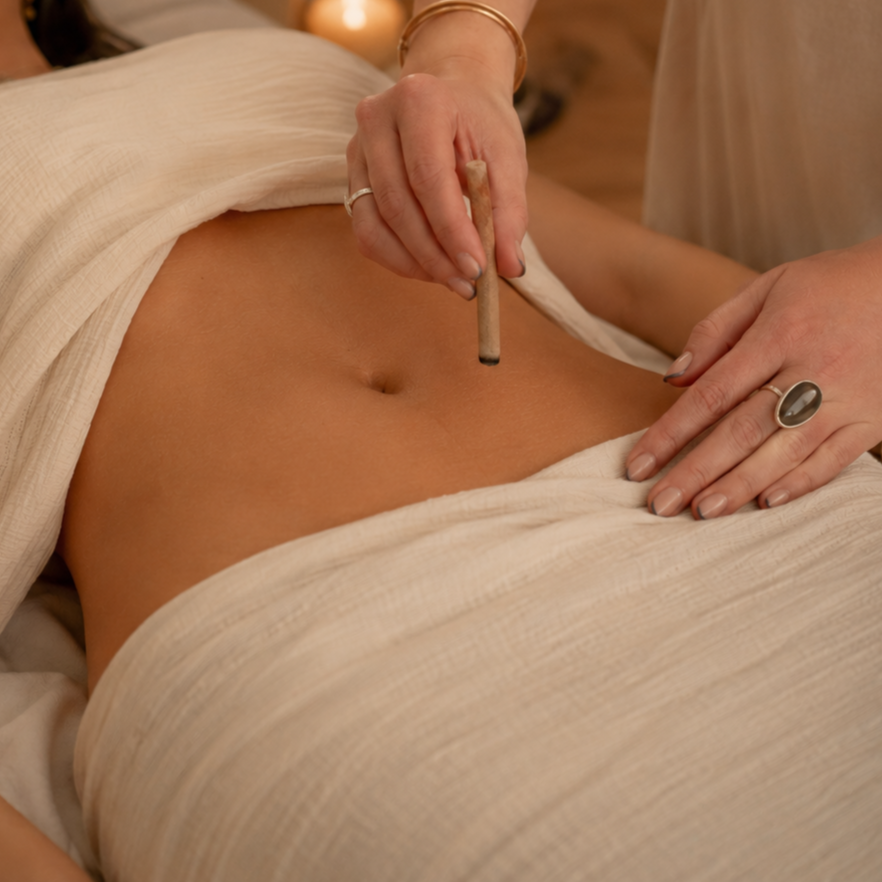
If you've ever received acupuncture and noticed a gentle, earthy aroma filling the room, you've already met one of Traditional Chinese Medicine's oldest healing herbs.
It's called mugwort, or Ai Ye (艾叶).
For over 2,000 years, practitioners have dried its soft, silvery leaves to create moxa—a warming therapy used alongside acupuncture to encourage circulation, relieve pain, and support the body's natural healing processes. But mugwort is much more than the herb behind moxibustion.
In Chinese medicine, Ai Ye is also a respected medicinal herb with a long history of supporting women's health, digestion, healthy circulation, and recovery from Cold conditions.
Let's take a closer look at why this humble plant continues to hold such an important place in Traditional Chinese Medicine.
Meet Mugwort:
The Herb behind Moxabustion
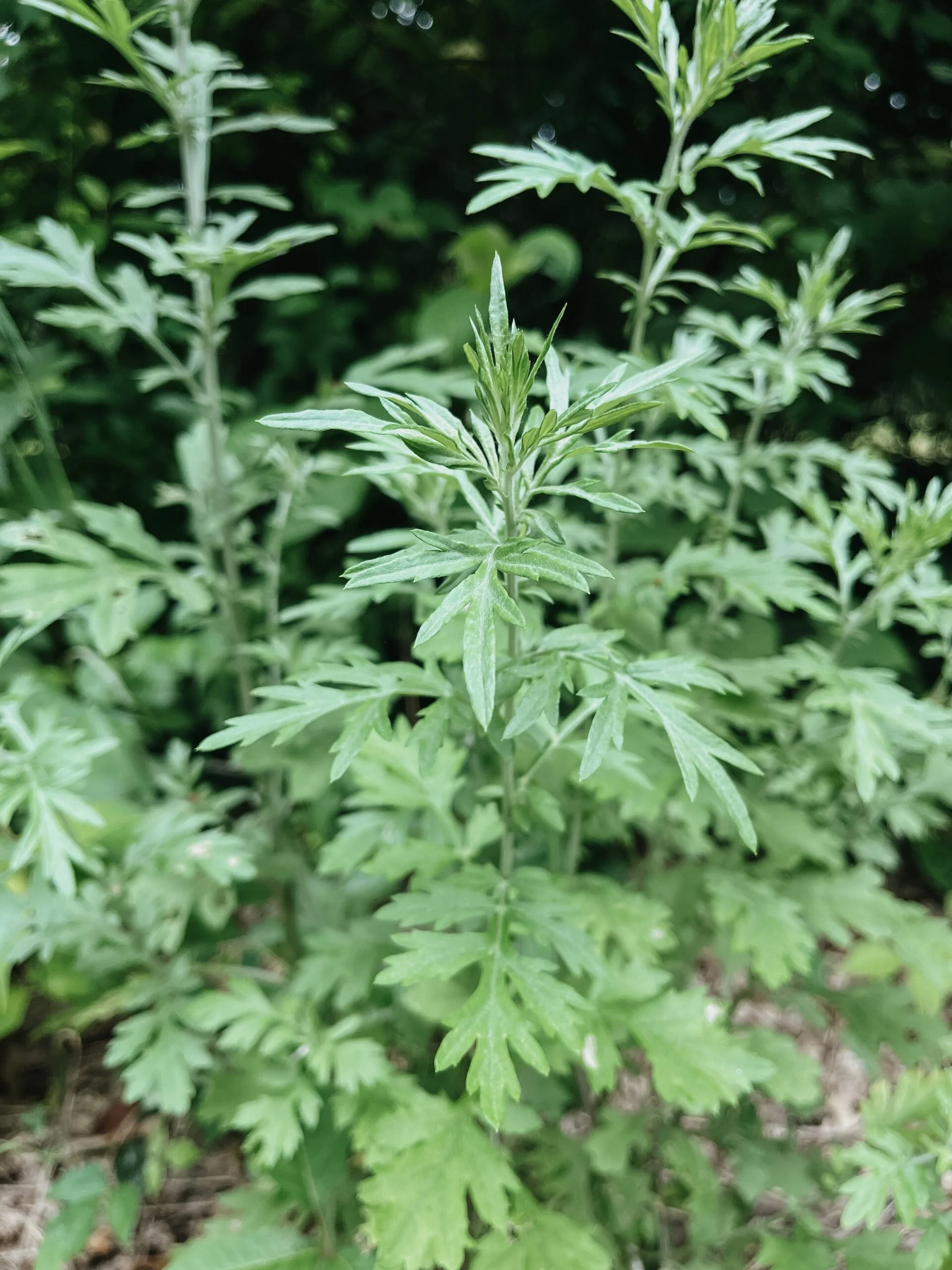
Chinese Name: Ai Ye (艾叶)
Botanical Name: Artemisia argyi
Nature: Warm
Flavor: Bitter, pungent
Channels Entered: Liver, Spleen & Kidney
Mugwort has been used for more than 2,000 years to bring warmth where there is Cold, encourage healthy circulation, and support the body's natural healing processes. Its warm, aromatic nature made it especially valued for conditions involving stagnation, discomfort, and women's reproductive health.
While Western herbal traditions have used mugwort for digestion, dreaming, and ritual practices, Ai Ye occupies a unique role in Chinese medicine. It is one of the few herbs prized not only for its medicinal properties when prepared as a decoction or formula, but also for the heat it produces when carefully dried and burned as moxa.
That transformation—from a humble leaf to one of Chinese medicine's most recognizable therapeutic tools—is part of what makes mugwort so remarkable.
Why Do We Burn Mugwort?
One of the questions I hear most often in the treatment room is:
"What exactly is that thing you're holding?"
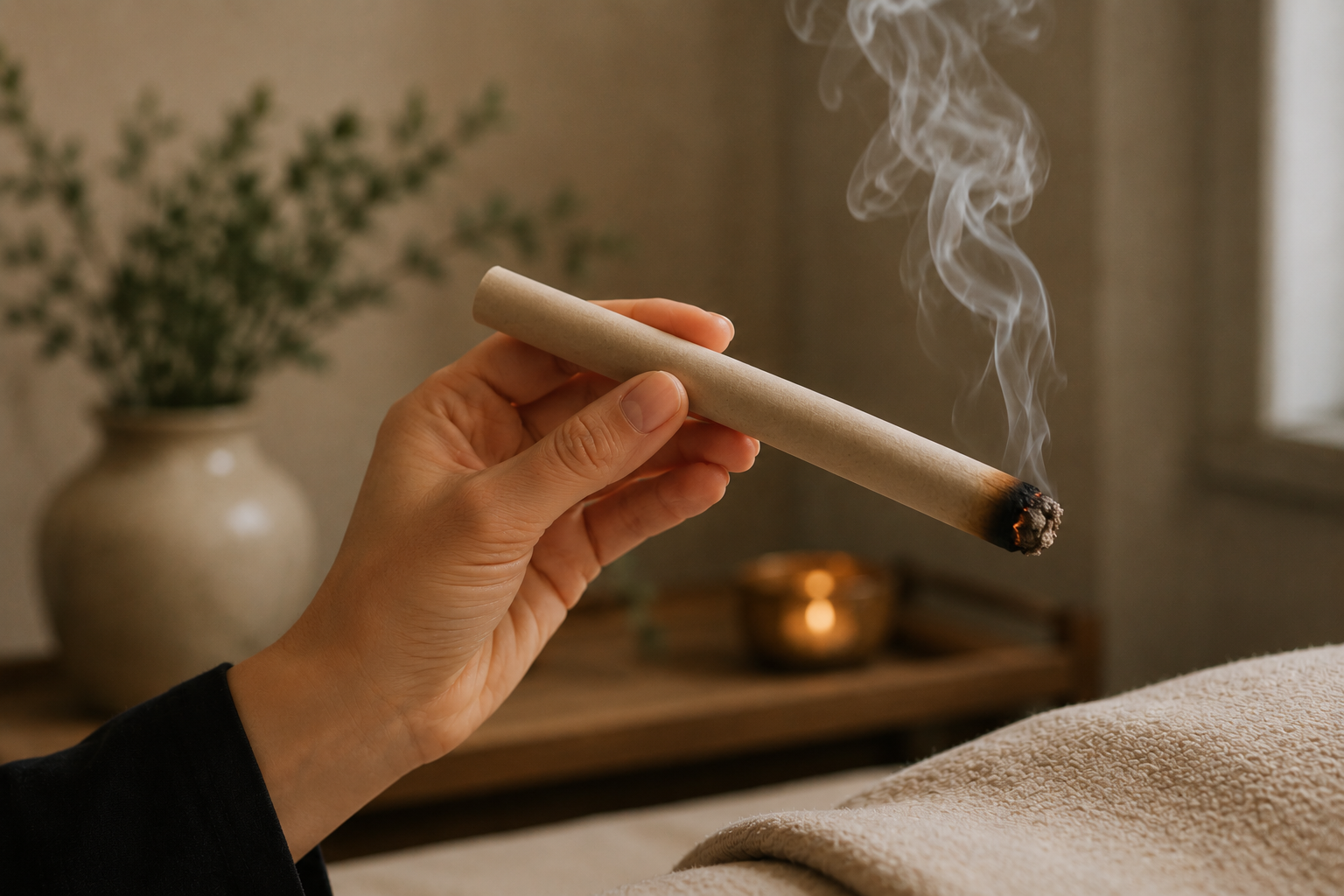
The answer is moxa—dried mugwort leaves that have been aged, processed into a soft wool-like material, and formed into sticks or cones.
Mugwort is uniquely suited for moxibustion because it burns slowly, evenly, and produces a deep, comfortable warmth rather than an intense surface heat. When held near the skin or used over an acupuncture needle, that warmth penetrates the tissues without direct contact.
The goal isn't simply to make the body warm.
The goal is to restore healthy movement.
Why Use Moxa Instead of Just Acupuncture?
One of the reasons moxibustion has remained an essential part of Chinese medicine for thousands of years is that heat behaves differently than a needle. While acupuncture helps regulate the body's flow of energy, moxa introduces a deep, penetrating warmth that acupuncture alone doesn't provide. For people who tend toward Cold, deficiency, or chronic stagnation, that gentle heat can make all the difference—encouraging circulation, easing discomfort, and restoring the body's natural movement.
Why Warmth Matters in Chinese Medicine
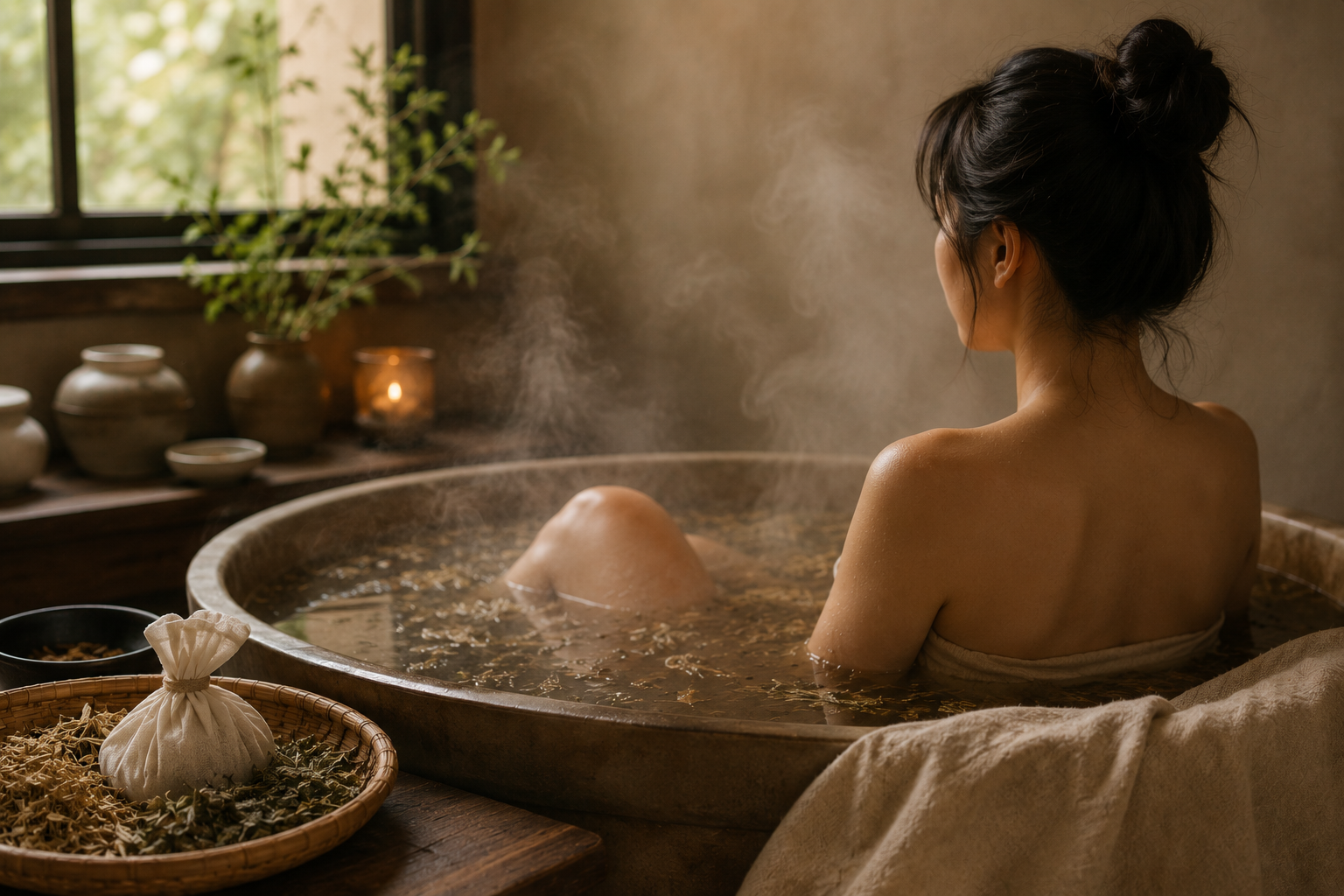
One of my favorite concepts in Chinese medicine is that warmth creates movement.
Cold causes things to contract.
Warmth allows them to open.
When the body becomes too cold—or when circulation slows—Qi and Blood don't move as efficiently. Over time, this may contribute to discomfort, stiffness, digestive sluggishness, or painful menstrual cycles.
Healthy warmth encourages:
Better circulation
Smooth movement of Qi and Blood
Relaxed muscles and connective tissue
Efficient delivery of oxygen and nutrients
The body's natural repair processes can be hindered by too much exposure to cold. For instance, through extended time in cold weather or environments or ingesting too many cold/raw foods and beverages, Cold can even enter the tissues after trauma or surgery where there was significant blood loss as in child birth
But how do you know if your body actually needs more warmth?
—> There are signs that can point to an excess of cold (see below)
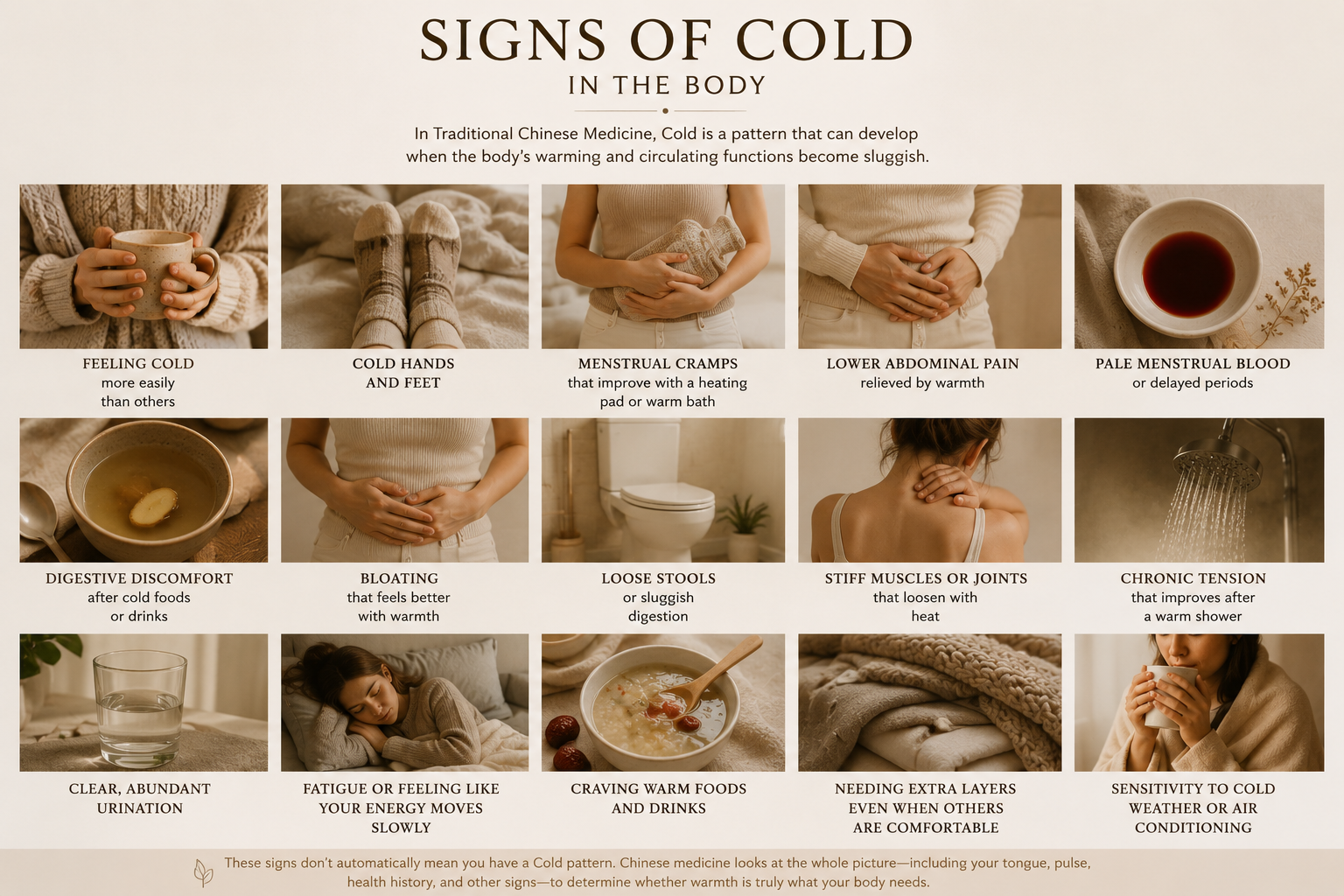
You may have a Cold pattern if...
You reach for a heating pad every month because it relieves your cramps.
Your hands and feet are almost always cold.
Warm meals make you feel better than salads or iced drinks.
Your muscles loosen up after a hot shower.
Of course, these symptoms don't automatically mean you have a Cold pattern. Chinese medicine looks at the whole picture—including your tongue, pulse, health history, and other signs—to determine whether warmth is truly what's needed.
At Ritual House, I assess each patient carefully before deciding whether therapies like moxibustion are the right fit. When warmth is indicated, it can be an incredibly gentle and effective way to encourage healthy circulation and restore balance.
Mugwort in Traditional Chinese Medicine
Women's Health
One of Ai Ye's best-known uses is warming the uterus when Cold contributes to menstrual discomfort.
It has traditionally been used for patterns involving:
Menstrual cramps relieved by warmth
Cold sensations in the lower abdomen
Pale menstrual blood
Irregular cycles associated with Cold
Certain infertility patterns involving uterine Cold
Because it enters the Liver, Spleen, and Kidney channels which travel through the gynecological system, herbal formulas containing Ai Ye or burning moxa over these channels help support healthy circulation through the pelvis.
Healthy Circulation
When Blood flows freely, tissues receive the nourishment they need to function well.
This principle extends far beyond the uterus.
Ai Ye can improve circulation to the muscles, joints, and connective tissues. Especially when pain in these areas feel cold to the touch or have signs of blood stagnation (look purple/blue).
Digestive Warmth
The digestive system functions best when it has sufficient warmth and energy.
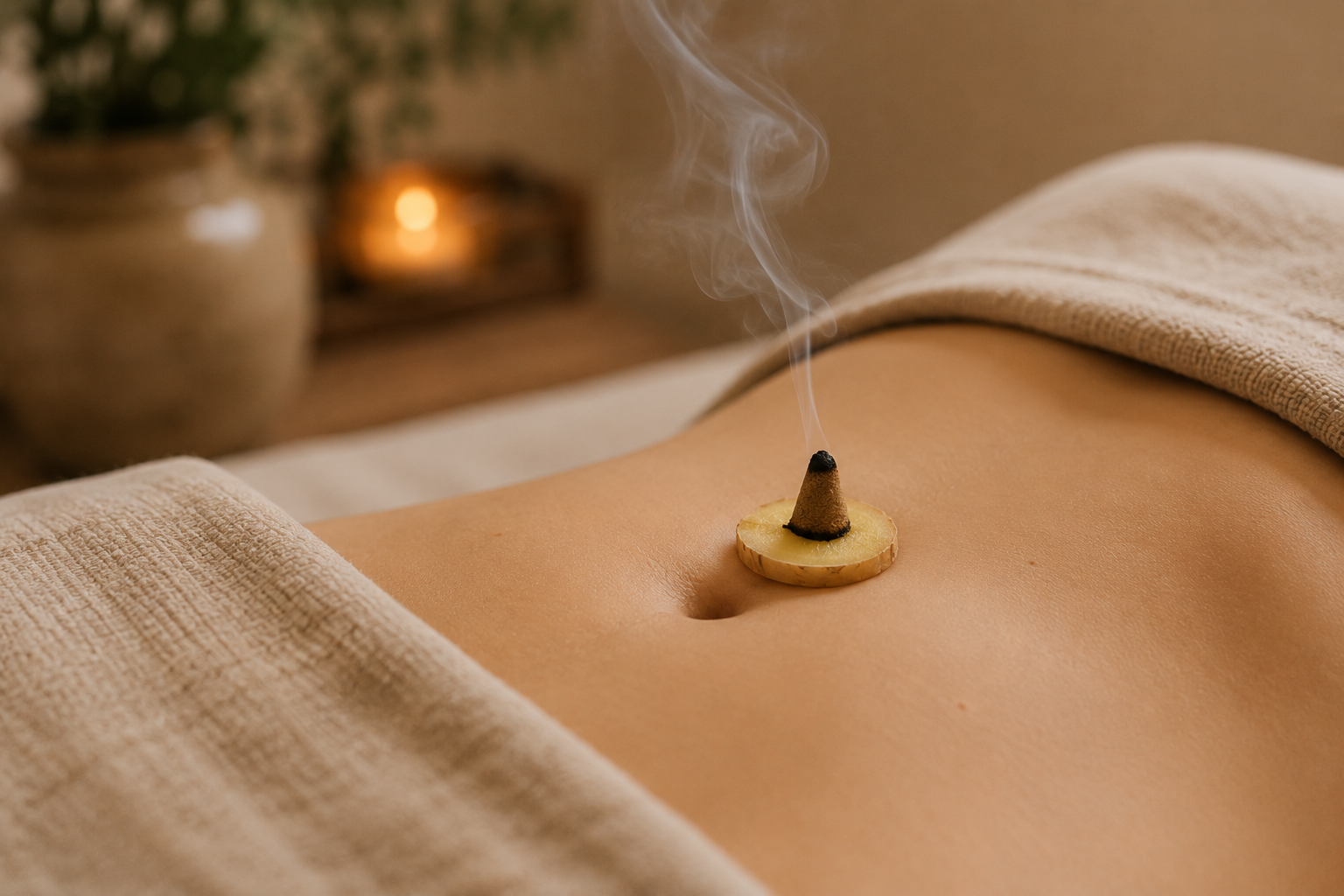
For individuals whose digestive discomfort is associated with Cold patterns like loose stools or low appetite, warming herbs have traditionally been used to help support healthy transformation and movement of food and fluids.
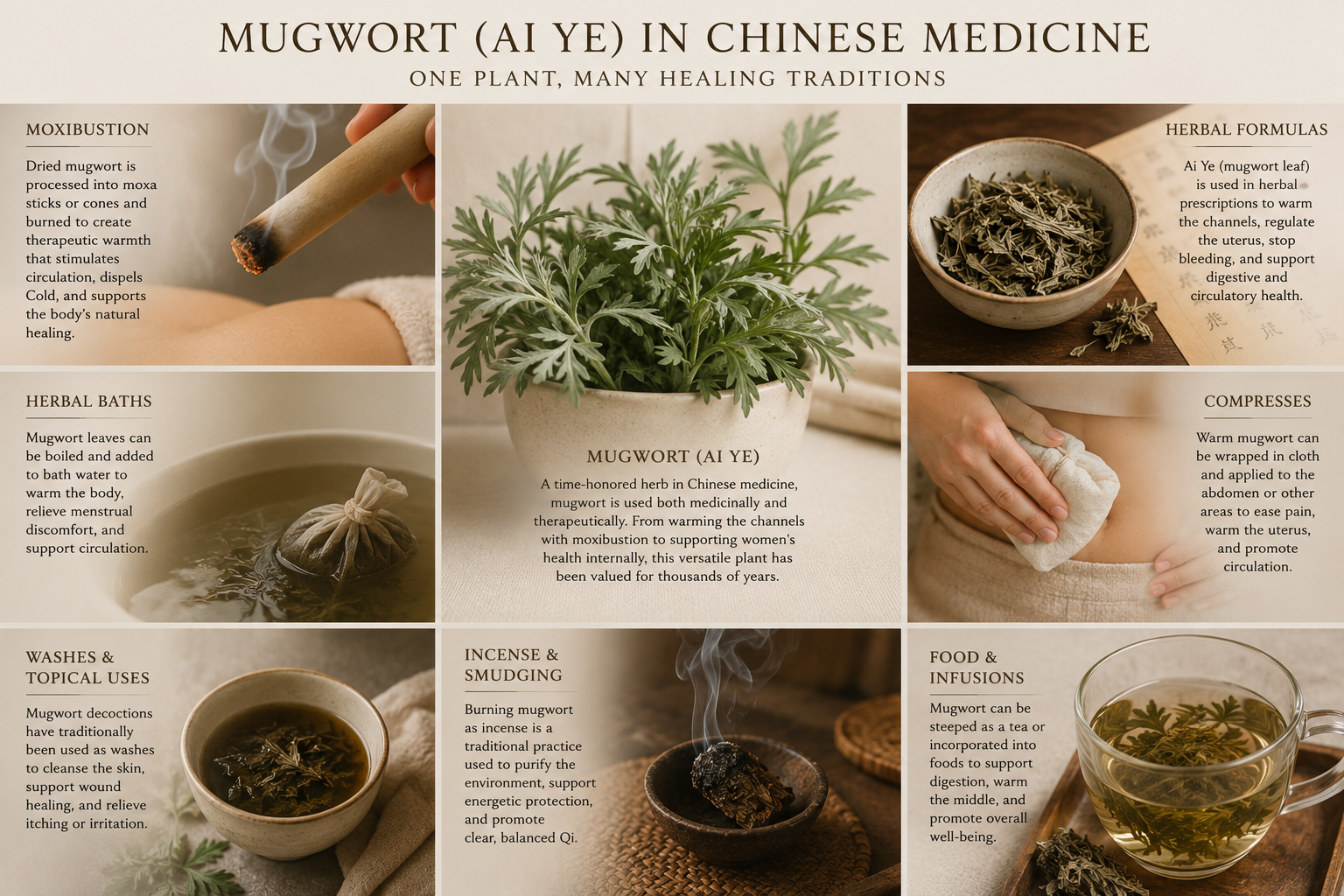
Other uses of Ai Ye (mugwort) in Chinese Medicine.
What Does Modern Research Say?
Modern science is beginning to explore many of the traditional observations surrounding mugwort.
Researchers have identified compounds within mugwort that demonstrate:
Antioxidant activity
Anti-inflammatory properties
Antimicrobial activity
Potential wound-healing effects in laboratory studies
Clinical research has also investigated the use of moxibustion alongside acupuncture for specific situations, including breech presentation during pregnancy. Several studies and systematic reviews suggest it may be helpful in encouraging babies to turn head-down when performed appropriately under professional guidance.
While these findings are encouraging, more high-quality research is still needed, particularly regarding mugwort taken internally.
How I Use Mugwort at Ritual House
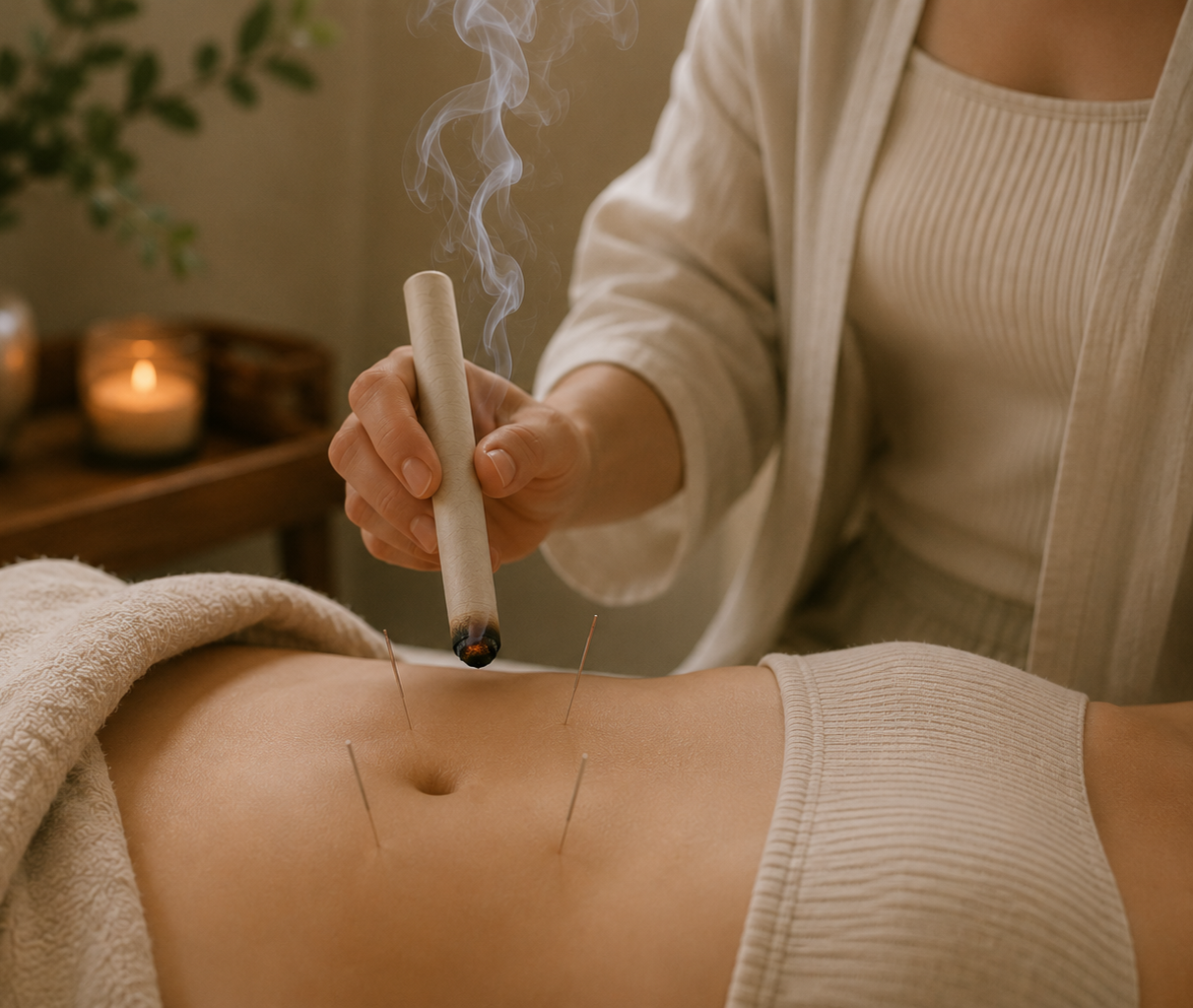
Depending on your unique pattern, I may incorporate smokeless moxibustion into your acupuncture treatment. I most often use it to warm the lower abdomen for menstrual health and fertility support, ease chronic muscle tension, or strengthen digestive function. Like every treatment at Ritual House, moxibustion is used only when your body shows that warmth would be therapeutic.
The Ritual
Evening Mugwort Foot Soak
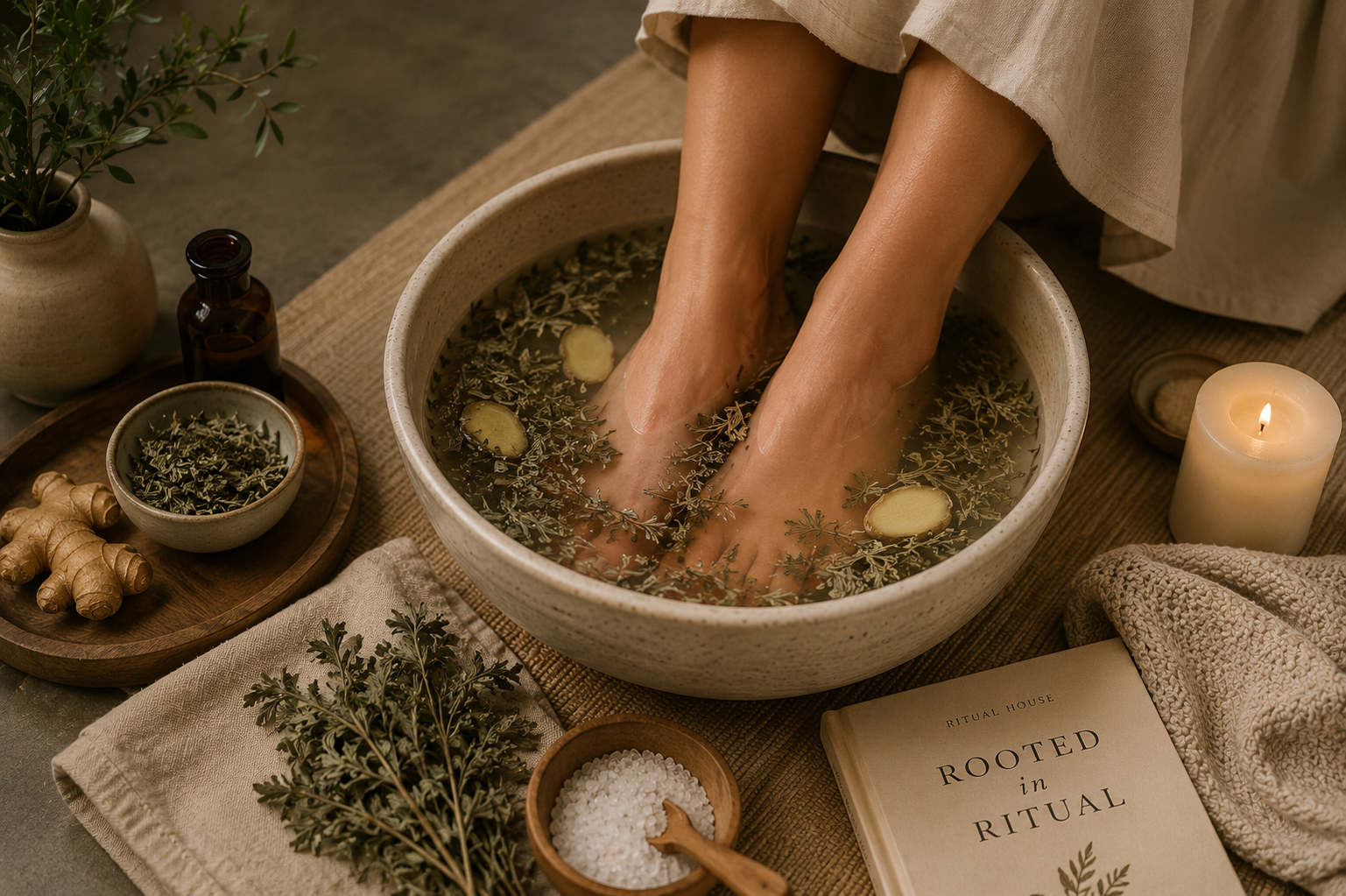
Best for: Cold hands & feet • Menstrual cramps that improve with heat • Relaxation before sleep • Supporting circulation • Reconnecting with your body
You'll Need
A basin large enough to cover your ankles
Comfortably hot water
½ cup Epsom salt
¼ cup coarse sea salt
2–3 tablespoons dried mugwort (Ai Ye)
2–3 slices fresh ginger
Optional: one cinnamon stick
A towel and warm socks
Method
Fill your basin with comfortably hot—not scalding—water.
Add:
Epsom salt
Sea salt
Mugwort
Ginger
Cinnamon (optional)
Allow everything to steep for a few minutes before placing your feet into the water.
Soak for 15–20 minutes.
A Gentle Reminder
Because mugwort is a warming herb with specific traditional indications, it isn't appropriate for everyone. It may not be suitable during pregnancy except under the guidance of a qualified practitioner, and it should not be used indiscriminately for heat conditions. If you're interested in using mugwort or trying moxibustion at home, I recommend speaking with a licensed acupuncturist first.
Final Thoughts
One of the things I love most about mugwort is that it reminds us healing doesn't always require something dramatic.
Sometimes the body simply needs a little more warmth.
A little more circulation.
A little more movement.
For thousands of years, Ai Ye has helped practitioners restore those qualities through one simple plant. Whether used in moxibustion or as part of a thoughtfully prescribed herbal formula, mugwort continues to remind us that some of the oldest medicines remain some of the most elegant.
Support Your Body's Natural Flow
Curious whether moxibustion could benefit you?
Whether you're seeking support for women's health, fertility, chronic pain, digestion, or simply looking to restore balance, I'd love to help.
Shop dried mugwort for home foot soaks, herbal baths, and seasonal wellness rituals.