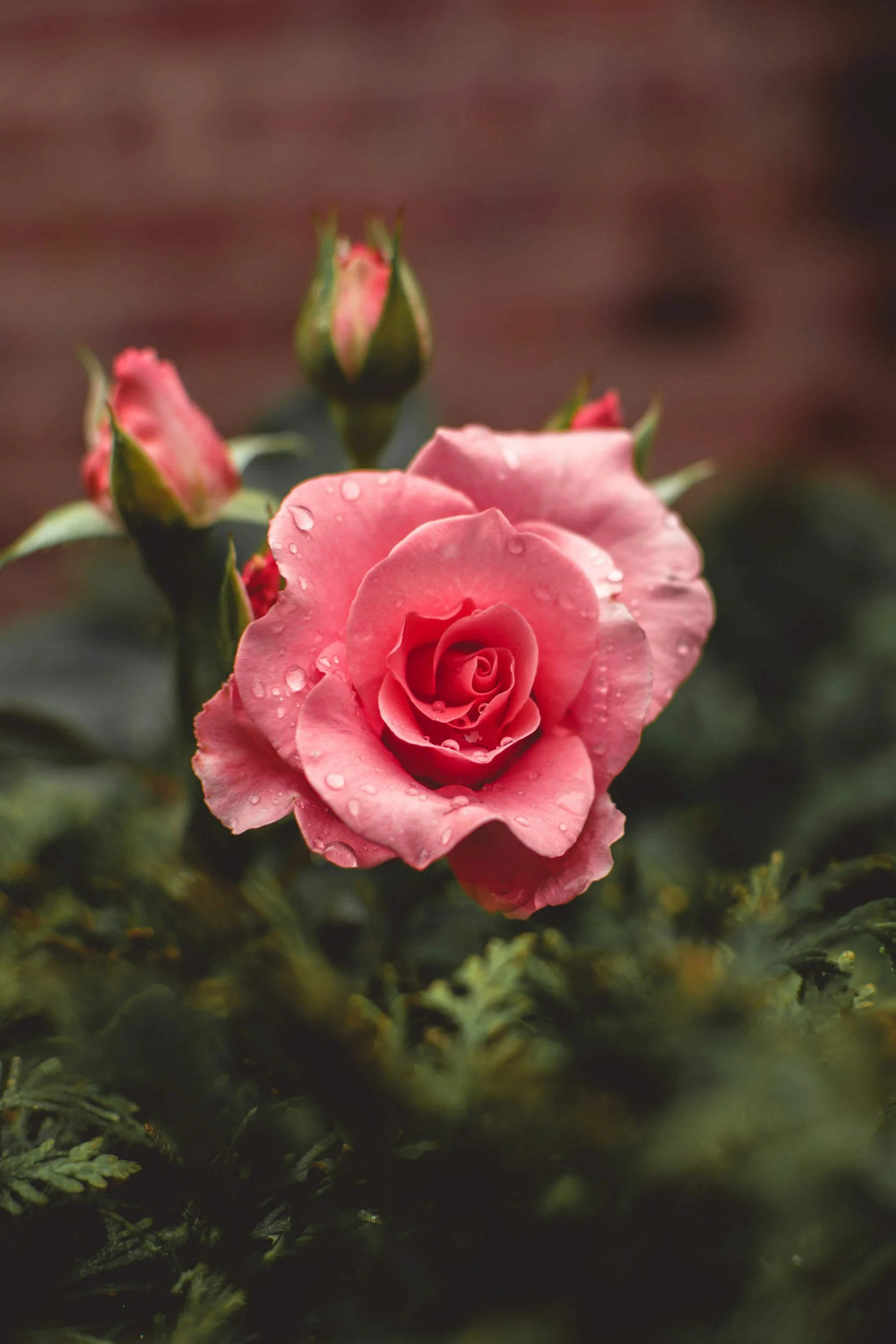
The Flower That Nourishes the Heart, Supports Women's Health, and Brings Life Back to Your Skin
When you think of roses, you probably picture romance, bouquets, or a luxurious skincare product.
But for thousands of years, rose has been something much deeper.
Across cultures—from Traditional Chinese Medicine to European herbalism—rose has been cherished as a medicine for the heart. Not just the physical heart, but the emotional one too. It has been used to comfort grief, soften stress, encourage healthy circulation, and support radiant skin.
It's one of nature's gentlest reminders that beauty begins with balance.
Meet the herb
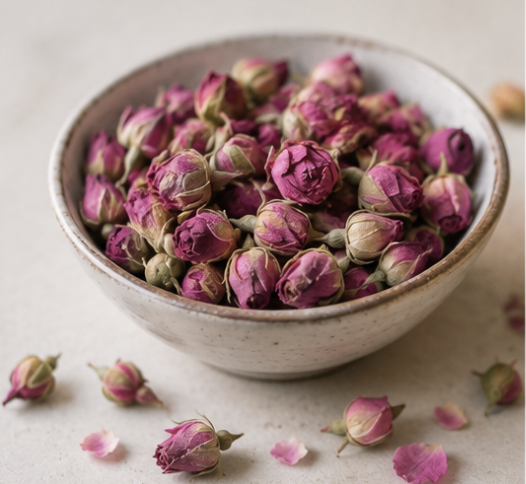
The herb of the heart.
For centuries, Mei Gui Hua (Rose Bud) has been treasured in Traditional Chinese Medicine to gently move Liver Qi, harmonize the Blood, and support emotional and physical well-being. More than just a beautiful flower, rose has long been used to encourage healthy circulation, ease emotional tension, support women's health, and promote a naturally radiant complexion.
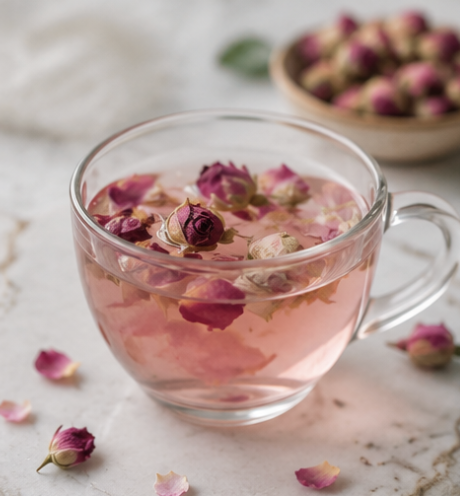
Enjoy as a calming tea, add to herbal blends, or infuse into honey as part of your daily wellness ritual. Delicate, fragrant, and deeply nourishing, rose is a beautiful reminder that caring for your heart is also caring for your whole body.
Traditionally Used To:
Support the smooth flow of Liver Qi
Promote emotional well-being during times of stress or grief
Support healthy menstrual cycles and ease occasional PMS
Encourage healthy circulation for glowing skin
Create calming daily rituals that nourish both body and mind
Preparation: Steep 1–2 teaspoons in hot water for 5–10 minutes. Enjoy on its own or blend with herbs like chrysanthemum, goji berries, or red dates.
Learn More
Curious why rose has been called the "herb of the heart" for thousands of years?
Read our Herb Spotlight: Rose (Mei Gui Hua) to discover its rich history, beauty benefits, role in women's health, and even a recipe for a soothing Rose Petal & Honey Cordial.
Important Notes
Sold as a raw food-grade ingredient, not a finished dietary supplement.
Store in a cool, dry place away from direct sunlight.
Best used with guidance from a trained herbal practitioner.
These statements have not been evaluated by the Food and Drug Administration (FDA). This product is not intended to diagnose, treat, cure, or prevent any disease.
Chinese Name: Mei Gui Hua (玫瑰花)
English Name: Rose Bud
Nature: Warm
Flavor: Sweet, slightly bitter
In Traditional Chinese Medicine, Mei Gui Hua enters the Liver and Spleen meridians, where it gently moves stagnant Qi, harmonizes the Blood, and supports healthy circulation.
The Liver is closely connected to the smooth flow of emotions, hormones, digestion, and circulation, while the Spleen plays an important role in nourishment and transformation. When Qi becomes stuck, we may feel tense, heavy, irritable, or emotionally stagnant—and the skin can reflect that with dullness, puffiness, or a lack of vitality.
Rose helps restore gentle movement. When Qi and Blood flow more freely, the body functions more smoothly, and the complexion often appears brighter, softer, and more alive.
Why Rose Matters for Beautiful Skin
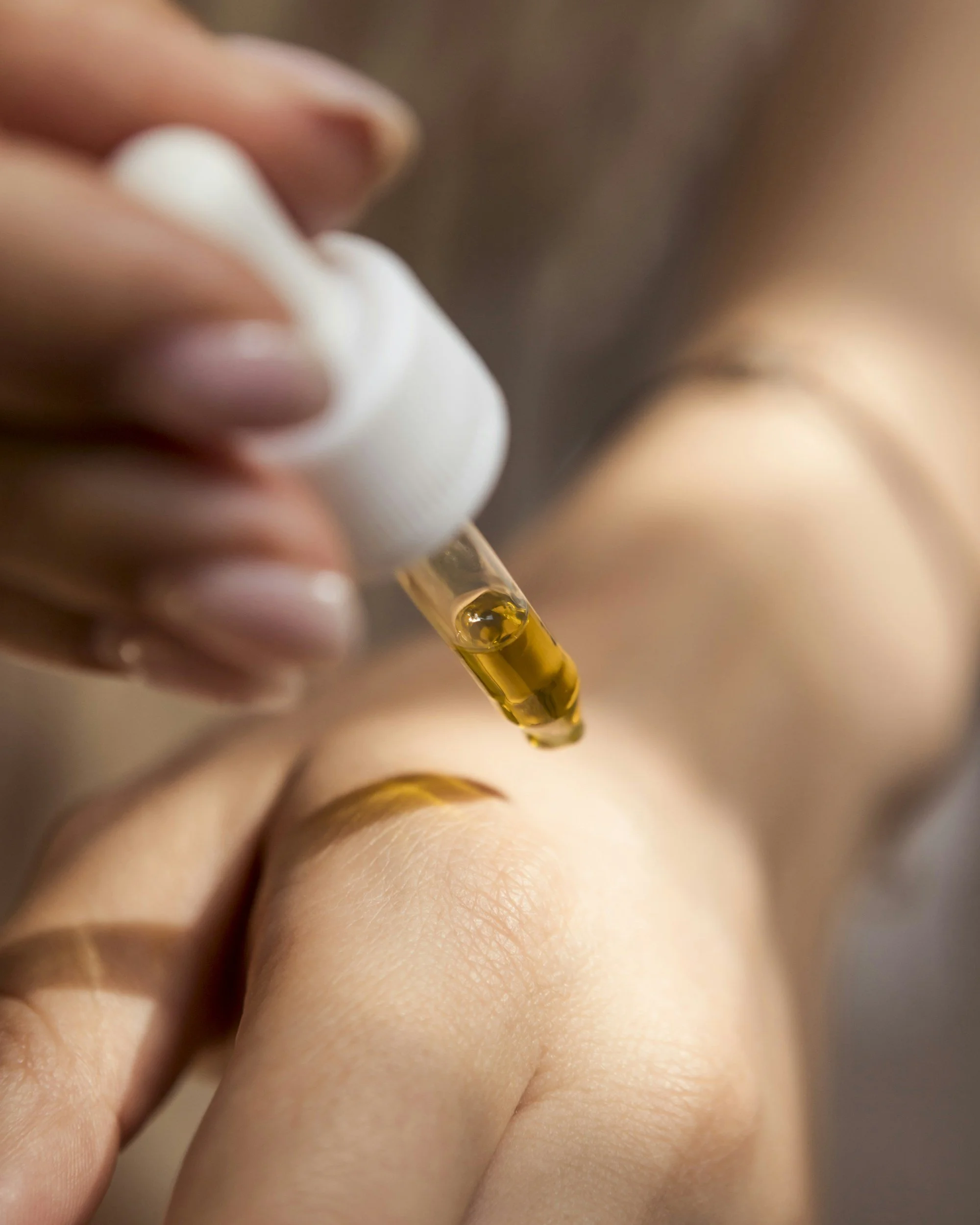
Healthy skin isn't only about hydration or collagen. It also depends on healthy circulation.
In Chinese medicine, when Qi becomes stagnant, nourishment doesn't reach the skin as efficiently. The complexion can appear dull, tired, or lack its natural glow.
Rose is traditionally used to gently encourage the movement of Qi and Blood, helping restore the flow that nourishes the skin from within.
Modern researchhas also found that rose petals contain naturally occurring flavonoids, polyphenols, antioxidants, and volatile oils that contribute to their soothing and protective properties. While research is still evolving, these compounds are being studied for their antioxidant, anti-inflammatory, and tissue-supportive effects.
More Than a Beauty Herb
One of the reasons I love rose is because it reminds us that our emotional health and our skin health are deeply connected.
Stress, frustration, grief, and emotional tension can all affect the smooth movement of Qi. Over time, that imbalance may show up as tight shoulders, digestive discomfort, hormonal changes, headaches—or even skin flare-ups.
In Traditional Chinese Medicine, Mei Gui Hua is often used to:
Move stagnant Liver Qi
Support healthy circulation
Ease emotional tension
Support healthy digestion
Harmonize the Blood
It's a gentle herb with a beautiful ability to help us feel more like ourselves again.
A Gentle Ally for Women's Health
Rose has a long history of supporting women's health, especially when emotional stress and hormonal rhythms seem to overlap.
In Traditional Chinese Medicine, Mei Gui Hua is traditionally used to move Liver Qi, harmonize the Blood, and ease patterns of stagnation that may show up as breast tenderness, PMS, mood changes, menstrual discomfort, or a sense of emotional heaviness before the menstrual cycle. Modern research has also explored rose extract for primary dysmenorrhea (painful periods), with promising early findings, though more research is needed.
This makes rose a beautiful herb for the connection between the heart, hormones, and skin—especially for women who notice stress showing up in their cycle, mood, or complexion.
A Flower for the Heart ❤︎
Across history, roses have symbolized love, remembrance, and healing.
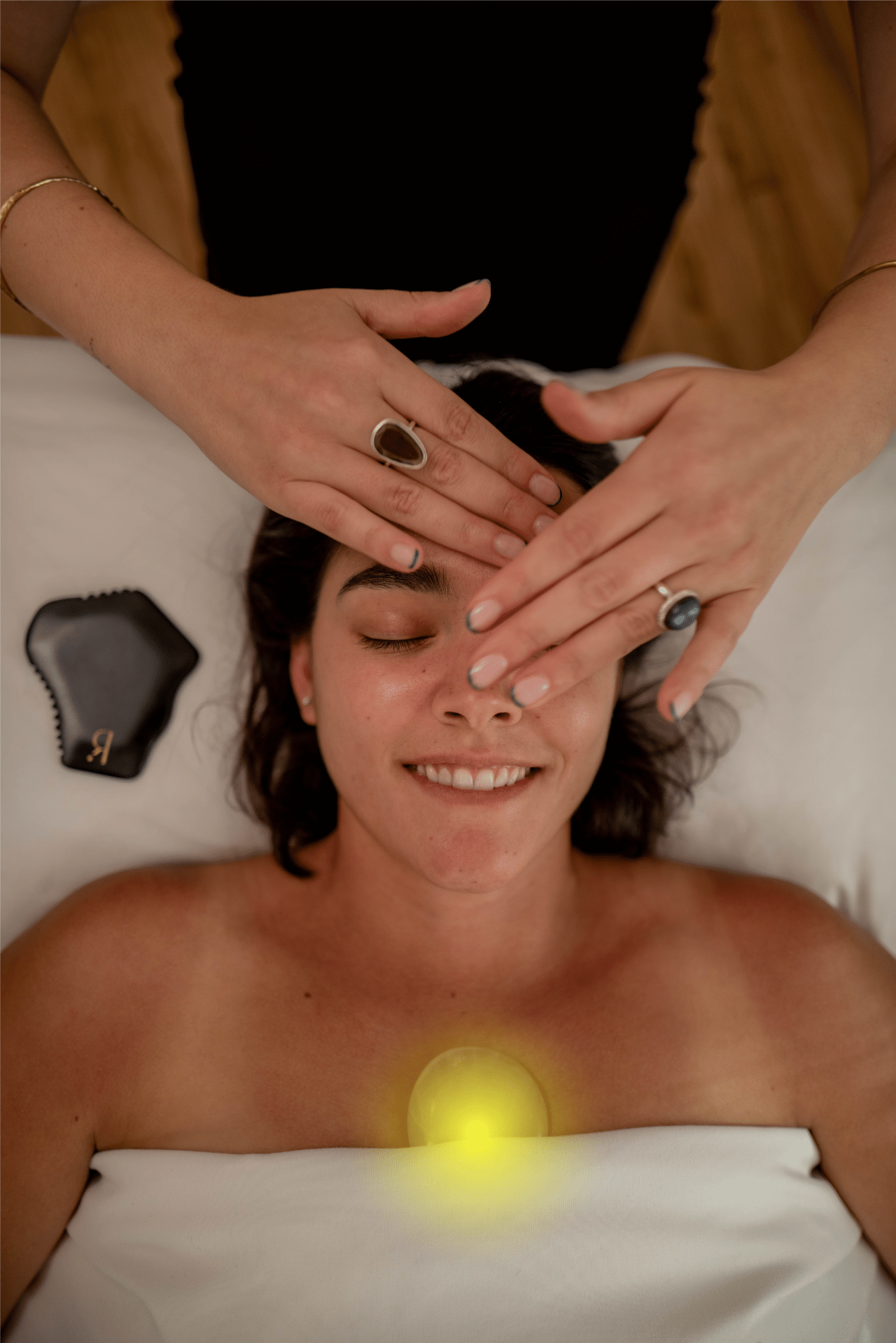
Ancient civilizations used them in ceremonies, celebrations, and to honor those who had passed. Herbal traditions around the world have long associated rose with emotional comfort, and today many herbalists continue to turn to rose during times of grief, heartbreak, or emotional overwhelm.
I find that symbolism especially beautiful.
Rose reminds us that softness is not weakness. Like the flower itself, we can remain open-hearted while still protecting our energy.
Support Your Skin at Home
One of my favorite ways to enjoy rose every day is with the Apoterra Rose Essential Hydration Mist.
This botanical mist delivers lightweight hydration while the delicate aroma of rose transforms your skincare routine into a calming ritual. I love using it after cleansing, before facial oil, or anytime my skin—and nervous system—need a little refresh.
Pair it with a few minutes of facial massage or gua sha to encourage circulation and create a moment of mindful self-care.
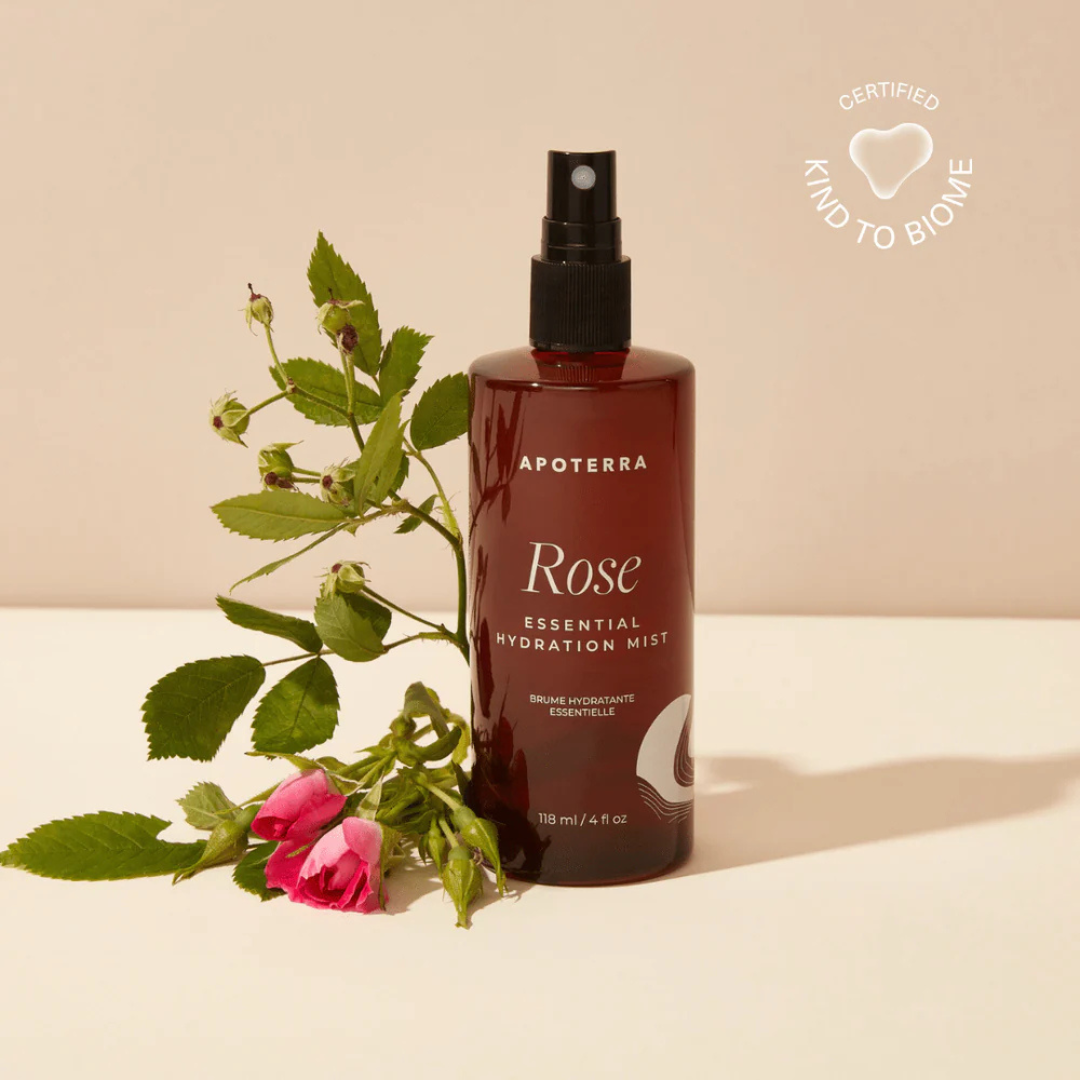
Think of this mist as a hydrating & calming serum in mist form. It's made with four powerful humectants—including hyaluronic acid and trehalose—3% niacinamide to support the skin barrier, & soothing botanicals to calm skin. Certified microbiome-friendly & balanced pH.
Formulated for: Dry, Dehydrated, Sensitive & Sensitized. Suitable for All Skin Types
Ingredients:
Distillate of Rosa damascena (rose)*, Aspalathus linearis (rooibos) leaf extract*, Musa sapientum (banana) leaf/trunk extract, Niacinamide (vitamin B3), Trehalose, Beta Vulgaris (Beet) Root Extract, Glycerin, Aloe barbadensis leaf juice extract*, Sodium PCA (sodium L-pyroglutamate), Sodium hyaluronate, L-Arginine *certified organic
Details:
4 fl oz/118 ml
Freshly Made & 100% Natural
Skin Microbiome Friendly Certified by Kind to Biome
Vegan & Leaping Bunny Cruelty Free Certified
Carbon & Plastic Negative
Packaged in a recyclable glass bottle
Ritual Recipe
Rose Petal & Honey Cordial
The Heart-Medicine Syrup
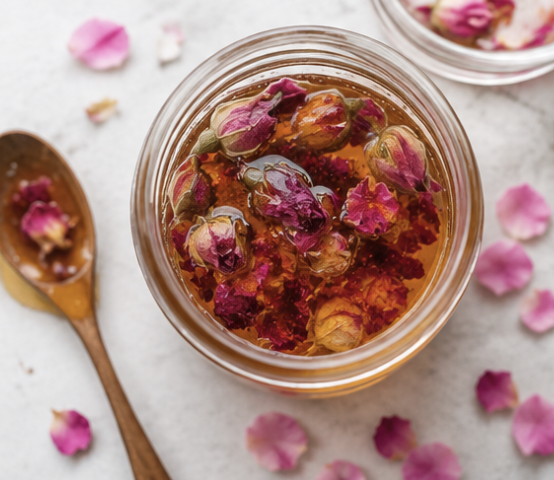
Best for: Grief • Heartbreak • Anxious-sad emotional states • Stress-related skin flare-ups • Postpartum emotional support
Ingredients
Makes about 2 cups
1 cup dried unsprayed rose petals, or ½ cup dried Chinese rose buds (Mei Gui Hua)
2 cups raw honey
Optional: 1 tablespoon dried hibiscus for color and a hint of tartness
Method
Place the rose petals (and hibiscus, if using) into a clean glass jar.
Gently warm the honey until it's just pourable—never boiling.
Pour the honey over the herbs, making sure they're completely submerged.
Seal the jar and let it infuse in a warm place for two weeks.
Strain through cheesecloth.
Enjoy one teaspoon on its own, stir it into warm water for a soothing tea, or drizzle it over yogurt or toast.
✨ From My Practice
One of the things I love most about Chinese herbal medicine is that no two people receive exactly the same formula.
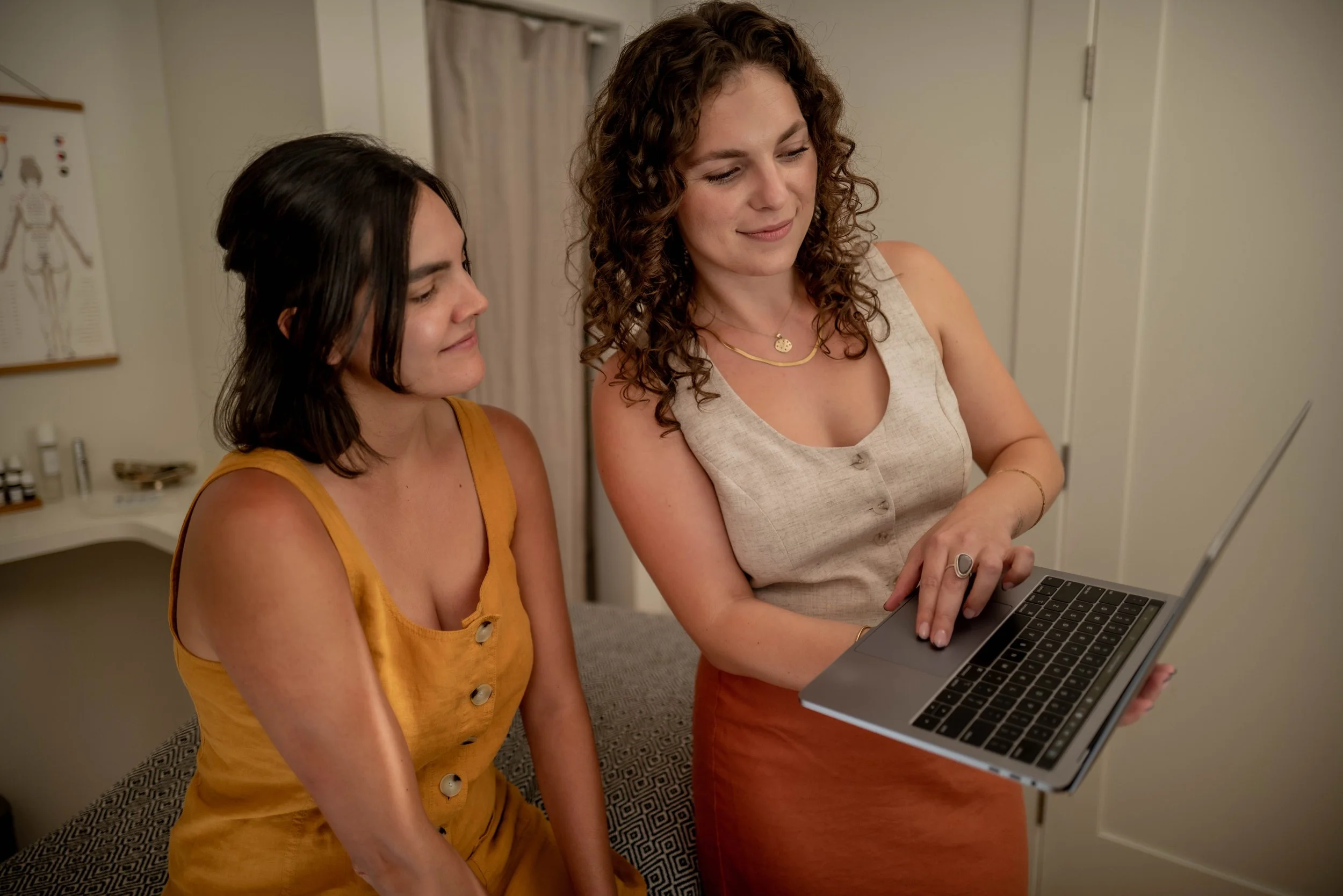
While Mei Gui Hua (rose bud) is a beautiful herb to enjoy as a daily tea or infused honey, I often incorporate it into customized herbal formulas for women experiencing stress, PMS, menstrual discomfort, hormonal skin changes, or emotional stagnation. Rose works gently alongside other herbs to move Liver Qi, harmonize the Blood, and restore balance based on each person's unique pattern.
I always tell my patients that herbs are like a symphony—each one has its own role, but together they create something much more powerful than any single herb alone.
Until Next Time...
Every herb has a story.
For thousands of years, plants have been used not only to heal the body, but to comfort the heart, celebrate life's milestones, and connect us with nature.
My hope is that these Herb Spotlights help you discover the wisdom behind each plant and inspire simple rituals you can bring into your everyday life.
Because sometimes the most powerful medicine isn't complicated.
It's a warm cup of tea.
A deep breath.
A moment of stillness.
And a single flower.
Ready to begin your own ritual?
Whether you're starting with a simple cup of rose tea or looking for personalized herbal support, I'd love to help you find what your body needs most.
or